Tag Archives: DevOps

OpenTofu: Open-Source Solution for Optimizing Cloud Infrastructure Management

Introduction to OpenTofu

Cloud infrastructure management has always been a challenge for IT professionals. With numerous cloud platforms, scalability issues, and the complexities of managing large infrastructures, it’s clear that businesses need a solution to simplify and optimize this process. OpenTofu, an open-source tool for managing cloud infrastructure, provides a powerful solution that can help you streamline operations, reduce costs, and enhance the overall performance of your cloud systems.

In this article, we’ll explore how OpenTofu optimizes cloud infrastructure management, covering its features, benefits, and examples of use. Whether you’re new to cloud infrastructure or an experienced DevOps engineer, this guide will help you understand how OpenTofu can improve your cloud management strategy.

What is OpenTofu?

OpenTofu is an open-source Infrastructure as Code (IaC) solution designed to optimize and simplify cloud infrastructure management. By automating the provisioning, configuration, and scaling of cloud resources, OpenTofu allows IT teams to manage their infrastructure with ease, reduce errors, and speed up deployment times.

Unlike traditional methods that require manual configuration, OpenTofu leverages code to define the infrastructure, enabling DevOps teams to create, update, and maintain infrastructure efficiently. OpenTofu can be integrated with various cloud platforms, such as AWS, Google Cloud, and Azure, making it a versatile solution for businesses of all sizes.

Key Features of OpenTofu

  • Infrastructure as Code: OpenTofu allows users to define their cloud infrastructure using code, which can be versioned, reviewed, and easily shared across teams.
  • Multi-cloud support: It supports multiple cloud providers, including AWS, Google Cloud, Azure, and others, giving users flexibility and scalability.
  • Declarative syntax: The tool uses a simple declarative syntax that defines the desired state of infrastructure, making it easier to manage and automate.
  • State management: OpenTofu automatically manages the state of your infrastructure, allowing users to track changes and ensure consistency across environments.
  • Open-source: As an open-source solution, OpenTofu is free to use and customizable, making it an attractive choice for businesses looking to optimize cloud management without incurring additional costs.

How OpenTofu Optimizes Cloud Infrastructure Management

1. Simplifies Resource Provisioning

Provisioning resources on cloud platforms often involves manually configuring services, networks, and storage. OpenTofu simplifies this process by using configuration files to describe the infrastructure components and their relationships. This automation ensures that resources are provisioned consistently and correctly across different environments, reducing the risk of errors.

Example: Provisioning an AWS EC2 Instance

Here’s a basic example of how OpenTofu can be used to provision an EC2 instance on AWS:

        provider "aws" {
          region = "us-west-2"
        }

        resource "aws_instance" "example" {
          ami           = "ami-12345678"
          instance_type = "t2.micro"
        }
    

This script will automatically provision an EC2 instance with the specified AMI and instance type.

2. Infrastructure Scalability

Scalability is one of the most important considerations when managing cloud infrastructure. OpenTofu simplifies scaling by allowing you to define how your infrastructure should scale, both vertically and horizontally. Whether you’re managing a single instance or a large cluster of services, OpenTofu’s ability to automatically scale resources based on demand ensures your infrastructure is always optimized.

Example: Auto-scaling EC2 Instances with OpenTofu

        resource "aws_launch_configuration" "example" {
          image_id        = "ami-12345678"
          instance_type   = "t2.micro"
          security_groups = ["sg-12345678"]
        }

        resource "aws_autoscaling_group" "example" {
          desired_capacity     = 3
          max_size             = 10
          min_size             = 1
          launch_configuration = aws_launch_configuration.example.id
        }
    

This configuration will automatically scale your EC2 instances between 1 and 10 based on demand, ensuring that your infrastructure can handle varying workloads.

3. Cost Optimization

OpenTofu can help optimize cloud costs by automating the scaling of resources. It allows you to define the desired state of your infrastructure and set parameters that ensure you only provision the necessary resources. By scaling resources up or down based on demand, you avoid over-provisioning and minimize costs.

4. Ensures Consistent Configuration Across Environments

One of the most significant challenges in cloud infrastructure management is ensuring consistency across environments. OpenTofu helps eliminate this challenge by using code to define your infrastructure. This approach ensures that every environment (development, staging, production) is configured in the same way, reducing the likelihood of discrepancies and errors.

Example: Defining Infrastructure for Multiple Environments

        provider "aws" {
          region = "us-west-2"
        }

        resource "aws_instance" "example" {
          ami           = "ami-12345678"
          instance_type = var.instance_type
        }
    

By creating separate workspaces for each environment, OpenTofu will automatically manage the configuration for each environment, ensuring consistency.

5. Increased Developer Productivity

With OpenTofu, developers no longer need to manually configure infrastructure. By using Infrastructure as Code (IaC), developers can spend more time focusing on developing applications instead of managing cloud resources. This increases overall productivity and allows teams to work more efficiently.

Advanced OpenTofu Use Cases

Multi-cloud Deployments

OpenTofu’s ability to integrate with multiple cloud providers means that you can deploy and manage resources across different cloud platforms. This is especially useful for businesses that operate in a multi-cloud environment and need to ensure their infrastructure is consistent across multiple providers.

Example: Multi-cloud Deployment with OpenTofu

        provider "aws" {
          region = "us-west-2"
        }

        provider "google" {
          project = "my-gcp-project"
        }

        resource "aws_instance" "example" {
          ami           = "ami-12345678"
          instance_type = "t2.micro"
        }

        resource "google_compute_instance" "example" {
          name         = "example-instance"
          machine_type = "f1-micro"
          zone         = "us-central1-a"
        }
    

This configuration will deploy resources in both AWS and Google Cloud, allowing businesses to manage a multi-cloud infrastructure seamlessly.

Integration with CI/CD Pipelines

OpenTofu integrates well with continuous integration and continuous deployment (CI/CD) pipelines, enabling automated provisioning of resources as part of your deployment process. This allows for faster and more reliable deployments, reducing the time it takes to push updates to production.

Frequently Asked Questions (FAQ)

What is Infrastructure as Code (IaC)?

Infrastructure as Code (IaC) is the practice of managing and provisioning infrastructure through code rather than manual processes. This enables automation, versioning, and better control over your infrastructure.

How does OpenTofu compare to other IaC tools?

OpenTofu is a powerful open-source IaC solution that offers flexibility and multi-cloud support. While tools like Terraform and AWS CloudFormation are popular, OpenTofu’s open-source nature and ease of use make it a compelling choice for teams looking for an alternative.

Can OpenTofu be used for production environments?

Yes, OpenTofu is well-suited for production environments. It allows you to define and manage your infrastructure in a way that ensures consistency, scalability, and cost optimization.

Is OpenTofu suitable for beginners?

While OpenTofu is relatively straightforward to use, a basic understanding of cloud infrastructure and IaC concepts is recommended. However, due to its open-source nature, there are plenty of community resources to help beginners get started.

Conclusion

OpenTofu provides an open-source, flexible, and powerful solution for optimizing cloud infrastructure management. From provisioning resources to ensuring scalability and reducing costs, OpenTofu simplifies the process of managing cloud infrastructure. By using Infrastructure as Code, businesses can automate and streamline their infrastructure management, increase consistency, and ultimately achieve better results.

Whether you’re just starting with cloud management or looking to improve your current infrastructure, OpenTofu is an excellent tool that can help you optimize your cloud infrastructure management efficiently. Embrace OpenTofu today and unlock the potential of cloud optimization for your business.

For more information on OpenTofu and its features, check out the official OpenTofu Documentation.Thank you for reading the DevopsRoles page!

How to Use SQL Databases with Python: A Comprehensive Guide

Introduction

SQL (Structured Query Language) databases have been the backbone of data management in modern applications for decades. Whether you’re building a web application, performing data analysis, or automating processes, working with SQL databases is a crucial skill. Python, one of the most popular programming languages, makes interacting with SQL databases straightforward and efficient.

In this guide, we’ll explore how to use SQL databases with Python. From connecting to the database to executing queries and retrieving data, we’ll walk you through essential techniques that every Python developer should know. Whether you’re a beginner or an experienced programmer, you’ll find practical examples and tips to enhance your Python-DB integration.

What is SQL?

SQL: The Language of Databases

SQL is a standard programming language designed for managing and manipulating relational databases. With SQL, you can create, read, update, and delete (CRUD operations) data stored in tables. The language is known for its simplicity and powerful querying capabilities.

Basic SQL Commands:

  • SELECT: Retrieves data from one or more tables.
  • INSERT: Adds new data into a table.
  • UPDATE: Modifies existing data in a table.
  • DELETE: Removes data from a table.
  • CREATE: Creates a new table or database.
  • DROP: Deletes a table or database.

SQL is widely used in various industries, including banking, e-commerce, healthcare, and education. As Python’s popularity grows, the need to integrate SQL databases with Python-based applications has become increasingly important.

How to Use SQL Databases with Python

Setting Up Your Environment

Before you can use SQL databases with Python, you need to install the required libraries. Python’s built-in library, sqlite3, is suitable for lightweight databases, but if you are working with MySQL, PostgreSQL, or other databases, you may need additional libraries.

Installing MySQL Connector:

For MySQL databases, use the mysql-connector-python package. You can install it with pip:

pip install mysql-connector-python

Installing PostgreSQL Adapter:

To interact with PostgreSQL, use psycopg2:

pip install psycopg2

Connecting to the Database

Once the necessary libraries are installed, you’ll need to establish a connection to the database.

Example: Connecting to SQLite

import sqlite3

# Establish connection to SQLite database
connection = sqlite3.connect("example.db")

# Create a cursor object to interact with the database
cursor = connection.cursor()

Example: Connecting to MySQL

import mysql.connector

# Establish connection to MySQL database
connection = mysql.connector.connect(
    host="localhost",
    user="yourusername",
    password="yourpassword",
    database="yourdatabase"
)

# Create a cursor object to interact with the database
cursor = connection.cursor()

Once the connection is established, you can begin executing SQL queries.

Executing SQL Queries with Python

Python provides several methods to execute SQL queries. The most common method is using a cursor object, which allows you to run commands and fetch results from the database.

Example 1: Executing a Simple SELECT Query

# Execute a simple SELECT query
cursor.execute("SELECT * FROM users")

# Fetch all results
results = cursor.fetchall()

# Display results
for row in results:
    print(row)

Example 2: Inserting Data into a Table

# Inserting data into the 'users' table
cursor.execute("INSERT INTO users (name, age) VALUES (%s, %s)", ("John Doe", 30))

# Commit changes to the database
connection.commit()

Example 3: Updating Data

# Update the 'age' of a user
cursor.execute("UPDATE users SET age = %s WHERE name = %s", (35, "John Doe"))

# Commit changes
connection.commit()

Example 4: Deleting Data

# Delete a user from the 'users' table
cursor.execute("DELETE FROM users WHERE name = %s", ("John Doe",))

# Commit changes
connection.commit()

Advanced Database Operations

Using Parameters in SQL Queries

Instead of directly inserting data into SQL queries (which can be prone to SQL injection attacks), it’s good practice to use parameterized queries. These queries separate the SQL logic from the data.

cursor.execute("SELECT * FROM users WHERE age > %s", (25,))

This approach improves security and helps prevent SQL injection.

Using Context Managers for Database Connections

It’s a good practice to use Python’s context manager (with statement) for managing database connections. This ensures that the connection is properly closed, even in case of an exception.

import sqlite3

with sqlite3.connect("example.db") as connection:
    cursor = connection.cursor()
    cursor.execute("SELECT * FROM users")
    results = cursor.fetchall()
    print(results)

Handling Errors and Exceptions

You should always handle errors and exceptions when working with databases. The try-except block is commonly used to catch SQL-related errors.

try:
    cursor.execute("SELECT * FROM non_existing_table")
except sqlite3.Error as e:
    print(f"An error occurred: {e}")

Transaction Management

In many cases, you may need to handle multiple database operations as part of a single transaction. Python’s commit() method is used to save changes, while rollback() can be used to undo changes if something goes wrong.

try:
    cursor.execute("INSERT INTO users (name, age) VALUES ('Alice', 25)")
    cursor.execute("UPDATE users SET age = 26 WHERE name = 'Alice'")
    connection.commit()
except:
    connection.rollback()
    print("Transaction failed. Changes rolled back.")

Best Practices for Using SQL Databases with Python

1. Use Prepared Statements

Prepared statements improve performance and security. They ensure that the same SQL query can be executed multiple times with different parameters.

2. Always Close Database Connections

Always close your database connections after use. Using context managers (with statement) is an efficient way to manage database connections and ensure they are properly closed.

3. Use Transactions

Wrap related operations in a transaction to ensure data consistency and rollback in case of failure.

4. Optimize SQL Queries

Ensure your SQL queries are optimized for better performance, especially when dealing with large datasets. Use indexes, avoid using SELECT *, and optimize joins.

Frequently Asked Questions (FAQ)

1. How do I connect Python to SQL Server?

To connect Python to SQL Server, you can use the pyodbc library.

pip install pyodbc

Here’s how you can connect:

import pyodbc

connection = pyodbc.connect(
    "DRIVER={ODBC Driver 17 for SQL Server};"
    "SERVER=your_server_name;"
    "DATABASE=your_database_name;"
    "UID=your_username;"
    "PWD=your_password"
)

2. Can I use Python with PostgreSQL?

Yes, you can use Python with PostgreSQL by installing the psycopg2 package. You can interact with the PostgreSQL database just like any other SQL database.

3. What is an ORM in Python?

An ORM (Object-Relational Mapping) allows you to work with SQL databases using Python objects. Some popular ORM frameworks for Python include SQLAlchemy and Django ORM.

4. How can I improve SQL query performance?

You can improve SQL query performance by:

  • Indexing the right columns
  • Using efficient joins
  • Avoiding SELECT *
  • Analyzing query execution plans

External Links

Conclusion

Learning how to use SQL databases with Python opens the door to many exciting opportunities in programming and data management. Whether you’re working with SQLite, MySQL, PostgreSQL, or any other relational database, Python offers robust tools for executing queries and handling data. By following the practices and examples in this guide, you’ll be able to efficiently integrate SQL databases into your Python projects.

Remember to prioritize security, efficiency, and best practices when working with databases. As you gain experience, you’ll discover more advanced techniques for optimizing your workflows and enhancing performance. Keep experimenting with real-world projects, and soon you’ll be a pro at using SQL with Python! Thank you for reading the DevopsRoles page!
The Future of DevOps: Trends Shaping 2025

Introduction

DevOps has revolutionized software development and IT operations, fostering seamless collaboration, continuous integration, and automation. As we move into 2025, emerging technologies and evolving industry demands are reshaping DevOps practices. This article explores the key trends shaping the future of DevOps and how organizations can leverage them to enhance efficiency, security, and scalability.

Key DevOps Trends in 2025

1. AI-Driven Automation and AIOps

The Role of AI in DevOps

Artificial Intelligence (AI) and Machine Learning (ML) are redefining DevOps workflows. With AIOps (Artificial Intelligence for IT Operations), teams can:

  • Automate anomaly detection and root cause analysis.
  • Enhance predictive maintenance and incident response.
  • Optimize CI/CD pipelines with intelligent recommendations.

How to Implement AI in DevOps

  • Utilize AI-powered log analysis tools like Splunk and ELK Stack.
  • Implement predictive analytics to foresee potential failures.
  • Integrate AI with CI/CD for automated code reviews and testing.

2. GitOps: The Future of Infrastructure Management

Understanding GitOps

GitOps is an operational framework that applies DevOps best practices using Git repositories as the single source of truth.

Benefits of GitOps

  • Version Control: Maintain a history of infrastructure changes.
  • Faster Deployments: Automate infrastructure updates with Git workflows.
  • Enhanced Security: Reduce human intervention and manual errors.

Tools for GitOps Implementation

  • FluxCD
  • ArgoCD
  • Jenkins X

3. DevSecOps: Security-First Approach

Why DevSecOps Matters in 2025

With increasing cyber threats, security must be integrated into DevOps from the start. DevSecOps ensures:

  • Continuous Security Testing: Automated vulnerability scans within CI/CD pipelines.
  • Shift-Left Security: Address security risks early in development.
  • Zero Trust Architectures: Implement strict access controls and authentication mechanisms.

Best Practices for DevSecOps

  • Use Infrastructure as Code (IaC) security policies.
  • Employ automated security tools like Snyk and Checkmarx.
  • Conduct regular penetration testing.

4. Multi-Cloud and Hybrid Cloud Adoption

The Rise of Multi-Cloud Strategies

Organizations are increasingly leveraging multiple cloud providers (AWS, Azure, GCP) to prevent vendor lock-in and optimize performance.

Key Benefits

  • Scalability: Dynamically allocate resources across multiple clouds.
  • Cost Optimization: Select the most cost-effective cloud services.
  • Resilience: Enhance redundancy and fault tolerance.

How to Implement Multi-Cloud DevOps

  • Utilize Kubernetes for container orchestration.
  • Adopt cloud-agnostic DevOps tools like Terraform and Pulumi.
  • Automate cloud deployment with CI/CD pipelines.

5. Edge Computing and IoT in DevOps

Why Edge Computing Matters

With the proliferation of IoT devices, edge computing allows real-time data processing closer to the source, reducing latency and bandwidth usage.

DevOps in Edge Computing

  • Deploying microservices to edge locations.
  • Automating updates for IoT devices.
  • Using lightweight containerization tools like K3s.

6. Serverless Computing in DevOps

The Shift to Serverless Architectures

Serverless computing enables developers to build applications without managing infrastructure. Popular serverless platforms include AWS Lambda, Azure Functions, and Google Cloud Functions.

DevOps Benefits of Serverless

  • Reduced Operational Overhead: No need to manage servers.
  • Cost Efficiency: Pay only for actual execution time.
  • Scalability: Automatic scaling based on demand.

7. Observability and Monitoring Evolution

Why Observability is Essential

Modern applications generate vast amounts of data, requiring advanced observability solutions for real-time monitoring and troubleshooting.

Tools for Observability

  • Prometheus & Grafana
  • New Relic
  • Datadog

Best Practices

  • Implement centralized logging with ELK Stack.
  • Use distributed tracing to diagnose performance issues.
  • Automate alerts with AI-driven monitoring systems.

Examples of DevOps Trends in Action

Example 1: AI-Driven Incident Response

A leading e-commerce company integrated AI-powered monitoring tools to automatically detect anomalies and predict system failures, reducing downtime by 40%.

Example 2: GitOps for Infrastructure Management

A financial services firm adopted GitOps, allowing automated rollbacks and controlled infrastructure updates, enhancing security and compliance.

Example 3: Serverless for Scalable Applications

A startup utilized AWS Lambda for microservices, reducing cloud costs by 60% while ensuring high availability.

FAQ Section

1. What is the future of DevOps in 2025?

The future of DevOps will be shaped by AI-driven automation, GitOps, security enhancements, and the growing adoption of multi-cloud and edge computing.

2. How does AI impact DevOps?

AI enhances DevOps by automating repetitive tasks, improving predictive maintenance, and optimizing CI/CD workflows.

3. What is GitOps, and why is it important?

GitOps is a DevOps methodology that uses Git repositories as the source of truth for infrastructure management, improving security and deployment efficiency.

4. How does DevSecOps improve security?

DevSecOps integrates security into the DevOps lifecycle, automating security testing and enforcing compliance through Infrastructure as Code.

5. What are the key DevOps tools for 2025?

Some leading DevOps tools include Kubernetes, Terraform, ArgoCD, Prometheus, Jenkins, and AI-powered monitoring solutions.

External Links

Conclusion

As DevOps continues to evolve in 2025, AI-driven automation, security integration, GitOps, and multi-cloud adoption will define the industry’s future. Organizations must embrace these trends to stay competitive, enhance operational efficiency, and deliver high-quality software at scale. By leveraging cutting-edge technologies and best practices, DevOps teams can build resilient, secure, and scalable applications for the digital future. Thank you for reading the DevopsRoles page!

The Difference Between DevOps Engineer, SRE, and Cloud Engineer Explained

Introduction

In today’s fast-paced technology landscape, roles like DevOps Engineer, Site Reliability Engineer (SRE), and Cloud Engineer have become vital in the world of software development, deployment, and system reliability. Although these roles often overlap, they each serve distinct functions within an organization. Understanding the difference between DevOps Engineers, SREs, and Cloud Engineers is essential for anyone looking to advance their career in tech or make informed hiring decisions.

In this article, we’ll dive deep into each of these roles, explore their responsibilities, compare them, and help you understand which career path might be right for you.

What Is the Role of a DevOps Engineer?

DevOps Engineer: Overview

A DevOps Engineer is primarily focused on streamlining the software development lifecycle (SDLC) by bringing together development and operations teams. This role emphasizes automation, continuous integration, and deployment (CI/CD), with a primary goal of reducing friction between development and operations to improve overall software delivery speed and quality.

Key Responsibilities:

  • Continuous Integration/Continuous Deployment (CI/CD): DevOps Engineers set up automated pipelines that allow code to be continuously tested, built, and deployed into production.
  • Infrastructure as Code (IaC): Using tools like Terraform and Ansible, DevOps Engineers define and manage infrastructure through code, enabling version control, consistency, and repeatability.
  • Monitoring and Logging: DevOps Engineers implement monitoring tools to track system health, identify issues, and ensure uptime.
  • Collaboration: They act as a bridge between the development and operations teams, ensuring effective communication and collaboration.

Skills Required:

  • Automation tools (Jenkins, GitLab CI)
  • Infrastructure as Code (IaC) tools (Terraform, Ansible)
  • Scripting (Bash, Python)
  • Monitoring tools (Prometheus, Grafana)

What Is the Role of a Site Reliability Engineer (SRE)?

Site Reliability Engineer (SRE): Overview

The role of an SRE is primarily focused on maintaining the reliability, scalability, and performance of large-scale systems. While SREs share some similarities with DevOps Engineers, they are more focused on system reliability and uptime. SREs typically work with engineering teams to ensure that services are reliable and can handle traffic spikes or other disruptions.

Key Responsibilities:

  • System Reliability: SREs ensure that the systems are reliable and meet Service Level Objectives (SLOs), which are predefined metrics like uptime and performance.
  • Incident Management: They develop and implement strategies to minimize system downtime and reduce the time to recovery when outages occur.
  • Capacity Planning: SREs ensure that systems can handle future growth by predicting traffic spikes and planning accordingly.
  • Automation and Scaling: Similar to DevOps Engineers, SREs automate processes, but their focus is more on reliability and scaling.

Skills Required:

  • Deep knowledge of cloud infrastructure (AWS, GCP, Azure)
  • Expertise in monitoring tools (Nagios, Prometheus)
  • Incident response and root cause analysis
  • Scripting and automation (Python, Go)

What Is the Role of a Cloud Engineer?

Cloud Engineer: Overview

A Cloud Engineer specializes in the design, deployment, and management of cloud-based infrastructure and services. They work closely with both development and operations teams to ensure that cloud resources are utilized effectively and efficiently.

Key Responsibilities:

  • Cloud Infrastructure Management: Cloud Engineers design, deploy, and manage the cloud infrastructure that supports an organization’s applications.
  • Security and Compliance: They ensure that the cloud infrastructure is secure and compliant with industry regulations and standards.
  • Cost Optimization: Cloud Engineers work to minimize cloud resource costs by optimizing resource utilization.
  • Automation and Monitoring: Like DevOps Engineers, Cloud Engineers implement automation, but their focus is on managing cloud resources specifically.

Skills Required:

  • Expertise in cloud platforms (AWS, Google Cloud, Microsoft Azure)
  • Cloud networking and security best practices
  • Knowledge of containerization (Docker, Kubernetes)
  • Automation and Infrastructure as Code (IaC) tools

The Difference Between DevOps Engineer, SRE, and Cloud Engineer

While all three roles—DevOps Engineer, Site Reliability Engineer, and Cloud Engineer—are vital to the smooth functioning of tech operations, they differ in their scope, responsibilities, and focus areas.

Key Differences in Focus:

  • DevOps Engineer: Primarily focused on bridging the gap between development and operations, with an emphasis on automation and continuous deployment.
  • SRE: Focuses on the reliability, uptime, and performance of systems, typically dealing with large-scale infrastructure and high availability.
  • Cloud Engineer: Specializes in managing and optimizing cloud infrastructure, ensuring efficient resource use and securing cloud services.

Similarities:

  • All three roles emphasize automation, collaboration, and efficiency.
  • They each use tools that facilitate CI/CD, monitoring, and scaling.
  • A solid understanding of cloud platforms is crucial for all three roles, although the extent of involvement may vary.

Career Path Comparison:

  • DevOps Engineers often move into roles like Cloud Architects or SREs.
  • SREs may specialize in site reliability or move into more advanced infrastructure management roles.
  • Cloud Engineers often transition into Cloud Architects or DevOps Engineers, given the overlap between cloud management and deployment practices.

FAQs

  • What is the difference between a DevOps Engineer and a Cloud Engineer?
    A DevOps Engineer focuses on automating the SDLC, while a Cloud Engineer focuses on managing cloud resources and infrastructure.
  • What are the key responsibilities of a Site Reliability Engineer (SRE)?
    SREs focus on maintaining system reliability, performance, and uptime. They also handle incident management and capacity planning.
  • Can a Cloud Engineer transition into a DevOps Engineer role?
    Yes, with a strong understanding of automation and CI/CD, Cloud Engineers can transition into DevOps roles.
  • What skills are essential for a DevOps Engineer, SRE, or Cloud Engineer?
    Skills in automation tools, cloud platforms, monitoring systems, and scripting are essential for all three roles.
  • How do DevOps Engineers and SREs collaborate in a tech team?
    While DevOps Engineers focus on automation and CI/CD, SREs work on ensuring reliability, which often involves collaborating on scaling and incident response.
  • What is the career growth potential for DevOps Engineers, SREs, and Cloud Engineers?
    All three roles have significant career growth potential, with opportunities to move into leadership roles like Cloud Architect, Engineering Manager, or Site Reliability Manager.

External Links

  1. What is DevOps? – Amazon Web Services (AWS)
  2. Site Reliability Engineering: Measuring and Managing Reliability
  3. Cloud Engineering: Best Practices for Cloud Infrastructure
  4. DevOps vs SRE: What’s the Difference? – Atlassian
  5. Cloud Engineering vs DevOps – IBM

Conclusion

Understanding the difference between DevOps Engineer, SRE, and Cloud Engineer is crucial for professionals looking to specialize in one of these roles or for businesses building their tech teams. Each role offers distinct responsibilities and skill sets, but they also share some common themes, such as automation, collaboration, and system reliability. Whether you are seeking a career in one of these areas or are hiring talent for your organization, knowing the unique aspects of these roles will help you make informed decisions.

As technology continues to evolve, these positions will remain pivotal in ensuring that systems are scalable, reliable, and secure. Choose the role that best aligns with your skills and interests to contribute effectively to modern tech teams. Thank you for reading the DevopsRoles page!
DevSecOps: What Is Security in the DevOps Process and Why Is It Important?

Introduction

In today’s fast-paced software development landscape, security is no longer an afterthought. DevSecOps-short for Development, Security, and Operations-ensures that security is embedded into every stage of the DevOps process. This proactive approach minimizes vulnerabilities, reduces risks, and streamlines compliance. But why is DevSecOps essential, and how can organizations implement it effectively? This article explores the concept, benefits, implementation strategies, and best practices of DevSecOps.

What Is DevSecOps?

Understanding DevSecOps

DevSecOps is an extension of DevOps that integrates security into the entire software development lifecycle (SDLC). It promotes collaboration between development, security, and operations teams to identify and mitigate security threats early in the development process.

Key Principles of DevSecOps

  • Security as Code: Automating security policies and configurations.
  • Shift-Left Approach: Implementing security measures early in the SDLC.
  • Continuous Monitoring: Detecting and responding to threats in real-time.
  • Collaboration and Shared Responsibility: Encouraging cross-functional teams to address security proactively.

Why Is Security Important in DevOps?

The Growing Need for DevSecOps

With cyber threats evolving rapidly, traditional security approaches are no longer sufficient. DevSecOps addresses security concerns by embedding protective measures throughout the DevOps pipeline, reducing the risk of vulnerabilities reaching production.

Benefits of DevSecOps

  1. Enhanced Security Posture: Identifying vulnerabilities early minimizes security risks.
  2. Faster Development Cycles: Automated security checks reduce delays.
  3. Compliance Assurance: Aligns with regulatory requirements such as GDPR, HIPAA, and ISO 27001.
  4. Cost Savings: Fixing security issues earlier is more cost-effective than post-deployment remediation.
  5. Improved Collaboration: Fosters a security-first culture across teams.

How to Implement DevSecOps

1. Integrating Security into CI/CD Pipelines

DevSecOps involves incorporating security controls into Continuous Integration/Continuous Deployment (CI/CD) workflows.

  • Static Application Security Testing (SAST): Scans code for vulnerabilities before deployment.
  • Dynamic Application Security Testing (DAST): Identifies runtime vulnerabilities.
  • Software Composition Analysis (SCA): Detects risks in open-source components.

2. Automating Security Testing

Automated security tools ensure that vulnerabilities are detected and mitigated efficiently.

  • Popular Security Automation Tools:
    • SonarQube (SAST)
    • OWASP ZAP (DAST)
    • Dependabot (SCA)

3. Using Infrastructure as Code (IaC) Security

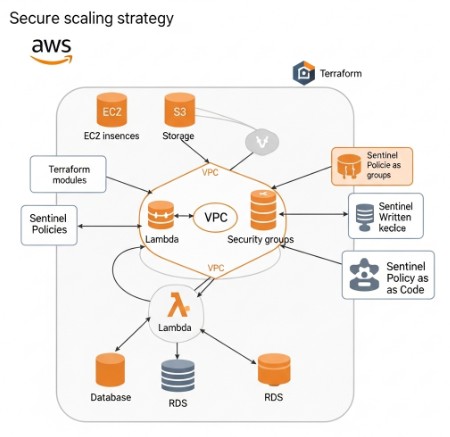
  • Terraform Security Best Practices: Apply security policies in infrastructure configurations.
  • Cloud Security Posture Management (CSPM): Tools like Prisma Cloud and AWS Config monitor cloud environments.

4. Enforcing Access Control and Identity Management

  • Implement Role-Based Access Control (RBAC) to restrict unauthorized access.
  • Utilize Multi-Factor Authentication (MFA) for additional security.

5. Continuous Monitoring and Incident Response

  • Utilize Security Information and Event Management (SIEM) solutions for real-time threat detection.
  • Automate incident response workflows using SOAR (Security Orchestration, Automation, and Response) tools.

Real-World Examples of DevSecOps

Example 1: Securing a Web Application

  • Challenge: A fintech company deploying a banking app faces security vulnerabilities.
  • Solution: Integrating DevSecOps tools like SAST, DAST, and container security scans into the CI/CD pipeline.
  • Outcome: Early detection of security flaws reduces the risk of data breaches.

Example 2: Cloud Security in a DevOps Environment

  • Challenge: A SaaS provider migrates its services to the cloud but struggles with misconfigured permissions.
  • Solution: Implementing Infrastructure as Code (IaC) security scans and automated compliance checks.
  • Outcome: Reduced misconfiguration risks, ensuring compliance with security standards.

FAQs on DevSecOps

1. How is DevSecOps different from traditional security?

Unlike traditional security, which is applied at the end of development, DevSecOps integrates security throughout the SDLC, ensuring continuous risk mitigation.

2. Which tools are commonly used in DevSecOps?

Some popular DevSecOps tools include:

  • SAST: SonarQube, Checkmarx
  • DAST: OWASP ZAP, Burp Suite
  • Container Security: Aqua Security, Trivy
  • SIEM: Splunk, ELK Stack

3. Can DevSecOps be applied in small teams?

Yes. Small teams can leverage automated security tools and cloud-based security services to implement DevSecOps efficiently.

4. What are the challenges in implementing DevSecOps?

  • Resistance to change in development teams
  • Complexity in integrating security tools
  • Skills gap in security expertise
  • Balancing security with speed in deployments

5. How does DevSecOps support compliance?

DevSecOps ensures adherence to security regulations by automating compliance checks and maintaining audit logs for security assessments.

External Resources

Conclusion

DevSecOps is a transformative approach to secure software development. By embedding security into the DevOps lifecycle, organizations can proactively detect and mitigate vulnerabilities, reduce risks, and improve compliance. Implementing DevSecOps requires cultural, technical, and procedural changes, but the long-term benefits outweigh the challenges. Businesses looking to secure their DevOps processes should start by integrating security automation, enforcing access controls, and adopting continuous monitoring. Embracing DevSecOps is the key to achieving resilient, secure, and agile software development. Thank you for reading the DevopsRoles page!

Top 10 Best DevOps Tools of 2025 – Don’t Miss Out

Introduction

DevOps has become an integral part of modern software development, enabling teams to enhance efficiency, automate workflows, and ensure seamless deployment. As technology evolves, new tools emerge to optimize DevOps pipelines. In this article, we explore the Top 10 Best DevOps Tools of 2025 that are reshaping the industry, covering their features, use cases, and why they stand out.

Top 10 Best DevOps Tools of 2025

1. Jenkins – The Continuous Integration Pioneer

Jenkins remains a cornerstone in DevOps, offering extensive automation capabilities for continuous integration and continuous deployment (CI/CD).

Key Features:

  • Open-source with a vast plugin ecosystem
  • Supports parallel builds
  • Integration with popular DevOps tools

Use Case:

Automating code testing and deployment to improve development speed.

2. Docker – Revolutionizing Containerization

Docker simplifies application deployment by packaging software into lightweight containers that run consistently across environments.

Key Features:

  • Platform-independent containerization
  • Scalable microservices architecture
  • Seamless CI/CD integration

Use Case:

Ensuring consistency in development, testing, and production environments.

3. Kubernetes – The Ultimate Container Orchestration Tool

Kubernetes automates the deployment, scaling, and operation of containerized applications.

Key Features:

  • Self-healing and auto-scaling
  • Rolling updates for zero-downtime deployments
  • Service discovery and load balancing

Use Case:

Managing large-scale containerized applications with minimal manual intervention.

4. Terraform – Infrastructure as Code (IaC) Leader

Terraform enables automated infrastructure provisioning using declarative configuration files.

Key Features:

  • Multi-cloud support (AWS, Azure, GCP)
  • Immutable infrastructure
  • Version control integration

Use Case:

Automating cloud resource provisioning and managing infrastructure efficiently.

5. GitHub Actions – CI/CD Directly in Your Repository

GitHub Actions allows DevOps teams to automate workflows within GitHub repositories.

Key Features:

  • Native CI/CD for GitHub repositories
  • Event-driven automation
  • Secure, fast, and scalable builds

Use Case:

Automating software testing and deployment with minimal configuration.

6. Ansible – Simplifying IT Automation

Ansible is an agentless automation tool that simplifies configuration management and application deployment.

Key Features:

  • YAML-based playbooks
  • Scalable automation
  • Security and compliance enforcement

Use Case:

Managing server configurations across multiple environments with ease.

7. Prometheus – Advanced Monitoring and Alerting

Prometheus is a leading open-source monitoring and alerting toolkit designed for reliability.

Key Features:

  • Time-series data collection
  • Powerful querying language (PromQL)
  • Integrates with Grafana for visualization

Use Case:

Monitoring cloud-based applications and infrastructure performance.

8. Grafana – Real-time Data Visualization

Grafana provides beautiful, interactive dashboards for monitoring and analytics.

Key Features:

  • Supports multiple data sources
  • Customizable alerts
  • User-friendly UI

Use Case:

Creating real-time dashboards for DevOps observability and insights.

9. Splunk – Log Management and Security

Splunk enables organizations to analyze machine data and logs for performance optimization and security.

Key Features:

  • AI-driven analytics
  • Security Information and Event Management (SIEM)
  • Automated alerting and insights

Use Case:

Detecting and mitigating security threats using AI-powered log analysis.

10. CircleCI – Scalable CI/CD for Teams

CircleCI accelerates software development with robust CI/CD pipelines and performance optimizations.

Key Features:

  • Container-native builds
  • Fast caching for speed improvements
  • Integrated debugging tools

Use Case:

Boosting software delivery speed through automated builds and deployments.

Frequently Asked Questions (FAQ)

1. What is the best DevOps tool for CI/CD?

Jenkins and GitHub Actions are the most widely used CI/CD tools, offering automation and seamless integration.

2. How does Kubernetes improve DevOps?

Kubernetes automates container orchestration, ensuring high availability, scalability, and self-healing infrastructure.

3. Which tool is best for infrastructure automation?

Terraform is the top choice for Infrastructure as Code (IaC), enabling automated cloud resource provisioning.

4. Why is monitoring important in DevOps?

Tools like Prometheus and Grafana provide real-time insights into system performance, helping teams proactively detect issues.

5. How can DevOps tools enhance security?

Splunk and Ansible offer security features such as automated compliance enforcement and AI-driven threat detection.

Conclusion

The Top 10 Best DevOps Tools of 2025 are transforming how teams develop, deploy, and manage software. Whether you need CI/CD, infrastructure automation, monitoring, or security solutions, these tools help streamline your DevOps workflows. By integrating these cutting-edge tools, organizations can improve efficiency, reliability, and innovation in software development. Thank you for reading the DevopsRoles page!

Recommended Readings:

AWS Toolkit for Azure DevOps: Streamlining Multi-Cloud CI/CD Workflows

Introduction

In today’s cloud-centric world, businesses often operate in multi-cloud environments, leveraging both Amazon Web Services (AWS) and Microsoft Azure. The AWS Toolkit for Azure DevOps provides a seamless way to integrate AWS services into Azure DevOps workflows, enabling DevOps teams to automate deployments, manage AWS infrastructure, and streamline CI/CD processes efficiently.

This article explores how to set up and use the AWS Toolkit for Azure DevOps, practical use cases, and best practices for optimal performance.

What is AWS Toolkit for Azure DevOps?

The AWS Toolkit for Azure DevOps is an extension provided by AWS that enables developers to integrate AWS services into their Azure DevOps pipelines. This toolkit allows teams to deploy applications to AWS, configure AWS infrastructure, and manage resources within Azure DevOps.

Key Features

  • AWS CodeDeploy Integration: Automate deployments of applications to Amazon EC2, AWS Lambda, or on-premises instances.
  • AWS Elastic Beanstalk Support: Deploy applications seamlessly to AWS Elastic Beanstalk environments.
  • S3 and CloudFormation Integration: Upload assets to Amazon S3 and automate infrastructure provisioning using AWS CloudFormation.
  • IAM Role Management: Securely authenticate Azure DevOps pipelines with AWS Identity and Access Management (IAM).
  • Multi-Account Support: Manage multiple AWS accounts directly from Azure DevOps.

How to Set Up AWS Toolkit for Azure DevOps

Step 1: Install the AWS Toolkit Extension

  1. Navigate to the Azure DevOps Marketplace.
  2. Search for AWS Toolkit for Azure DevOps.
  3. Click Get it free and install it into your Azure DevOps organization.

Step 2: Configure AWS Credentials

To enable Azure DevOps to access AWS resources, configure AWS credentials using an IAM User or IAM Role.

Creating an IAM User

  1. Go to the AWS IAM Console.
  2. Create a new IAM user with programmatic access.
  3. Attach necessary permissions (e.g., AdministratorAccess or a custom policy).
  4. Generate an access key and secret key.
  5. Store credentials securely in Azure DevOps Service Connections.

Using an IAM Role (Recommended for Security)

  1. Create an IAM Role with required permissions.
  2. Attach the role to an EC2 instance or configure AWS Systems Manager for secure access.
  3. Configure Azure DevOps to assume the role using AWS STS (Security Token Service).

Step 3: Set Up AWS Service Connection in Azure DevOps

  1. Go to Project Settings > Service Connections.
  2. Click New service connection and select AWS.
  3. Enter the Access Key, Secret Key, or Assume Role ARN.
  4. Test and save the connection.

Using AWS Toolkit in Azure DevOps Pipelines

Once the AWS Toolkit is configured, you can start integrating AWS services into your Azure DevOps pipelines.

Example 1: Deploying an Application to AWS Elastic Beanstalk

YAML Pipeline Definition

trigger:
- main

pool:
  vmImage: 'ubuntu-latest'

steps:
- task: AWSElasticBeanstalkDeployApplication@1
  inputs:
    awsCredentials: 'AWS_Service_Connection'
    regionName: 'us-east-1'
    applicationName: 'MyApp'
    environmentName: 'MyApp-env'
    applicationPackage: '$(Build.ArtifactStagingDirectory)/app.zip'

Example 2: Deploying a CloudFormation Stack

steps:
- task: AWSCloudFormationCreateOrUpdateStack@1
  inputs:
    awsCredentials: 'AWS_Service_Connection'
    regionName: 'us-east-1'
    stackName: 'MyStack'
    templatePath: 'infrastructure/template.yaml'
    capabilities: 'CAPABILITY_NAMED_IAM'

Best Practices for Using AWS Toolkit for Azure DevOps

  • Use IAM Roles Instead of Access Keys: Minimize security risks by using AWS STS for temporary credentials.
  • Enable Logging and Monitoring: Use AWS CloudWatch and Azure Monitor for enhanced visibility.
  • Automate Infrastructure as Code: Utilize AWS CloudFormation or Terraform for consistent deployments.
  • Implement Least Privilege Access: Restrict permissions to necessary AWS services only.
  • Leverage AWS CodeBuild for Efficient CI/CD: Offload build tasks to AWS CodeBuild for better scalability.

Frequently Asked Questions (FAQ)

1. Is AWS Toolkit for Azure DevOps free to use?

Yes, the AWS Toolkit extension for Azure DevOps is free to install and use. However, standard AWS service charges apply when deploying resources.

2. Can I deploy to AWS Lambda using Azure DevOps?

Yes, the AWS Toolkit supports deployments to AWS Lambda using AWS CodeDeploy or direct Lambda function deployment.

3. How secure is AWS Toolkit for Azure DevOps?

The toolkit follows AWS security best practices. It is recommended to use IAM roles with minimal permissions and enable MFA for added security.

4. Does AWS Toolkit support multi-region deployments?

Yes, you can configure multiple AWS service connections and deploy resources across different regions.

5. Can I integrate AWS CodePipeline with Azure DevOps?

Yes, you can trigger AWS CodePipeline workflows using Azure DevOps pipelines through AWS CLI or SDK integrations.

External Links for Reference

Conclusion

The AWS Toolkit for Azure DevOps empowers organizations to leverage the strengths of both AWS and Azure, enabling a seamless multi-cloud CI/CD experience. By following best practices, securing credentials, and leveraging automation, teams can efficiently deploy and manage applications across both cloud platforms. Start integrating AWS services into your Azure DevOps pipelines today and streamline your cloud deployment workflows! Thank you for reading the DevopsRoles page!
Making K8s APIs Simpler for All Kubernetes Users

Introduction

Kubernetes (K8s) has revolutionized container orchestration, but its API complexities often challenge users. As Kubernetes adoption grows, simplifying K8s APIs ensures greater accessibility and usability for developers, DevOps engineers, and IT administrators. This article explores methods, tools, and best practices for making K8s APIs simpler for all Kubernetes users.

Why Simplifying K8s APIs Matters

Challenges with Kubernetes APIs

  • Steep Learning Curve: New users find K8s API interactions overwhelming.
  • Complex Configuration: YAML configurations and manifests require precision.
  • Authentication & Authorization: Managing RBAC (Role-Based Access Control) adds complexity.
  • API Versioning Issues: Deprecation and updates can break applications.

Strategies for Simplifying Kubernetes APIs

1. Using Kubernetes Client Libraries

Kubernetes provides client libraries for various programming languages, such as:

These libraries abstract raw API calls, providing simplified methods for managing Kubernetes resources.

2. Leveraging Kubernetes Operators

Operators automate complex workflows, reducing the need for manual API interactions. Some popular operators include:

  • Cert-Manager: Automates TLS certificate management.
  • Prometheus Operator: Simplifies monitoring stack deployment.
  • Istio Operator: Eases Istio service mesh management.

3. Implementing Helm Charts

Helm, the Kubernetes package manager, simplifies API interactions by allowing users to deploy applications using predefined templates. Benefits of Helm include:

  • Reusable Templates: Reduce redundant YAML configurations.
  • Version Control: Easily manage different application versions.
  • Simple Deployment: One command (helm install) instead of multiple API calls.

4. Using Kubernetes API Aggregation Layer

The API Aggregation Layer enables extending Kubernetes APIs with custom endpoints. Benefits include:

  • Custom API Resources: Reduce reliance on default Kubernetes API.
  • Enhanced Performance: Aggregated APIs optimize resource calls.

5. Adopting CRDs (Custom Resource Definitions)

CRDs simplify Kubernetes API interactions by allowing users to create custom resources tailored to specific applications. Examples include:

  • Defining custom workload types
  • Automating deployments with unique resource objects
  • Managing application-specific settings

6. Streamlining API Access with Service Meshes

Service meshes like Istio, Linkerd, and Consul simplify Kubernetes API usage by:

  • Automating Traffic Management: Reduce manual API configurations.
  • Improving Security: Provide built-in encryption and authentication.
  • Enhancing Observability: Offer tracing and monitoring features.

7. Using API Gateways

API gateways abstract Kubernetes API complexities by handling authentication, request routing, and response transformations. Examples:

  • Kong for Kubernetes
  • NGINX API Gateway
  • Ambassador API Gateway

8. Automating API Calls with Kubernetes Operators

Kubernetes operators manage lifecycle tasks without manual API calls. Examples include:

  • ArgoCD Operator: Automates GitOps deployments.
  • Crossplane Operator: Extends Kubernetes API for cloud-native infrastructure provisioning.

Practical Examples

Example 1: Deploying an Application Using Helm

helm install myapp stable/nginx

Instead of multiple kubectl apply commands, Helm simplifies the process with a single command.

Example 2: Accessing Kubernetes API Using Python Client

from kubernetes import client, config
config.load_kube_config()
v1 = client.CoreV1Api()
print(v1.list_pod_for_all_namespaces())

This Python script fetches all running pods using the Kubernetes API without requiring manual API calls.

Example 3: Creating a Custom Resource Definition (CRD)

apiVersion: apiextensions.k8s.io/v1
kind: CustomResourceDefinition
metadata:
  name: myresources.example.com
spec:
  group: example.com
  versions:
  - name: v1
    served: true
    storage: true
  scope: Namespaced
  names:
    plural: myresources
    singular: myresource
    kind: MyResource
    shortNames:
    - mr

CRDs allow users to define new resource types, making Kubernetes APIs more adaptable.

FAQs

1. Why is Kubernetes API complexity a challenge?

Kubernetes APIs involve intricate configurations, authentication mechanisms, and multiple versions, making them difficult to manage for beginners and experts alike.

2. How does Helm simplify Kubernetes API usage?

Helm provides predefined templates that reduce repetitive API calls, ensuring seamless application deployment.

3. What are Custom Resource Definitions (CRDs) in Kubernetes?

CRDs extend Kubernetes APIs, allowing users to define custom objects that suit their application needs.

4. How do service meshes help in API simplification?

Service meshes manage traffic routing, security, and observability without requiring manual API modifications.

5. Which tools help in abstracting Kubernetes API complexity?

Helm, Operators, CRDs, Service Meshes, API Gateways, and Kubernetes client libraries all contribute to simplifying Kubernetes API interactions.

External Resources

Conclusion

Making K8s APIs simpler for all Kubernetes users is crucial for enhancing adoption, usability, and efficiency. By leveraging tools like Helm, Operators, CRDs, and API Gateways, users can streamline interactions with Kubernetes, reducing complexity and boosting productivity. Kubernetes will continue evolving, and simplifying API access remains key to fostering innovation and growth in cloud-native ecosystems.Thank you for reading the DevopsRoles page!

How to Store Your Docker Registry Credentials

Introduction

Docker registries play a crucial role in containerized application development by allowing developers to store and share container images. However, securely managing credentials to authenticate against these registries is essential to avoid unauthorized access and potential security breaches.

In this guide, we will explore different methods for securely storing Docker registry credentials. We will cover built-in authentication mechanisms, best security practices, and advanced configurations for enhanced protection.

Understanding Docker Authentication

Before diving into storing credentials, it’s important to understand how Docker handles authentication.

Docker Login Command

Docker provides the docker login command to authenticate against registries:

docker login myregistry.com -u myusername -p mypassword

However, using plaintext credentials in the terminal can expose sensitive information. Thus, more secure alternatives should be considered.

Docker Config File

Upon successful authentication, Docker stores credentials in a configuration file located at:

  • Linux/macOS:
    • ~/.docker/config.json
  • Windows:
    • %USERPROFILE%\.docker\config.json

Methods for Storing Docker Registry Credentials

1. Using the Docker Credential Store

Docker provides credential store helpers to store credentials securely rather than saving them in plaintext.

Enabling Docker Credential Store

1.Install a credential helper based on your operating system:

Linux/macOS: Install docker-credential-pass or docker-credential-secretservice.

Windows: Use docker-credential-wincred.

2.Configure Docker to use the credential store:

{
  "credsStore": "os-specific-helper"
}

    2. Using Docker Credential Helpers

    Docker credential helpers offer an additional layer of security by encrypting and storing credentials externally.

    Steps to Use a Credential Helper

    Install the appropriate credential helper (e.g., docker-credential-pass).

    Configure Docker to use it by adding:

    {
      "credHelpers": {
        "myregistry.com": "pass"
      }
    }

    Execute docker login to store credentials using the configured helper.

    3. Storing Credentials in Environment Variables

    For temporary authentication without storing credentials on disk, use environment variables:

    export DOCKER_USERNAME=myusername
    export DOCKER_PASSWORD=mypassword

    Then log in using:

    echo $DOCKER_PASSWORD | docker login myregistry.com -u $DOCKER_USERNAME --password-stdin

    Pros: No credentials stored on disk. Cons: Credentials remain in memory and shell history.

    4. Using AWS Secrets Manager or Vault

    For enterprise environments, use secure secret management tools like AWS Secrets Manager or HashiCorp Vault.

    Example: Using AWS Secrets Manager

    1.Store credentials:

    aws secretsmanager create-secret --name dockerRegistryCreds --secret-string '{"username":"myusername", "password":"mypassword"}'

    2.Retrieve credentials dynamically:

    aws secretsmanager get-secret-value --secret-id dockerRegistryCreds --query SecretString --output text | jq -r '.password' | docker login myregistry.com -u myusername --password-stdin

    Example: Securing Docker Registry Credentials in CI/CD

    In a CI/CD pipeline, avoid storing credentials in source code. Instead:

    • Use environment variables in GitHub Actions, GitLab CI/CD, or Jenkins.
    • Fetch credentials dynamically from a secret manager.
    • Use docker login with --password-stdin to prevent exposure in logs.

    FAQs

    1. Where does Docker store registry credentials by default?

    Docker stores credentials in ~/.docker/config.json, unless configured to use a credential helper.

    2. How can I remove stored Docker credentials?

    Use docker logout:

    docker logout myregistry.com

    Or manually edit ~/.docker/config.json.

    3. Are Docker credential helpers more secure than config.json?

    Yes. Credential helpers store credentials encrypted and prevent plaintext storage.

    4. Can I use multiple credential stores for different registries?

    Yes. Use credHelpers in config.json to specify different helpers per registry.

    5. How do I avoid exposing Docker credentials in CI/CD logs?

    Use --password-stdin and environment variables instead of inline passwords.

    External Resources

    Conclusion

    Storing Docker registry credentials securely is critical for protecting sensitive data and maintaining best practices in DevOps workflows. By using Docker’s built-in credential store, environment variables, or external secret management tools, you can enhance security while ensuring seamless authentication in your projects.

    Following the best practices outlined in this guide will help you manage Docker credentials effectively, reduce security risks, and streamline containerized workflows.Thank you for reading the DevopsRoles page!

    Kubernetes vs OpenShift: A Comprehensive Guide to Container Orchestration

    Introduction

    In the realm of software development, containerization has revolutionized how applications are built, deployed, and managed. At the heart of this revolution are two powerful tools: Kubernetes and OpenShift. Both platforms are designed to manage containers efficiently, but they differ significantly in their features, ease of use, and enterprise capabilities. This article delves into the world of Kubernetes and OpenShift, comparing their core functionalities and highlighting scenarios where each might be the better choice.

    Overview of Kubernetes vs OpenShift

    Kubernetes

    Kubernetes is an open-source container orchestration system originally developed by Google. It automates the deployment, scaling, and management of containerized applications. Kubernetes offers a flexible framework that can be installed on various platforms, including cloud services like AWS and Azure, as well as Linux distributions such as Ubuntu and Debian.

    OpenShift

    OpenShift, developed by Red Hat, is built on top of Kubernetes and extends its capabilities by adding features like integrated CI/CD pipelines, enhanced security, and a user-friendly interface. It is often referred to as a Platform-as-a-Service (PaaS) because it provides a comprehensive set of tools for enterprise applications, including support for Docker container images.

    Core Features Comparison

    Kubernetes Core Features

    • Container Orchestration: Automates deployment, scaling, and management of containers.
    • Autoscaling: Dynamically adjusts the number of replicas based on resource utilization.
    • Service Discovery: Enables communication between services within the cluster.
    • Health Checking and Self-Healing: Automatically detects and replaces unhealthy pods.
    • Extensibility: Supports a wide range of plugins and extensions.

    OpenShift Core Features

    • Integrated CI/CD Pipelines: Simplifies application development and deployment processes.
    • Developer-Friendly Workflows: Offers a web console for easy application deployment and management.
    • Built-in Monitoring and Logging: Provides insights into application performance and issues.
    • Enhanced Security: Includes strict security policies and secure-by-default configurations.
    • Enterprise Support: Offers dedicated support and periodic updates for commercial versions.

    Deployment and Management

    Kubernetes Deployment

    Kubernetes requires manual configuration for networking, storage, and security policies, which can be challenging for beginners. It is primarily managed through the kubectl command-line interface, offering fine-grained control but requiring a deep understanding of Kubernetes concepts.

    OpenShift Deployment

    OpenShift simplifies deployment tasks with its intuitive web console, allowing users to deploy applications with minimal effort. It integrates well with Red Hat Enterprise Linux Atomic Host (RHELAH), Fedora, or CentOS, though this limits platform flexibility compared to Kubernetes.

    Scalability and Performance

    Kubernetes Scalability

    Kubernetes offers flexible scaling options, both vertically and horizontally, and employs built-in load-balancing mechanisms to ensure optimal performance and high availability.

    OpenShift Scalability

    OpenShift is optimized for enterprise workloads, providing enhanced performance and reliability features such as optimized scheduling and resource quotas. It supports horizontal autoscaling based on metrics like CPU or memory utilization.

    Ecosystem and Community Support

    Kubernetes Community

    Kubernetes boasts one of the largest and most active open-source communities, offering extensive support, resources, and collaboration opportunities. The ecosystem includes a wide range of tools for container runtimes, networking, storage, CI/CD, and monitoring.

    OpenShift Community

    OpenShift has a smaller community primarily supported by Red Hat developers. While it offers dedicated support for commercial versions, the open-source version (OKD) relies on self-support.

    Examples in Action

    Basic Deployment with Kubernetes

    To deploy a simple web application using Kubernetes, you would typically create a YAML file defining the deployment and service, then apply it using kubectl.

    apiVersion: apps/v1
    kind: Deployment
    metadata:
      name: web-app
    spec:
      replicas: 3
      selector:
        matchLabels:
          app: web-app
      template:
        metadata:
          labels:
            app: web-app
        spec:
          containers:
          - name: web-app
            image: nginx:latest
            ports:
            - containerPort: 80
    
    ---
    
    apiVersion: v1
    kind: Service
    metadata:
      name: web-app-service
    spec:
      selector:
        app: web-app
      ports:
      - name: http
        port: 80
        targetPort: 80
      type: LoadBalancer
    

    Advanced CI/CD with OpenShift

    OpenShift integrates seamlessly with Jenkins for CI/CD pipelines. You can create custom Jenkins images and automate application testing and deployment using OpenShift’s source-to-image feature.

    # Example of creating a Jenkins image in OpenShift
    oc new-app jenkins-ephemeral --name=jenkins
    oc expose svc jenkins
    

    Frequently Asked Questions

    Q: What is the primary difference between Kubernetes and OpenShift?

    A: Kubernetes is a basic container orchestration platform, while OpenShift is built on Kubernetes and adds features like CI/CD pipelines, enhanced security, and a user-friendly interface.

    Q: Which platform is more scalable?

    A: Both platforms are scalable, but Kubernetes offers more flexible scaling options, while OpenShift is optimized for enterprise workloads with features like optimized scheduling.

    Q: Which has better security features?

    A: OpenShift has stricter security policies and secure-by-default configurations, making it more secure out of the box compared to Kubernetes.

    Q: What kind of support does each platform offer?

    A: Kubernetes has a large community-driven support system, while OpenShift offers dedicated commercial support and self-support for its open-source version.

    Conclusion

    Choosing between Kubernetes and OpenShift depends on your specific needs and environment. Kubernetes provides flexibility and a wide range of customization options, making it ideal for those who prefer a hands-on approach. OpenShift, on the other hand, offers a more streamlined experience with built-in features that simplify application development and deployment, especially in enterprise settings. Whether you’re looking for a basic container orchestration system or a comprehensive platform with integrated tools, understanding the differences between Kubernetes and OpenShift will help you make an informed decision. Thank you for reading the DevopsRoles page!

    For more information on Kubernetes and OpenShift, visit: