touch command means Change file timestamps. The touch command in Linux is used to create empty files or update the timestamp of existing files.
In the Linux operating system, the ability to create and manipulate files is essential for effective file management and scripting. One of the most fundamental commands for this purpose is the touch command.
The touch command is primarily used to create new empty files and update file timestamps. In this article, we will explore the touch command in detail, learn how to use it, and provide practical examples that demonstrate its capabilities in real-world scenarios.
Syntax
touch [OPTION]… FILE…
According to the man page, the touch command is used to change file timestamps.
For more detailed information about the touch command examples, you can use:
man touch
touch command in Linux with Examples
Create a new file:
$ touch devopsroles.txt
Create multiple files at once:
touch file1.txt file2.txt file3.txt
Set a specific timestamp:
touch -t 202306151200.00 filename.txt
Create a new file with specific permissions:
touch -m 644 filename.txt
Update the timestamp of a file
touch filename.txt
To set the timestamp of a file based on the timestamp of another file, use the -r option followed by the reference file:
touch -r referencefile.txt targetfile.txt
To create a file only if it does not already exist (and do nothing if it does), use the -c option:
touch -c existingfile.txt
Conclusion
touch command in Linux is a simple command in Linux. It is the most popular in-use terminal Linux change file timestamps.
The touch command is a versatile and essential tool in Linux for creating files and modifying timestamps. By mastering its options and syntax, you can enhance your file management skills and streamline your shell scripting tasks. Hopefully, this article has provided you with a clearer understanding of how to use the touch command effectively and apply it in your daily activities.
Keep exploring and leveraging the powerful commands in Linux to improve your efficiency and productivity in managing systems and automating tasks. Thank you for reading the DevopsRoles page!
join command in Linux means Join lines of two files on a common field. In the Linux operating system, processing and merging text files are common tasks that are essential for effective data management and manipulation.
The join command is a powerful tool that allows users to combine lines of two files based on a common field. This command is particularly useful for merging data sets and performing relational database-like operations on text files. In this article, we will explore the join command in detail, learn how to use it, and provide practical examples that demonstrate its capabilities in real-world scenarios.
Syntax join command in Linux
join [OPTION]… FILE1 FILE2
According to the man page, the join command merges lines of two files based on a common field. For more detailed information about the join command, you can use:
man join
join command in Linux with Examples
To join two files on the first field by default, use:
$ join huuphan.txt devopsroles.txt
To join files on a specific field, use the -1 and -2 options to specify the field numbers in the first and second files, respectively:
join -1 2 -2 3 file1.txt file2.txt
To include lines from both files that do not have a matching join field, use the -a option:
join -a 1 -a 2 file1.txt file2.txt
To change the output field separator, use the -t option:
join -t ',' file1.csv file2.csv
To suppress the output of unpaired fields, use the -o option:
join -o 1.1 1.2 2.3 file1.txt file2.txt
To perform a case-insensitive join, use the -i option:
join -i file1.txt file2.txt
Basic Usage of join Command
Let’s start with the basics of the join command. Consider two files, file1.txt and file2.txt.
Example Files:
file1.txt
1 Apple 2 Banana 3 Cherry
file2.txt
1 Red 2 Yellow 3 Red
Basic Command:
To join these files based on the first field:
join file1.txt file2.txt
Output:
1 Apple Red 2 Banana Yellow 3 Cherry Red
Options and Their Usage
Specifying a Different Field
By default, join uses the first field for matching. To specify a different field, use the -1 and -2 options.
join -1 1 -2 1 file1.txt file2.txt
Including Unpaired Lines
To include lines that do not have a matching pair, use the -a option.
join -a 1 -a 2 file1.txt file2.txt
Specifying Delimiters
If the fields in the files are separated by a delimiter other than a space, use the -t option.
join -t ',' file1.csv file2.csv
Advanced Usage of join Command
Combining Files with Multiple Fields
Consider two files with multiple fields:
file1.txt
1 Apple 5 2 Banana 10 3 Cherry 7
file2.txt
1 Red 2 Yellow 3 Red
To join based on the first field and include multiple fields from the first file:
join -1 1 -2 1 file1.txt file2.txt
Output with Multiple Fields:
1 Apple 5 Red 2 Banana 10 Yellow 3 Cherry 7 Red
Ignoring Case Differences
To perform a case-insensitive join, use the -i option.
join -i file1.txt file2.txt
Customizing Output Format
To customize the output format, use the -o option followed by the field specifiers.
join -o 1.1,1.2,2.2 file1.txt file2.txt
Handling Missing Fields
To handle missing fields gracefully, use the -e option to provide a default value.
join -e 'N/A' file1.txt file2.txt
Common Errors and Troubleshooting
Mismatched Delimiters
Ensure that the delimiters in both files match when using the -t option. Mismatched delimiters can cause unexpected results.
Non-Sorted Files
The join command requires input files to be sorted based on the join field. Use the sort command to sort the files beforehand.
Ensure that both files have the same number of fields if you are using the -o option to specify output format.
Frequently Asked Questions (FAQs)
What is the join the command used for in Linux?
The join command is used to merge lines from two files based on a common field, typically for data processing and analysis tasks.
How do I join files with a different delimiter?
Use the -t option followed by the delimiter character to specify a different delimiter.
Can I join files on fields other than the first field?
Yes, use the -1 and -2 options to specify the fields in the first and second files, respectively.
How do I include unmatched lines in the output?
Use the -a option to include unmatched lines from either or both files.
How do I handle case differences in the join field?
Use the -i option to perform a case-insensitive join.
Conclusion
join command is a simple command in Linux.The join command is a versatile and powerful tool in Linux for merging lines of text files based on a common field. By mastering its options and syntax, you can enhance your data processing skills and streamline your file management tasks.
Hopefully, this article has provided you with a clearer understanding of how to use the join command examples effectively and apply them in your daily activities. Keep exploring and leveraging the powerful commands in Linux to improve your efficiency and productivity in managing data and automating tasks. Thank you for reading the DevopsRoles page!
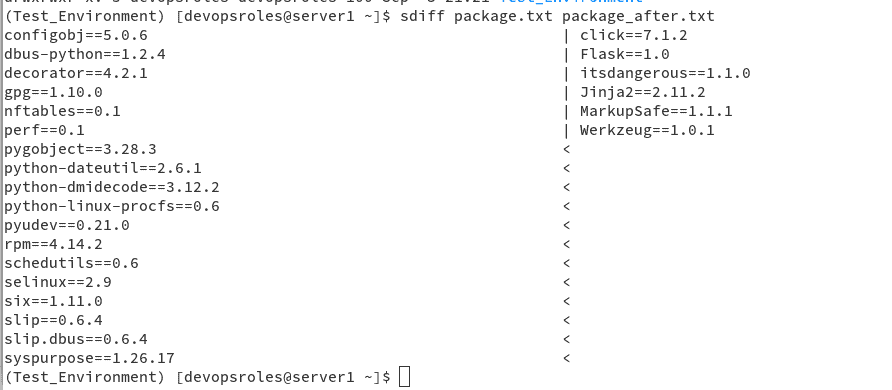
man diff – More details information about diff command.
diff command in Linux with Examples
$ diff huuphan.txt devopsroles.txt
Conclusion
diff command is a simple command in Linux. It is the most popular in use terminal Linux compare files line by line. Thank you for reading the DevopsRoles page!
kill command in Linux is a simple command in Linux. It is the most popular in use terminal Linux terminate a process. Thank you for reading the DevopsRoles page!
ps command in Linux means ps displays information about a selection of the active processes. In the Linux operating system, managing and monitoring processes is a crucial task for system administrators and users alike. The ps command is an essential tool for viewing the currently running processes on a system.
It provides detailed information about each process, including its process ID (PID), the user who owns the process, and the resources it is consuming. In this article, we will explore the ps command in detail, learn how to use it effectively and provide practical examples to demonstrate its capabilities in real-world scenarios.
Syntax
ps [options]
According to the man page, the ps the command provides a snapshot of the current processes.
For more detailed information about the ps command, you can use:
man ps
ps command in Linux with Examples
$ ps
Display User Running Processes
[vagrant@DevopsRoles ~]$ ps -X
#To display a user’s processes by real user ID (RUID)
[vagrant@DevopsRoles ~]$ ps -fU vagrant
ps command in Linux is a simple command in Linux. The ps command is a powerful and versatile tool in Linux for monitoring and managing system processes. By mastering its options and syntax, you can gain valuable insights into the processes running on your system, diagnose issues, and optimize performance.
Hopefully, this article has provided you with a clearer understanding of how to use the ps command effectively and apply it in your daily tasks. Keep exploring and leveraging the powerful commands in Linux to enhance your efficiency and productivity in system administration and process management. Thank you for reading the DevopsRoles page!
top -hv|-bcEHiOSs1 -d secs -n max -u|U user -p pid -o fld -w [cols]
In man page the describe it
top– display Linux processes.
man top – More details information about top command.
top command in Linux with Examples
$ top
Conclusion
top command is the simple command in Linux. It is the most popular in use terminal Linux display Linux processes. Thank you for reading the DevopsRoles page!

grep command in Linux means grep prints the matching lines. In the Linux operating system, searching for specific text patterns within files is a common task that is essential for system administrators, developers, and users alike.
The grep command is a powerful and versatile tool used for searching and filtering text based on patterns. It supports regular expressions, allowing users to perform complex searches with ease. In this article, we will explore the grep command in detail, learn how to use it effectively, and provide practical examples that demonstrate its capabilities in real-world scenarios.
To perform a case-insensitive search, use the -i option:
grep -i "search_string" filename
To search for a pattern in all files within a directory recursively, use the -r option:
grep -r "search_string" /path/to/directory
To display the line numbers of the matching lines, use the -n option:
grep -n "search_string" filename
To display lines that do not match the pattern, use the -v option:
grep -v "search_string" filename
To count the number of matching lines, use the -c option:
grep -c "search_string" filename
To use regular expressions for more complex searches, use the -E option (for extended regular expressions):
grep -E "pattern" filename
FAQs About the grep Command
1. What does grep stand for?
grep stands for “Global Regular Expression Print,” highlighting its ability to search globally for patterns using regular expressions.
2. Can grep search binary files?
Yes, but by default, it skips binary files. Use the -a option to treat binary files as text:
grep -a "pattern" binaryfile
3. How do I suppress output for non-matching lines?
Use the -q option for quiet mode:
grep -q "pattern" file.txt && echo "Match found"
4. Can I use grep to search for multiple patterns simultaneously?
Yes, with the -e option:
grep -e "pattern1" -e "pattern2" file.txt
5. How does grep handle large files?
grep is optimized for performance, but for extremely large files, consider using it with tools like xargs or limiting output with head or tail.
Conclusion
grep command in Linux is a simple command in Linux. The grep command is an indispensable tool in Linux for searching and filtering text. By mastering its options and syntax, you can efficiently locate and manipulate data within files, enhancing your productivity in system administration and development tasks.
Hopefully, this article has provided you with a clearer understanding of how to use the grep command examples effectively and apply it in your daily activities. Keep exploring and leveraging the powerful commands in Linux to improve your efficiency and proficiency in managing and processing text data. Thank you for reading the DevopsRoles page!
The find command in Linux is one of the most powerful tools for system administrators and developers. It allows users to search for files and directories based on a variety of criteria such as name, type, size, permissions, and modification time. Whether you’re troubleshooting, managing files, or automating tasks, mastering the find command can significantly boost your productivity.
In this article, we’ll explore the ins and outs of the find command, starting with the basics and moving to advanced use cases. By the end, you’ll have a strong grasp of how to wield this versatile tool effectively.
How to Use the find Command in Linux
Basic Syntax of the find Command
The general syntax of the find command is as follows:
The find command in Linux is an indispensable tool for locating files and directories based on a variety of criteria. From simple name searches to advanced permission-based queries, find offers unmatched flexibility. Whether you’re a system administrator or a casual user, mastering this command can streamline your workflow and improve efficiency.
Start experimenting with the examples provided in this guide to become proficient in using the find command. For more details, refer to the official Linux documentation linked above. Thank you for reading the DevopsRoles page!

sort command in Linux is a powerful utility that organizes text lines in a file or input stream. Whether you’re managing log files, organizing data, or processing large datasets, sort offers robust sorting capabilities, from simple alphabetical order to complex numerical arrangements. This guide delves into the sort command, showcasing its versatility with practical examples and tips for advanced usage.
Understanding the Basics of the sort Command
What is the sort Command?
The sort command in Linux arranges lines of text in a specified order. It supports multiple options for sorting, including numerical, alphabetical, case-insensitive, and more.
Syntax
Syntax
sort [OPTION]… [FILE]…
On the man page, the describes it
sort – sort lines of text files
man sort – More details information about sort command.
sort command in Linux with Examples
$ sort devopsroles.txt
Key Features of the sort Command
Primary Options
-n: Numerical sort.
-r: Reverse order.
-k: Sort by a specific column.
-t: Specify a delimiter for field separation.
-u: Remove duplicate lines.
Combining Options
The sort command allows combining multiple options to achieve complex sorting tasks.
Examples of Using the sort Command in Linux
1. Sorting Alphabetically
Example:
sort file.txt
This sorts the lines in file.txt alphabetically.
Input:
banana
apple
cherry
Output:
apple
banana
cherry
2. Numerical Sorting
Example:
sort -n numbers.txt
Sorts the file numerically.
Input:
10
2
30
Output:
2
10
30
3. Reverse Sorting
Example:
sort -r file.txt
Sorts the lines in reverse alphabetical order.
4. Sorting by a Specific Column
Example:
sort -k 2 data.txt
Sorts the file based on the second column.
Input:
John 25
Alice 30
Bob 22
Output:
Bob 22
John 25
Alice 30
5. Sorting with a Delimiter
Example:
sort -t: -k 2 scores.txt
Sorts the file by the second field, with : as the delimiter.
Input:
Alice:85
Bob:90
John:78
Output:
John:78
Alice:85
Bob:90
6. Removing Duplicates
Example:
sort -u file.txt
Removes duplicate lines during sorting.
7. Handling Large Files
For large files, use the -T option to specify a directory for temporary storage:
sort -T /tmp largefile.txt
Advanced Techniques with the sort Command
Sorting with Case Insensitivity
Example:
sort -f file.txt
Sorts lines without considering case sensitivity.
Merging Sorted Files
Example:
sort -m file1.txt file2.txt
Combines two pre-sorted files into one sorted output.
Sorting Based on Month Names
Example:
sort -M months.txt
Sorts lines based on month names (e.g., Jan, Feb).
Sorting with Unique Keys
Combine sort with uniq for advanced deduplication:
sort file.txt | uniq
Frequently Asked Questions (FAQs)
1. How do I sort files in reverse order?
Use the -r option:
sort -r file.txt
2. Can sort handle case-insensitive sorting?
Yes, the -f flag enables case-insensitive sorting.
3. How do I sort large files efficiently?
Use the -T option to specify a temporary directory with sufficient space.
4. What does the -k option do in sort?
The -k option sorts based on a specified column or field.
sort command is a simple command in Linux. It is the most popular in use terminal Linux sort lines of text files. Thank you for reading the DevopsRoles page!

The echo command in Linux is a versatile tool used for printing text or variables to the terminal or redirecting them to a file. It is a simple yet powerful command that finds wide usage in shell scripting and day-to-day Linux operations.
In this tutorial, we will delve into the echo command, exploring its functionality and providing practical examples to illustrate its usage. echo command means Echo the STRING(s) to standard output.
Syntax
echo [SHORT-OPTION]… [STRING]… echo LONG-OPTION
On the man page, the describes it
echo – display a line of text.
man echo– More details information about echo command.
This command creates a file named output.txt and writes the text “This is some content.” into it.
Conclusion
echo command in Linux is a simple command in Linux. It is the most popular in-use terminal Linux displays a line of text. Thank you for reading the DevopsRoles page!