Category Archives: Docker

Master Docker with DevOpsRoles.com. Discover comprehensive guides and tutorials to efficiently use Docker for containerization and streamline your DevOps processes.

The 15 Best Docker Monitoring Tools for 2025: A Comprehensive Guide

Docker has revolutionized how applications are built, shipped, and run, enabling unprecedented agility and efficiency through containerization. However, managing and understanding the performance of dynamic, ephemeral containers in a production environment presents unique challenges. Without proper visibility, resource bottlenecks, application errors, and security vulnerabilities can go unnoticed, leading to performance degradation, increased operational costs, and potential downtime. This is where robust Docker monitoring tools become indispensable.

As organizations increasingly adopt microservices architectures and container orchestration platforms like Kubernetes, the complexity of their infrastructure grows. Traditional monitoring solutions often fall short in these highly dynamic and distributed environments. Modern Docker monitoring tools are specifically designed to provide deep insights into container health, resource utilization, application performance, and log data, helping DevOps teams, developers, and system administrators ensure the smooth operation of their containerized applications.

In this in-depth guide, we will explore why Docker monitoring is critical, what key features to look for in a monitoring solution, and present the 15 best Docker monitoring tools available in 2025. Whether you’re looking for an open-source solution, a comprehensive enterprise platform, or a specialized tool, this article will help you make an informed decision to optimize your containerized infrastructure.

Why Docker Monitoring is Critical for Modern DevOps

In the fast-paced world of DevOps, where continuous integration and continuous delivery (CI/CD) are paramount, understanding the behavior of your Docker containers is non-negotiable. Here’s why robust Docker monitoring is essential:

  • Visibility into Ephemeral Environments: Docker containers are designed to be immutable and can be spun up and down rapidly. Traditional monitoring struggles with this transient nature. Docker monitoring tools provide real-time visibility into these short-lived components, ensuring no critical events are missed.
  • Performance Optimization: Identifying CPU, memory, disk I/O, and network bottlenecks at the container level is crucial for optimizing application performance. Monitoring allows you to pinpoint resource hogs and allocate resources more efficiently.
  • Proactive Issue Detection: By tracking key metrics and logs, monitoring tools can detect anomalies and potential issues before they impact end-users. Alerts and notifications enable teams to respond proactively to prevent outages.
  • Resource Efficiency: Over-provisioning resources for containers can lead to unnecessary costs, while under-provisioning can lead to performance problems. Monitoring helps right-size resources, leading to significant cost savings and improved efficiency.
  • Troubleshooting and Debugging: When issues arise, comprehensive monitoring provides the data needed for quick root cause analysis. Aggregated logs, traces, and metrics from multiple containers and services simplify the debugging process.
  • Security and Compliance: Monitoring container activity, network traffic, and access patterns can help detect security threats and ensure compliance with regulatory requirements.
  • Capacity Planning: Historical data collected by monitoring tools is invaluable for understanding trends, predicting future resource needs, and making informed decisions about infrastructure scaling.

Key Features to Look for in Docker Monitoring Tools

Selecting the right Docker monitoring solution requires careful consideration of various features tailored to the unique demands of containerized environments. Here are the essential capabilities to prioritize:

  • Container-Level Metrics: Deep visibility into CPU utilization, memory consumption, disk I/O, network traffic, and process statistics for individual containers and hosts.
  • Log Aggregation and Analysis: Centralized collection, parsing, indexing, and searching of logs from all Docker containers. This includes structured logging support and anomaly detection in log patterns.
  • Distributed Tracing: Ability to trace requests across multiple services and containers, providing an end-to-end view of transaction flows in microservices architectures.
  • Alerting and Notifications: Customizable alert rules based on specific thresholds or anomaly detection, with integration into communication channels like Slack, PagerDuty, email, etc.
  • Customizable Dashboards and Visualization: Intuitive and flexible dashboards to visualize metrics, logs, and traces in real-time, allowing for quick insights and correlation.
  • Integration with Orchestration Platforms: Seamless integration with Kubernetes, Docker Swarm, and other orchestrators for cluster-level monitoring and auto-discovery of services.
  • Application Performance Monitoring (APM): Capabilities to monitor application-specific metrics, identify code-level bottlenecks, and track user experience within containers.
  • Host and Infrastructure Monitoring: Beyond containers, the tool should ideally monitor the underlying host infrastructure (VMs, physical servers) to provide a complete picture.
  • Service Maps and Dependency Mapping: Automatic discovery and visualization of service dependencies, helping to understand the architecture and impact of changes.
  • Scalability and Performance: The ability to scale with your growing container infrastructure without introducing significant overhead or latency.
  • Security Monitoring: Detection of suspicious container activity, network breaches, or policy violations.
  • Cost-Effectiveness: A balance between features, performance, and pricing models (SaaS, open-source, hybrid) that aligns with your budget and operational needs.

The 15 Best Docker Monitoring Tools for 2025

Choosing the right set of Docker monitoring tools is crucial for maintaining the health and performance of your containerized applications. Here’s an in-depth look at the top contenders for 2025:

1. Datadog

Datadog is a leading SaaS-based monitoring and analytics platform that offers full-stack observability for cloud-scale applications. It provides comprehensive monitoring for Docker containers, Kubernetes, serverless functions, and traditional infrastructure, consolidating metrics, traces, and logs into a unified view.

  • Key Features:
    • Real-time container metrics and host-level resource utilization.
    • Advanced log management and analytics with powerful search.
    • Distributed tracing for microservices with APM.
    • Customizable dashboards and service maps for visualizing dependencies.
    • AI-powered anomaly detection and robust alerting.
    • Out-of-the-box integrations with Docker, Kubernetes, AWS, Azure, GCP, and hundreds of other technologies.
  • Pros:
    • Extremely comprehensive and unified platform for all observability needs.
    • Excellent user experience, intuitive dashboards, and easy setup.
    • Strong community support and continuous feature development.
    • Scales well for large and complex environments.
  • Cons:
    • Can become expensive for high data volumes, especially logs and traces.
    • Feature richness can have a steep learning curve for new users.

External Link: Datadog Official Site

2. Prometheus & Grafana

Prometheus is a powerful open-source monitoring system that collects metrics from configured targets at given intervals, evaluates rule expressions, displays the results, and can trigger alerts. Grafana is an open-source data visualization and analytics tool that allows you to query, visualize, alert on, and explore metrics, logs, and traces from various sources, making it a perfect companion for Prometheus.

  • Key Features (Prometheus):
    • Multi-dimensional data model with time series data identified by metric name and key/value pairs.
    • Flexible query language (PromQL) for complex data analysis.
    • Service discovery for dynamic environments like Docker and Kubernetes.
    • Built-in alerting manager.
  • Key Features (Grafana):
    • Rich and interactive dashboards.
    • Support for multiple data sources (Prometheus, Elasticsearch, Loki, InfluxDB, etc.).
    • Alerting capabilities integrated with various notification channels.
    • Templating and variables for dynamic dashboards.
  • Pros:
    • Open-source and free, highly cost-effective for budget-conscious teams.
    • Extremely powerful and flexible for custom metric collection and visualization.
    • Large and active community support.
    • Excellent for self-hosting and full control over your monitoring stack.
  • Cons:
    • Requires significant effort to set up, configure, and maintain.
    • Limited long-term storage capabilities without external integrations.
    • No built-in logging or tracing (requires additional tools like Loki or Jaeger).

3. cAdvisor (Container Advisor)

cAdvisor is an open-source tool from Google that provides container users with an understanding of the resource usage and performance characteristics of their running containers. It collects, aggregates, processes, and exports information about running containers, exposing a web interface for basic visualization and a raw data endpoint.

  • Key Features:
    • Collects CPU, memory, network, and file system usage statistics.
    • Provides historical resource usage information.
    • Supports Docker containers natively.
    • Lightweight and easy to deploy.
  • Pros:
    • Free and open-source.
    • Excellent for basic, localized container monitoring on a single host.
    • Easy to integrate with Prometheus for metric collection.
  • Cons:
    • Lacks advanced features like log aggregation, tracing, or robust alerting.
    • Not designed for large-scale, distributed environments.
    • User interface is basic compared to full-fledged monitoring solutions.

4. New Relic

New Relic is another full-stack observability platform offering deep insights into application and infrastructure performance, including extensive support for Docker and Kubernetes. It combines APM, infrastructure monitoring, logs, browser, mobile, and synthetic monitoring into a single solution.

  • Key Features:
    • Comprehensive APM for applications running in Docker containers.
    • Detailed infrastructure monitoring for hosts and containers.
    • Full-stack distributed tracing and service maps.
    • Centralized log management and analytics.
    • AI-powered proactive anomaly detection and intelligent alerting.
    • Native integration with Docker and Kubernetes.
  • Pros:
    • Provides a holistic view of application health and performance.
    • Strong APM capabilities for identifying code-level issues.
    • User-friendly interface and powerful visualization tools.
    • Good for large enterprises requiring end-to-end visibility.
  • Cons:
    • Can be costly, especially with high data ingest volumes.
    • May have a learning curve due to the breadth of features.

External Link: New Relic Official Site

5. Sysdig Monitor

Sysdig Monitor is a container-native visibility platform that provides deep insights into the performance, health, and security of containerized applications and infrastructure. It’s built specifically for dynamic cloud-native environments and offers granular visibility at the process, container, and host level.

  • Key Features:
    • Deep container visibility with granular metrics.
    • Prometheus-compatible monitoring and custom metric collection.
    • Container-aware logging and auditing capabilities.
    • Interactive service maps and topology views.
    • Integrated security and forensics (Sysdig Secure).
    • Powerful alerting and troubleshooting features.
  • Pros:
    • Excellent for container-specific monitoring and security.
    • Provides unparalleled depth of visibility into container activity.
    • Strong focus on security and compliance in container environments.
    • Good for organizations prioritizing container security alongside performance.
  • Cons:
    • Can be more expensive than some other solutions.
    • Steeper learning curve for some advanced features.

6. Dynatrace

Dynatrace is an AI-powered, full-stack observability platform that provides automatic and intelligent monitoring for modern cloud environments, including Docker and Kubernetes. Its OneAgent technology automatically discovers, maps, and monitors all components of your application stack.

  • Key Features:
    • Automatic discovery and mapping of all services and dependencies.
    • AI-driven root cause analysis with Davis AI.
    • Full-stack monitoring: APM, infrastructure, logs, digital experience.
    • Code-level visibility for applications within containers.
    • Real-time container and host performance metrics.
    • Extensive Kubernetes and Docker support.
  • Pros:
    • Highly automated setup and intelligent problem detection.
    • Provides deep, code-level insights without manual configuration.
    • Excellent for complex, dynamic cloud-native environments.
    • Reduces mean time to resolution (MTTR) significantly.
  • Cons:
    • One of the more expensive enterprise solutions.
    • Resource footprint of the OneAgent might be a consideration for very small containers.

7. AppDynamics

AppDynamics, a Cisco company, is an enterprise-grade APM solution that extends its capabilities to Docker container monitoring. It provides deep visibility into application performance, user experience, and business transactions, linking them directly to the underlying infrastructure, including containers.

  • Key Features:
    • Business transaction monitoring across containerized services.
    • Code-level visibility into applications running in Docker.
    • Infrastructure visibility for Docker hosts and containers.
    • Automatic baselining and anomaly detection.
    • End-user experience monitoring.
    • Scalable for large enterprise deployments.
  • Pros:
    • Strong focus on business context and transaction tracing.
    • Excellent for large enterprises with complex application landscapes.
    • Helps connect IT performance directly to business outcomes.
    • Robust reporting and analytics features.
  • Cons:
    • High cost, typically suited for larger organizations.
    • Can be resource-intensive for agents.
    • Setup and configuration might be more complex than lightweight tools.

8. Elastic Stack (ELK – Elasticsearch, Logstash, Kibana)

The Elastic Stack, comprising Elasticsearch (search and analytics engine), Logstash (data collection and processing pipeline), and Kibana (data visualization), is a popular open-source solution for log management and analytics. It’s widely used for collecting, processing, storing, and visualizing Docker container logs.

  • Key Features:
    • Centralized log aggregation from Docker containers (via Filebeat or Logstash).
    • Powerful search and analytics capabilities with Elasticsearch.
    • Rich visualization and customizable dashboards with Kibana.
    • Can also collect metrics (via Metricbeat) and traces (via Elastic APM).
    • Scalable for large volumes of log data.
  • Pros:
    • Highly flexible and customizable for log management.
    • Open-source components offer cost savings.
    • Large community and extensive documentation.
    • Can be extended to full-stack observability with other Elastic components.
  • Cons:
    • Requires significant effort to set up, manage, and optimize the stack.
    • Steep learning curve for new users, especially for performance tuning.
    • Resource-intensive, particularly Elasticsearch.
    • No built-in distributed tracing without Elastic APM.

9. Splunk

Splunk is an enterprise-grade platform for operational intelligence, primarily known for its powerful log management and security information and event management (SIEM) capabilities. It can effectively ingest, index, and analyze data from Docker containers, hosts, and applications to provide real-time insights.

  • Key Features:
    • Massive-scale log aggregation, indexing, and search.
    • Real-time data correlation and anomaly detection.
    • Customizable dashboards and powerful reporting.
    • Can monitor Docker daemon logs, container logs, and host metrics.
    • Integrates with various data sources and offers a rich app ecosystem.
  • Pros:
    • Industry-leading for log analysis and operational intelligence.
    • Extremely powerful search language (SPL).
    • Excellent for security monitoring and compliance.
    • Scalable for petabytes of data.
  • Cons:
    • Very expensive, pricing based on data ingest volume.
    • Can be complex to configure and optimize.
    • More focused on logs and events rather than deep APM or tracing natively.

10. LogicMonitor

LogicMonitor is a SaaS-based performance monitoring platform for hybrid IT infrastructures, including extensive support for Docker, Kubernetes, and cloud environments. It provides automated discovery, comprehensive metric collection, and intelligent alerting across your entire stack.

  • Key Features:
    • Automated discovery and monitoring of Docker containers, hosts, and services.
    • Pre-built monitoring templates for Docker and associated technologies.
    • Comprehensive metrics (CPU, memory, disk, network, processes).
    • Intelligent alerting with dynamic thresholds and root cause analysis.
    • Customizable dashboards and reporting.
    • Monitors hybrid cloud and on-premises environments from a single platform.
  • Pros:
    • Easy to deploy and configure with automated discovery.
    • Provides a unified view for complex hybrid environments.
    • Strong alerting capabilities with reduced alert fatigue.
    • Good support for a wide range of technologies out-of-the-box.
  • Cons:
    • Can be more expensive than open-source or some smaller SaaS tools.
    • May lack the deep, code-level APM of specialized tools like Dynatrace.

11. Sematext

Sematext provides a suite of monitoring and logging products, including Sematext Monitoring (for infrastructure and APM) and Sematext Logs (for centralized log management). It offers comprehensive monitoring for Docker, Kubernetes, and microservices environments, focusing on ease of use and full-stack visibility.

  • Key Features:
    • Full-stack visibility for Docker containers, hosts, and applications.
    • Real-time container metrics, events, and logs.
    • Distributed tracing with Sematext Experience.
    • Anomaly detection and powerful alerting.
    • Pre-built dashboards and customizable views.
    • Support for Prometheus metric ingestion.
  • Pros:
    • Offers a good balance of features across logs, metrics, and traces.
    • Relatively easy to set up and use.
    • Cost-effective compared to some enterprise alternatives, with flexible pricing.
    • Good for small to medium-sized teams seeking full-stack observability.
  • Cons:
    • User interface can sometimes feel less polished than market leaders.
    • May not scale as massively as solutions like Splunk for petabyte-scale data.

12. Instana

Instana, an IBM company, is an automated enterprise observability platform designed for modern cloud-native applications and microservices. It automatically discovers, maps, and monitors all services and infrastructure components, providing real-time distributed tracing and AI-powered root cause analysis for Docker and Kubernetes environments.

  • Key Features:
    • Fully automated discovery and dependency mapping.
    • Real-time distributed tracing for every request.
    • AI-powered root cause analysis and contextual alerting.
    • Comprehensive metrics for Docker containers, Kubernetes, and underlying hosts.
    • Code-level visibility and APM.
    • Agent-based with minimal configuration.
  • Pros:
    • True automated observability with zero-config setup.
    • Exceptional for complex microservices architectures.
    • Provides immediate, actionable insights into problems.
    • Significantly reduces operational overhead and MTTR.
  • Cons:
    • Premium pricing reflecting its advanced automation and capabilities.
    • May be overkill for very simple container setups.

13. Site24x7

Site24x7 is an all-in-one monitoring solution from Zoho that covers websites, servers, networks, applications, and cloud resources. It offers extensive monitoring capabilities for Docker containers, providing insights into their performance and health alongside the rest of your IT infrastructure.

  • Key Features:
    • Docker container monitoring with key metrics (CPU, memory, network, disk I/O).
    • Docker host monitoring.
    • Automated discovery of containers and applications within them.
    • Log management for Docker containers.
    • Customizable dashboards and reporting.
    • Integrated alerting with various notification channels.
    • Unified monitoring for hybrid cloud environments.
  • Pros:
    • Comprehensive all-in-one platform for diverse monitoring needs.
    • Relatively easy to set up and use.
    • Cost-effective for businesses looking for a single monitoring vendor.
    • Good for monitoring entire IT stack, not just Docker.
  • Cons:
    • May not offer the same depth of container-native features as specialized tools.
    • UI can sometimes feel a bit cluttered due to the breadth of features.

14. Netdata

Netdata is an open-source, real-time performance monitoring solution that provides high-resolution metrics for systems, applications, and containers. It’s designed to be installed on every system (or container) you want to monitor, providing instant visualization and anomaly detection without requiring complex setup.

  • Key Features:
    • Real-time, per-second metric collection for Docker containers and hosts.
    • Interactive, zero-configuration dashboards.
    • Thousands of metrics collected out-of-the-box.
    • Anomaly detection and customizable alerts.
    • Low resource footprint.
    • Distributed monitoring capabilities with Netdata Cloud.
  • Pros:
    • Free and open-source with optional cloud services.
    • Incredibly easy to install and get started, providing instant insights.
    • Excellent for real-time troubleshooting and granular performance analysis.
    • Very low overhead, suitable for edge devices and resource-constrained environments.
  • Cons:
    • Designed for real-time, local monitoring; long-term historical storage requires external integration.
    • Lacks integrated log management and distributed tracing features.
    • Scalability for thousands of nodes might require careful planning and integration with other tools.

15. Prometheus + Grafana with Blackbox Exporter and Pushgateway

While Prometheus and Grafana were discussed earlier, this specific combination highlights their extended capabilities. Integrating the Blackbox Exporter allows for external service monitoring (e.g., checking if an HTTP endpoint inside a container is reachable and responsive), while Pushgateway enables short-lived jobs to expose metrics to Prometheus. This enhances the monitoring scope beyond basic internal metrics.

  • Key Features:
    • External endpoint monitoring (HTTP, HTTPS, TCP, ICMP) for containerized applications.
    • Metrics collection from ephemeral and batch jobs that don’t expose HTTP endpoints.
    • Comprehensive time-series data storage and querying.
    • Flexible dashboarding and visualization via Grafana.
    • Highly customizable alerting.
  • Pros:
    • Extends Prometheus’s pull-based model for broader monitoring scenarios.
    • Increases the observability of short-lived and externally exposed services.
    • Still entirely open-source and highly configurable.
    • Excellent for specific use cases where traditional Prometheus pull isn’t sufficient.
  • Cons:
    • Adds complexity to the Prometheus setup and maintenance.
    • Requires careful management of the Pushgateway for cleanup and data freshness.
    • Still requires additional components for logs and traces.

External Link: Prometheus Official Site

Frequently Asked Questions

What is Docker monitoring and why is it important?

Docker monitoring is the process of collecting, analyzing, and visualizing data (metrics, logs, traces) from Docker containers, hosts, and the applications running within them. It’s crucial for understanding container health, performance, resource utilization, and application behavior in dynamic, containerized environments, helping to prevent outages, optimize resources, and troubleshoot issues quickly.

What’s the difference between open-source and commercial Docker monitoring tools?

Open-source tools like Prometheus, Grafana, and cAdvisor are free to use and offer high flexibility and community support, but often require significant effort for setup, configuration, and maintenance. Commercial tools (e.g., Datadog, New Relic, Dynatrace) are typically SaaS-based, offer out-of-the-box comprehensive features, automated setup, dedicated support, and advanced AI-powered capabilities, but come with a recurring cost.

Can I monitor Docker containers with existing infrastructure monitoring tools?

While some traditional infrastructure monitoring tools might provide basic host-level metrics, they often lack the granular, container-aware insights needed for effective Docker monitoring. They may struggle with the ephemeral nature of containers, dynamic service discovery, and the specific metrics (like container-level CPU/memory limits and usage) that modern container monitoring tools provide. Specialized tools offer deeper integration with Docker and orchestrators like Kubernetes.

How do I choose the best Docker monitoring tool for my organization?

Consider your organization’s specific needs, budget, and existing infrastructure. Evaluate tools based on:

  1. Features: Do you need logs, metrics, traces, APM, security?
  2. Scalability: How many containers/hosts do you need to monitor now and in the future?
  3. Ease of Use: How much time and expertise can you dedicate to setup and maintenance?
  4. Integration: Does it integrate with your existing tech stack (Kubernetes, cloud providers, CI/CD)?
  5. Cost: Compare pricing models (open-source effort vs. SaaS subscription).
  6. Support: Is community or vendor support crucial for your team?

For small setups, open-source options are great. For complex, enterprise-grade needs, comprehensive SaaS platforms are often preferred.

Conclusion

The proliferation of Docker and containerization has undeniably transformed the landscape of software development and deployment. However, the benefits of agility and scalability come with the inherent complexity of managing highly dynamic, distributed environments. Robust Docker monitoring tools are no longer a luxury but a fundamental necessity for any organization leveraging containers in production.

The tools discussed in this guide – ranging from versatile open-source solutions like Prometheus and Grafana to comprehensive enterprise platforms like Datadog and Dynatrace – offer a spectrum of capabilities to address diverse monitoring needs. Whether you prioritize deep APM, granular log analysis, real-time metrics, or automated full-stack observability, there’s a tool tailored for your specific requirements.

Ultimately, the “best” Docker monitoring tool is one that aligns perfectly with your team’s expertise, budget, infrastructure complexity, and specific observability goals. We encourage you to evaluate several options, perhaps starting with a proof of concept, to determine which solution provides the most actionable insights and helps you maintain the health, performance, and security of your containerized applications efficiently. Thank you for reading the DevopsRoles page!

Why You Should Run Docker on Your NAS: A Definitive Guide

Network Attached Storage (NAS) devices have evolved far beyond their original purpose as simple network file servers. Modern NAS units from brands like Synology, QNAP, and ASUSTOR are powerful, always-on computers capable of running a wide array of applications, from media servers like Plex to smart home hubs like Home Assistant. However, as users seek to unlock the full potential of their hardware, they often face a critical choice: install applications directly from the vendor’s app store or embrace a more powerful, flexible method. This article explores why leveraging Docker on NAS systems is overwhelmingly the superior approach for most users, transforming your storage device into a robust and efficient application server.

If you’ve ever struggled with outdated applications in your NAS app center, worried about software conflicts, or wished for an application that wasn’t officially available, this guide will demonstrate how containerization is the solution. We will delve into the limitations of the traditional installation method and contrast it with the security, flexibility, and vast ecosystem that Docker provides.

Understanding the Traditional Approach: Direct Installation

Every major NAS manufacturer provides a graphical, user-friendly “App Center” or “Package Center.” This is the default method for adding functionality to the device. You browse a curated list of applications, click “Install,” and the NAS operating system handles the rest. While this approach offers initial simplicity, it comes with significant drawbacks that become more apparent as your needs grow more sophisticated.

The Allure of Simplicity

The primary advantage of direct installation is its ease of use. It requires minimal technical knowledge and is designed to be a “point-and-click” experience. For users who only need to run a handful of officially supported, core applications (like a backup utility or a simple media indexer), this method can be sufficient. The applications are often tested by the NAS vendor to ensure basic compatibility with their hardware and OS.

The Hidden Costs of Convenience

Beneath the surface of this simplicity lies a rigid structure with several critical limitations that can hinder performance, security, and functionality.

  • Dependency Conflicts (“Dependency Hell”): Native packages install their dependencies directly onto the NAS operating system. If Application A requires Python 3.8 and Application B requires Python 3.10, installing both can lead to conflicts, instability, or outright failure. You are at the mercy of how the package maintainer bundled the software.
  • Outdated Software Versions: The applications available in official app centers are often several versions behind the latest stable releases. The process of a developer submitting an update, the NAS vendor vetting it, and then publishing it can be incredibly slow. This means you miss out on new features, performance improvements, and, most critically, important security patches.
  • Limited Application Selection: The vendor’s app store is a walled garden. If the application you want—be it a niche monitoring tool, a specific database, or the latest open-source project—isn’t in the official store, you are often out of luck or forced to rely on untrusted, third-party repositories.
  • Security Risks: A poorly configured or compromised application installed directly on the host has the potential to access and affect the entire NAS operating system. Its permissions are not strictly sandboxed, creating a larger attack surface for your critical data.
  • Lack of Portability: Your entire application setup is tied to your specific NAS vendor and its proprietary operating system. If you decide to switch from Synology to QNAP, or to a custom-built TrueNAS server, you must start from scratch, manually reinstalling and reconfiguring every single application.

The Modern Solution: The Power of Docker on NAS

This is where containerization, and specifically Docker, enters the picture. Docker is a platform that allows you to package an application and all its dependencies—libraries, system tools, code, and runtime—into a single, isolated unit called a container. This container can run consistently on any machine that has Docker installed, regardless of the underlying operating system. Implementing Docker on NAS systems fundamentally solves the problems inherent in the direct installation model.

What is Docker? A Quick Primer

To understand Docker’s benefits, it’s helpful to clarify a few core concepts:

  • Image: An image is a lightweight, standalone, executable package that includes everything needed to run a piece of software. It’s like a blueprint or a template for a container.
  • Container: A container is a running instance of an image. It is an isolated, sandboxed environment that runs on top of the host operating system’s kernel. Crucially, it shares the kernel with other containers, making it far more resource-efficient than a traditional virtual machine (VM), which requires a full guest OS.
  • Docker Engine: This is the underlying client-server application that builds and runs containers. Most consumer NAS devices with an x86 or ARMv8 processor now offer a version of the Docker Engine through their package centers.
  • Docker Hub: This is a massive public registry of millions of Docker images. If you need a database, a web server, a programming language runtime, or a complete application like WordPress, there is almost certainly an official or well-maintained image ready for you to use. You can explore it at Docker Hub’s official website.

By running applications inside containers, you effectively separate them from both the host NAS operating system and from each other, creating a cleaner, more secure, and infinitely more flexible system.

Key Advantages of Using Docker on Your NAS

Adopting a container-based workflow for your NAS applications isn’t just a different way of doing things; it’s a better way. Here are the concrete benefits that make it the go-to choice for tech-savvy users.

1. Unparalleled Application Selection

With Docker, you are no longer limited to the curated list in your NAS’s app store. Docker Hub and other container registries give you instant access to a vast universe of software. From popular applications like Pi-hole (network-wide ad-blocking) and Home Assistant (smart home automation) to developer tools like Jenkins, GitLab, and various databases, the selection is nearly limitless. You can run the latest versions of software the moment they are released by the developers, not weeks or months later.

2. Enhanced Security Through Isolation

This is perhaps the most critical advantage. Each Docker container runs in its own isolated environment. An application inside a container cannot, by default, see or interfere with the host NAS filesystem or other running containers. You explicitly define what resources it can access, such as specific storage folders (volumes) or network ports. If a containerized web server is compromised, the breach is contained within that sandbox. The attacker cannot easily access your core NAS data or other services, a significant security improvement over a natively installed application.

3. Simplified Dependency Management

Docker completely eliminates the “dependency hell” problem. Each Docker image bundles all of its own dependencies. You can run one container that requires an old version of NodeJS for a legacy app right next to another container that uses the very latest version, and they will never conflict. They are entirely self-contained, ensuring that applications run reliably and predictably every single time.

4. Consistent and Reproducible Environments with Docker Compose

For managing more than one container, the community standard is a tool called docker-compose. It allows you to define a multi-container application in a single, simple text file called docker-compose.yml. This file specifies all the services, networks, and volumes for your application stack. For more information, the official Docker Compose documentation is an excellent resource.

For example, setting up a WordPress site traditionally involves installing a web server, PHP, and a database, then configuring them all to work together. With Docker Compose, you can define the entire stack in one file:

version: '3.8'

services:
  db:
    image: mysql:8.0
    container_name: wordpress_db
    volumes:
      - db_data:/var/lib/mysql
    restart: unless-stopped
    environment:
      MYSQL_ROOT_PASSWORD: your_strong_root_password
      MYSQL_DATABASE: wordpress
      MYSQL_USER: wordpress
      MYSQL_PASSWORD: your_strong_user_password

  wordpress:
    image: wordpress:latest
    container_name: wordpress_app
    ports:
      - "8080:80"
    restart: unless-stopped
    environment:
      WORDPRESS_DB_HOST: db:3306
      WORDPRESS_DB_USER: wordpress
      WORDPRESS_DB_PASSWORD: your_strong_user_password
      WORDPRESS_DB_NAME: wordpress
    depends_on:
      - db

volumes:
  db_data:

With this file, you can deploy, stop, or recreate your entire WordPress installation with a single command (docker-compose up -d). This configuration is version-controllable, portable, and easy to share.

5. Effortless Updates and Rollbacks

Updating a containerized application is a clean and safe process. Instead of running a complex update script that modifies files on your live system, you simply pull the new version of the image and recreate the container. If something goes wrong, rolling back is as simple as pointing back to the previous image version. The process typically looks like this:

  1. docker-compose pull – Fetches the latest versions of all images defined in your file.
  2. docker-compose up -d – Recreates any containers for which a new image was pulled, leaving others untouched.

This process is atomic and far less risky than in-place upgrades of native packages.

6. Resource Efficiency and Portability

Because containers share the host NAS’s operating system kernel, their overhead is minimal compared to full virtual machines. You can run dozens of containers on a moderately powered NAS without a significant performance hit. Furthermore, your Docker configurations are inherently portable. The docker-compose.yml file you perfected on your Synology NAS will work with minimal (if any) changes on a QNAP, a custom Linux server, or even a cloud provider, future-proofing your setup and preventing vendor lock-in.

When Might Direct Installation Still Make Sense?

While Docker offers compelling advantages, there are a few scenarios where using the native package center might be a reasonable choice:

  • Tightly Integrated Core Functions: For applications that are deeply integrated with the NAS operating system, such as Synology Photos or QNAP’s Qfiling, the native version is often the best choice as it can leverage private APIs and system hooks unavailable to a Docker container.
  • Absolute Beginners: For a user who needs only one or two apps and has zero interest in learning even basic technical concepts, the simplicity of the app store may be preferable.
  • Extreme Resource Constraints: On a very old or low-power NAS (e.g., with less than 1GB of RAM), the overhead of the Docker engine itself, while small, might be a factor. However, most modern NAS devices are more than capable.

Frequently Asked Questions

Does running Docker on my NAS slow it down?

When idle, Docker containers consume a negligible amount of resources. When active, they use CPU and RAM just like any other application. The Docker engine itself has a very small overhead. In general, a containerized application will perform similarly to a natively installed one. Because containers are more lightweight than VMs, you can run many more of them, which might lead to higher overall resource usage if you run many services, but this is a function of the workload, not Docker itself.

Is Docker on a NAS secure?

Yes, when configured correctly, it is generally more secure than direct installation. The key is the isolation model. Each container is sandboxed from the host and other containers. To enhance security, always use official or well-vetted images, run containers as non-root users where possible (a setting within the image or compose file), and only expose the necessary network ports and data volumes to the container.

Can I run any Docker container on my NAS?

Mostly, but you must be mindful of CPU architecture. Most higher-end NAS devices use Intel or AMD x86-64 processors, which can run the vast majority of Docker images. However, many entry-level and ARM-based NAS devices (using processors like Realtek or Annapurna Labs) require ARM-compatible Docker images. Docker Hub typically labels images for different architectures (e.g., amd64, arm64v8). Many popular projects, like those from linuxserver.io, provide multi-arch images that automatically use the correct version for your system.

Do I need to use the command line to manage Docker on my NAS?

While the command line is the most powerful way to interact with Docker, it is not strictly necessary. Both Synology (with Container Manager) and QNAP (with Container Station) provide graphical user interfaces (GUIs) for managing containers. Furthermore, you can easily deploy a powerful web-based management UI like Portainer or Yacht inside a container, giving you a comprehensive graphical dashboard to manage your entire Docker environment from a web browser.

Conclusion

For any NAS owner looking to do more than just store files, the choice is clear. While direct installation from an app center offers a facade of simplicity, it introduces fragility, security concerns, and severe limitations. Transitioning to a workflow built around Docker on NAS is an investment that pays massive dividends in flexibility, security, and power. It empowers you to run the latest software, ensures your applications are cleanly separated and managed, and provides a reproducible, portable configuration that will outlast your current hardware.

By embracing containerization, you are not just installing an app; you are adopting a modern, robust, and efficient methodology for service management. You are transforming your NAS from a simple storage appliance into a true, multi-purpose home server, unlocking its full potential and future-proofing your digital ecosystem.Thank you for reading the DevopsRoles page!
Mastering Layer Caching: A Deep Dive into Boosting Your Docker Build Speed

In modern software development, containers have become an indispensable tool for creating consistent and reproducible environments. Docker, as the leading containerization platform, is at the heart of many development and deployment workflows. However, as applications grow in complexity, a common pain point emerges: slow build times. Waiting for a Docker image to build can be a significant drag on productivity, especially in CI/CD pipelines where frequent builds are the norm. The key to reclaiming this lost time lies in mastering one of Docker’s most powerful features: layer caching. A faster Docker build speed is not just a convenience; it’s a critical factor for an agile and efficient development cycle.

This comprehensive guide will take you on a deep dive into the mechanics of Docker’s layer caching system. We will explore how Docker images are constructed, how caching works under the hood, and most importantly, how you can structure your Dockerfiles to take full advantage of it. From fundamental best practices to advanced techniques involving BuildKit and multi-stage builds, you will learn actionable strategies to dramatically reduce your image build times, streamline your workflows, and enhance overall developer productivity.

Understanding Docker Layers and the Caching Mechanism

Before you can optimize caching, you must first understand the fundamental building blocks of a Docker image: layers. An image is not a single, monolithic entity; it’s a composite of multiple, read-only layers stacked on top of each other. This layered architecture is the foundation for the efficiency and shareability of Docker images.

The Anatomy of a Dockerfile Instruction

Every instruction in a `Dockerfile` (except for a few metadata instructions like `ARG` or `MAINTAINER`) creates a new layer in the Docker image. Each layer contains only the changes made to the filesystem by that specific instruction. For example, a `RUN apt-get install -y vim` command creates a layer containing the newly installed `vim` binaries and their dependencies.

Consider this simple `Dockerfile`:

# Base image
FROM ubuntu:22.04

# Install dependencies
RUN apt-get update && apt-get install -y curl

# Copy application files
COPY . /app

# Set the entrypoint
CMD ["/app/start.sh"]

This `Dockerfile` will produce an image with three distinct layers on top of the base `ubuntu:22.04` image layers:

  • Layer 1: The result of the `RUN apt-get update …` command.
  • Layer 2: The files and directories added by the `COPY . /app` command.
  • Layer 3: Metadata specifying the `CMD` instruction.

This layered structure is what allows Docker to be so efficient. When you pull an image, Docker only downloads the layers you don’t already have locally from another image.

How Docker’s Layer Cache Works

When you run the `docker build` command, Docker’s builder processes your `Dockerfile` instruction by instruction. For each instruction, it performs a critical check: does a layer already exist in the local cache that was generated by this exact instruction and state?

  • If the answer is yes, it’s a cache hit. Docker reuses the existing layer from its cache and prints `—> Using cache`. This is an almost instantaneous operation.
  • If the answer is no, it’s a cache miss. Docker must execute the instruction, create a new layer from the result, and add it to the cache for future builds.

The crucial rule to remember is this: once an instruction results in a cache miss, all subsequent instructions in the Dockerfile will also be executed without using the cache, even if cached layers for them exist. This is because the state of the image has diverged, and Docker cannot guarantee that the subsequent cached layers are still valid.

For most instructions like `RUN` or `CMD`, Docker simply checks if the command string is identical to the one that created a cached layer. For file-based instructions like `COPY` and `ADD`, the check is more sophisticated. Docker calculates a checksum of the files being copied. If the instruction and the file checksums match a cached layer, it’s a cache hit. Any change to the content of those files will result in a different checksum and a cache miss.

Core Strategies to Maximize Your Docker Build Speed

Understanding the “cache miss invalidates all subsequent layers” rule is the key to unlocking a faster Docker build speed. The primary optimization strategy is to structure your `Dockerfile` to maximize the number of cache hits. This involves ordering instructions from least to most likely to change.

Order Your Dockerfile Instructions Strategically

Place instructions that change infrequently, like installing system dependencies, at the top of your `Dockerfile`. Place instructions that change frequently, like copying your application’s source code, as close to the bottom as possible.

Bad Example: Inefficient Ordering

FROM node:18-alpine

WORKDIR /usr/src/app

# Copy source code first - changes on every commit
COPY . .

# Install dependencies - only changes when package.json changes
RUN npm install

CMD [ "node", "server.js" ]

In this example, any small change to your source code (e.g., fixing a typo in a comment) will invalidate the `COPY` layer’s cache. Because of the core caching rule, the subsequent `RUN npm install` layer will also be invalidated and re-run, even if `package.json` hasn’t changed. This is incredibly inefficient.

Good Example: Optimized Ordering

FROM node:18-alpine

WORKDIR /usr/src/app

# Copy only the dependency manifest first
COPY package*.json ./

# Install dependencies. This layer is only invalidated when package.json changes.
RUN npm install

# Now, copy the source code, which changes frequently
COPY . .

CMD [ "node", "server.js" ]

This version is far superior. We first copy only `package.json` and `package-lock.json`. The `npm install` command runs and its resulting layer is cached. In subsequent builds, as long as the package files haven’t changed, Docker will hit the cache for this layer. Changes to your application source code will only invalidate the final `COPY . .` layer, making the build near-instantaneous.

Leverage a `.dockerignore` File

The build context is the set of files at the specified path or URL sent to the Docker daemon. A `COPY . .` instruction makes the entire build context relevant to the layer’s cache. If any file in the context changes, the cache is busted. A `.dockerignore` file, similar in syntax to `.gitignore`, allows you to exclude files and directories from the build context.

This is critical for two reasons:

  1. Cache Invalidation: It prevents unnecessary cache invalidation from changes to files not needed in the final image (e.g., `.git` directory, logs, local configuration, `README.md`).
  2. Performance: It reduces the size of the build context sent to the Docker daemon, which can speed up the start of the build process, especially for large projects.

A typical `.dockerignore` file might look like this:

.git
.gitignore
.dockerignore
node_modules
npm-debug.log
README.md
Dockerfile

Chain RUN Commands and Clean Up in the Same Layer

To keep images small and optimize layer usage, chain related commands together using `&&` and clean up any unnecessary artifacts within the same `RUN` instruction. This creates a single layer for the entire operation.

Example: Chaining and Cleaning

RUN apt-get update && \
    apt-get install -y wget && \
    wget https://example.com/some-package.deb && \
    dpkg -i some-package.deb && \
    rm some-package.deb && \
    apt-get clean && \
    rm -rf /var/lib/apt/lists/*

If each of these commands were a separate `RUN` instruction, the downloaded `.deb` file and the `apt` cache would be permanently stored in intermediate layers, bloating the final image size. By combining them, we download, install, and clean up all within a single layer, ensuring no intermediate artifacts are left behind.

Advanced Caching Techniques for Complex Scenarios

While the basics will get you far, modern development workflows often require more sophisticated caching strategies, especially in CI/CD environments.

Using Multi-Stage Builds

Multi-stage builds are a powerful feature for creating lean, production-ready images. They allow you to use one image with a full build environment (the “builder” stage) to compile your code or build assets, and then copy only the necessary artifacts into a separate, minimal final image.

This pattern also enhances caching. Your build stage might have many dependencies (`gcc`, `maven`, `npm`) that rarely change. The final stage only copies the compiled binary or static assets. This decouples the final image from build-time dependencies, making its layers more stable and more likely to be cached.

Example: Go Application Multi-Stage Build

# Stage 1: The builder stage
FROM golang:1.19 AS builder

WORKDIR /go/src/app
COPY . .

# Build the application
RUN CGO_ENABLED=0 GOOS=linux go build -o /go/bin/app .

# Stage 2: The final, minimal image
FROM alpine:latest

# Copy only the compiled binary from the builder stage
COPY --from=builder /go/bin/app /app

# Run the application
ENTRYPOINT ["/app"]

Here, changes to the Go source code will trigger a rebuild of the `builder` stage, but the `FROM alpine:latest` layer in the final stage will always be cached. The `COPY –from=builder` layer will only be invalidated if the compiled binary itself changes, leading to very fast rebuilds for the production image.

Leveraging BuildKit’s Caching Features

BuildKit is Docker’s next-generation build engine, offering significant performance improvements and new features. One of its most impactful features is the cache mount (`–mount=type=cache`).

A cache mount allows you to provide a persistent cache directory for commands inside a `RUN` instruction. This is a game-changer for package managers. Instead of re-downloading dependencies on every cache miss of an `npm install` or `pip install` layer, you can mount a cache directory that persists across builds.

Example: Using a Cache Mount for NPM

To use this feature, you must enable BuildKit by setting an environment variable (`DOCKER_BUILDKIT=1`) or by using the `docker buildx build` command. The Dockerfile syntax is:

# syntax=docker/dockerfile:1
FROM node:18-alpine

WORKDIR /usr/src/app

COPY package*.json ./

# Mount a cache directory for npm
RUN --mount=type=cache,target=/root/.npm \
    npm install

COPY . .

CMD [ "node", "server.js" ]

With this setup, even if `package.json` changes and the `RUN` layer’s cache is busted, `npm` will use the mounted cache directory (`/root/.npm`) to avoid re-downloading packages it already has, dramatically speeding up the installation process.

Using External Cache Sources with `–cache-from`

In CI/CD environments, each build often runs on a clean, ephemeral agent, which means there is no local Docker cache from previous builds. The `–cache-from` flag solves this problem.

It instructs Docker to use the layers from a specified image as a cache source. A common CI/CD pattern is:

  1. Attempt to pull a previous build: At the start of the job, pull the image from the previous successful build for the same branch (e.g., `my-app:latest` or `my-app:my-branch`).
  2. Build with `–cache-from`: Run the `docker build` command, pointing `–cache-from` to the image you just pulled.
  3. Push the new image: Tag the newly built image and push it to the registry for the next build to use as its cache source.

Example Command:

# Pull the latest image to use as a cache source
docker pull my-registry/my-app:latest || true

# Build the new image, using the pulled image as a cache
docker build \
  --cache-from my-registry/my-app:latest \
  -t my-registry/my-app:latest \
  -t my-registry/my-app:${CI_COMMIT_SHA} \
  .

# Push the new images to the registry
docker push my-registry/my-app:latest
docker push my-registry/my-app:${CI_COMMIT_SHA}

This technique effectively shares the build cache across CI/CD jobs, providing significant improvements to your pipeline’s Docker build speed.

Frequently Asked Questions

Why is my Docker build still slow even with caching?

There could be several reasons. The most common is frequent cache invalidation high up in your `Dockerfile` (e.g., a `COPY . .` near the top). Other causes include a very large build context being sent to the daemon, slow network speeds for downloading base images or dependencies, or CPU-intensive `RUN` commands that are legitimately taking a long time to execute (not a caching issue).

How can I force Docker to rebuild an image without using the cache?

You can use the `–no-cache` flag with the `docker build` command. This will instruct Docker to ignore the build cache entirely and run every single instruction from scratch.

docker build --no-cache -t my-app .

What is the difference between `COPY` and `ADD` regarding caching?

For the purpose of caching local files and directories, they behave identically: a checksum of the file contents is used to determine a cache hit or miss. However, the `ADD` command has additional “magic” features, such as automatically extracting local tar archives and fetching remote URLs. These features can lead to unexpected cache behavior. The official Docker best practices recommend always preferring `COPY` unless you specifically need the extra functionality of `ADD`.

Does changing a comment in my Dockerfile bust the cache?

No. Docker’s parser is smart enough to ignore comments (`#`) when it determines whether to use a cached layer. Similarly, changing the case of an instruction (e.g., `run` to `RUN`) will also not bust the cache. The cache key is based on the instruction’s content, not its exact formatting.

Conclusion

Optimizing your Docker build speed is a crucial skill for any developer or DevOps professional working with containers. By understanding that Docker images are built in layers and that a single cache miss invalidates all subsequent layers, you can make intelligent decisions when structuring your `Dockerfile`. Remember the core principles: order your instructions from least to most volatile, be precise with what you `COPY`, and use a `.dockerignore` file to keep your build context clean.

For more complex scenarios, don’t hesitate to embrace advanced techniques like multi-stage builds to create lean and secure images, and leverage the powerful caching features of BuildKit to accelerate dependency installation. By applying these strategies, you will transform slow, frustrating builds into a fast, efficient, and streamlined part of your development lifecycle, freeing up valuable time to focus on what truly matters: building great software. Thank you for reading the DevopsRoles page!

Streamlining Your Workflow: How to Automate Container Security Audits with Docker Scout & Python

In the modern software development lifecycle, containers have become the de facto standard for packaging and deploying applications. Their portability and consistency offer immense benefits, but they also introduce a complex new layer for security management. As development velocity increases, manually inspecting every container image for vulnerabilities is not just inefficient; it’s impossible. This is where the practice of automated container security audits becomes a critical component of a robust DevSecOps strategy. This article provides a comprehensive, hands-on guide for developers, DevOps engineers, and security professionals on how to leverage the power of Docker Scout and the versatility of Python to build an automated security auditing workflow, ensuring vulnerabilities are caught early and consistently.

Understanding the Core Components: Docker Scout and Python

Before diving into the automation scripts, it’s essential to understand the two key technologies that form the foundation of our workflow. Docker Scout provides the security intelligence, while Python acts as the automation engine that glues everything together.

What is Docker Scout?

Docker Scout is an advanced software supply chain management tool integrated directly into the Docker ecosystem. Its primary function is to provide deep insights into the contents and security posture of your container images. It goes beyond simple vulnerability scanning by offering a multi-faceted approach to security.

  • Vulnerability Scanning: At its core, Docker Scout analyzes your image layers against an extensive database of Common Vulnerabilities and Exposures (CVEs). It provides detailed information on each vulnerability, including its severity (Critical, High, Medium, Low), the affected package, and the version that contains a fix.
  • Software Bill of Materials (SBOM): Scout automatically generates a detailed SBOM for your images. An SBOM is a complete inventory of all components, libraries, and dependencies within your software. This is crucial for supply chain security, allowing you to quickly identify if you’re affected by a newly discovered vulnerability in a transitive dependency.
  • Policy Evaluation: For teams, Docker Scout offers a powerful policy evaluation engine. You can define rules, such as “fail any build with critical vulnerabilities” or “alert on packages with non-permissive licenses,” and Scout will automatically enforce them.
  • Cross-Registry Support: While deeply integrated with Docker Hub, Scout is not limited to it. It can analyze images from various other registries, including Amazon ECR, Artifactory, and even local images on your machine, making it a versatile tool for diverse environments. You can find more details in the official Docker Scout documentation.

Why Use Python for Automation?

Python is the language of choice for DevOps and automation for several compelling reasons. Its simplicity, combined with a powerful standard library and a vast ecosystem of third-party packages, makes it ideal for scripting complex workflows.

  • Simplicity and Readability: Python’s clean syntax makes scripts easy to write, read, and maintain, which is vital for collaborative DevOps environments.
  • Powerful Standard Library: Modules like subprocess (for running command-line tools), json (for parsing API and tool outputs), and os (for interacting with the operating system) are included by default.
  • Rich Ecosystem: Libraries like requests for making HTTP requests to APIs (e.g., posting alerts to Slack or Jira) and pandas for data analysis make it possible to build sophisticated reporting and integration pipelines.
  • Platform Independence: Python scripts run consistently across Windows, macOS, and Linux, which is essential for teams using different development environments.

Setting Up Your Environment for Automated Container Security Audits

To begin, you need to configure your local machine to run both Docker Scout and the Python scripts we will develop. This setup process is straightforward and forms the bedrock of our automation.

Prerequisites

Ensure you have the following tools installed and configured on your system:

  1. Docker Desktop: You need a recent version of Docker Desktop (for Windows, macOS, or Linux). Docker Scout is integrated directly into Docker Desktop and the Docker CLI.
  2. Python 3.x: Your system should have Python 3.6 or a newer version installed. You can verify this by running python3 --version in your terminal.
  3. Docker Account: You need a Docker Hub account. While much of Scout’s local analysis is free, full functionality and organizational features require a subscription.
  4. Docker CLI Login: You must be authenticated with the Docker CLI. Run docker login and enter your credentials.

Enabling Docker Scout

Docker Scout is enabled by default in recent versions of Docker Desktop. You can verify its functionality by running a basic command against a public image:

docker scout cves nginx:latest

This command will fetch the vulnerability data for the latest NGINX image and display it in your terminal. If this works, your environment is ready.

Installing Necessary Python Libraries

For our scripts, we won’t need many external libraries initially, as we’ll rely on Python’s standard library. However, for more advanced reporting, the requests library is invaluable for API integrations.

Install it using pip:

pip install requests

A Practical Guide to Automating Docker Scout with Python

Now, let’s build the Python script to automate our container security audits. We’ll start with a basic script to trigger a scan and parse the results, then progressively add more advanced logic for policy enforcement and reporting.

The Automation Workflow Overview

Our automated process will follow these logical steps:

  1. Target Identification: The script will accept a container image name and tag as input.
  2. Scan Execution: It will use Python’s subprocess module to execute the docker scout cves command.
  3. Output Parsing: The command will be configured to output in JSON format, which is easily parsed by Python.
  4. Policy Analysis: The script will analyze the parsed data against a predefined set of security rules (our “policy”).
  5. Result Reporting: Based on the analysis, the script will produce a clear pass/fail result and a summary report.

Step 1: Triggering a Scan via Python’s `subprocess` Module

The subprocess module is the key to interacting with command-line tools from within Python. We’ll use it to run Docker Scout and capture its output.

Here is a basic Python script, audit_image.py, to achieve this:


import subprocess
import json
import sys

def run_scout_scan(image_name):
    """
    Runs the Docker Scout CVE scan on a given image and returns the JSON output.
    """
    if not image_name:
        print("Error: Image name not provided.")
        return None

    command = [
        "docker", "scout", "cves", image_name, "--format", "json", "--only-severity", "critical,high"
    ]
    
    print(f"Running scan on image: {image_name}...")
    
    try:
        result = subprocess.run(
            command,
            capture_output=True,
            text=True,
            check=True
        )
        # The JSON output might have multiple JSON objects, we are interested in the vulnerability list
        # We find the line that starts with '{"vulnerabilities":'
        for line in result.stdout.splitlines():
            if '"vulnerabilities"' in line:
                return json.loads(line)
        return {"vulnerabilities": []} # Return empty list if no vulnerabilities found
    except subprocess.CalledProcessError as e:
        print(f"Error running Docker Scout: {e}")
        print(f"Stderr: {e.stderr}")
        return None
    except json.JSONDecodeError as e:
        print(f"Error parsing JSON output: {e}")
        return None

if __name__ == "__main__":
    if len(sys.argv) < 2:
        print("Usage: python audit_image.py ")
        sys.exit(1)
        
    target_image = sys.argv[1]
    scan_results = run_scout_scan(target_image)
    
    if scan_results:
        print("\nScan complete. Raw JSON output:")
        print(json.dumps(scan_results, indent=2))

How to run it:

python audit_image.py python:3.9-slim

Explanation:

  • The script takes the image name as a command-line argument.
  • It constructs the docker scout cves command. We use --format json to get machine-readable output and --only-severity critical,high to focus on the most important threats.
  • subprocess.run() executes the command. capture_output=True captures stdout and stderr, and check=True raises an exception if the command fails.
  • The script then parses the JSON output and prints it. The logic specifically looks for the line containing the vulnerability list, as the Scout CLI can sometimes output other status information. For more detailed information on the module, consult the official Python `subprocess` documentation.

Step 2: Implementing a Custom Security Policy

Simply listing vulnerabilities is not enough; we need to make a decision based on them. This is where a security policy comes in. Our policy will define the acceptable risk level.

Let’s define a simple policy: The audit fails if there is one or more CRITICAL vulnerability OR more than five HIGH vulnerabilities.

We’ll add a function to our script to enforce this policy.


# Add this function to audit_image.py

def analyze_results(scan_data, policy):
    """
    Analyzes scan results against a defined policy and returns a pass/fail status.
    """
    if not scan_data or "vulnerabilities" not in scan_data:
        print("No vulnerability data to analyze.")
        return "PASS", "No vulnerabilities found or data unavailable."

    vulnerabilities = scan_data["vulnerabilities"]
    
    # Count vulnerabilities by severity
    severity_counts = {"CRITICAL": 0, "HIGH": 0}
    for vuln in vulnerabilities:
        severity = vuln.get("severity")
        if severity in severity_counts:
            severity_counts[severity] += 1
            
    print(f"\nAnalysis Summary:")
    print(f"- Critical vulnerabilities found: {severity_counts['CRITICAL']}")
    print(f"- High vulnerabilities found: {severity_counts['HIGH']}")

    # Check against policy
    fail_reasons = []
    if severity_counts["CRITICAL"] > policy["max_critical"]:
        fail_reasons.append(f"Exceeded max critical vulnerabilities (found {severity_counts['CRITICAL']}, max {policy['max_critical']})")
    
    if severity_counts["HIGH"] > policy["max_high"]:
        fail_reasons.append(f"Exceeded max high vulnerabilities (found {severity_counts['HIGH']}, max {policy['max_high']})")

    if fail_reasons:
        return "FAIL", ". ".join(fail_reasons)
    else:
        return "PASS", "Image meets the defined security policy."

# Modify the `if __name__ == "__main__":` block

if __name__ == "__main__":
    if len(sys.argv) < 2:
        print("Usage: python audit_image.py ")
        sys.exit(1)
        
    target_image = sys.argv[1]
    
    # Define our security policy
    security_policy = {
        "max_critical": 0,
        "max_high": 5
    }
    
    scan_results = run_scout_scan(target_image)
    
    if scan_results:
        status, message = analyze_results(scan_results, security_policy)
        print(f"\nAudit Result: {status}")
        print(f"Details: {message}")
        
        # Exit with a non-zero status code on failure for CI/CD integration
        if status == "FAIL":
            sys.exit(1)

Now, when you run the script, it will not only list the vulnerabilities but also provide a clear PASS or FAIL verdict. The non-zero exit code on failure is crucial for CI/CD pipelines, as it will cause the build step to fail automatically.

Integrating Automated Audits into Your CI/CD Pipeline

The true power of this automation script is realized when it’s integrated into a CI/CD pipeline. This “shifts security left,” enabling developers to get immediate feedback on the security of the images they build, long before they reach production.

Below is a conceptual example of how to integrate our Python script into a GitHub Actions workflow. This workflow builds a Docker image and then runs our audit script against it.

Example: GitHub Actions Workflow

Create a file named .github/workflows/security_audit.yml in your repository:


name: Docker Image Security Audit

on:
  push:
    branches: [ "main" ]
  pull_request:
    branches: [ "main" ]

jobs:
  build-and-audit:
    runs-on: ubuntu-latest
    steps:
      - name: Checkout repository
        uses: actions/checkout@v3

      - name: Set up Docker Buildx
        uses: docker/setup-buildx-action@v2

      - name: Login to Docker Hub
        uses: docker/login-action@v2
        with:
          username: ${{ secrets.DOCKERHUB_USERNAME }}
          password: ${{ secrets.DOCKERHUB_TOKEN }}

      - name: Build and push Docker image
        id: docker_build
        uses: docker/build-push-action@v4
        with:
          context: .
          file: ./Dockerfile
          push: true
          tags: ${{ secrets.DOCKERHUB_USERNAME }}/myapp:${{ github.sha }}

      - name: Setup Python
        uses: actions/setup-python@v4
        with:
          python-version: '3.9'

      - name: Run Container Security Audit
        run: |
          # Assuming your script is in a 'scripts' directory
          python scripts/audit_image.py ${{ secrets.DOCKERHUB_USERNAME }}/myapp:${{ github.sha }}

Key aspects of this workflow:

  • It triggers on pushes and pull requests to the main branch.
  • It logs into Docker Hub using secrets stored in GitHub.
  • The docker/build-push-action builds the image from a Dockerfile and pushes it to a registry. This is necessary for Docker Scout to analyze it effectively in a CI environment.
  • Finally, it runs our audit_image.py script. If the script exits with a non-zero status code (as we programmed it to do on failure), the entire workflow will fail, preventing the insecure code from being merged. This creates a critical security gate in the development process, aligning with best practices for CI/CD security.

Frequently Asked Questions (FAQ)

Can I use Docker Scout for images that are not on Docker Hub?

Yes. Docker Scout is designed to be registry-agnostic. You can analyze local images on your machine simply by referencing them (e.g., my-local-app:latest). For CI/CD environments and team collaboration, you can connect Docker Scout to other popular registries like Amazon ECR, Google Artifact Registry, and JFrog Artifactory to gain visibility across your entire organization.

Is Docker Scout a free tool?

Docker Scout operates on a freemium model. The free tier, included with a standard Docker account, provides basic vulnerability scanning and SBOM generation for local images and Docker Hub public images. For advanced features like central policy management, integration with multiple private registries, and detailed supply chain insights, a paid Docker Business subscription is required.

What is an SBOM and why is it important for container security?

SBOM stands for Software Bill of Materials. It is a comprehensive, machine-readable inventory of all software components, dependencies, and libraries included in an application or, in this case, a container image. Its importance has grown significantly as software supply chains have become more complex. An SBOM allows organizations to quickly and precisely identify all systems affected by a newly discovered vulnerability in a third-party library, drastically reducing response time and risk exposure.

How does Docker Scout compare to other open-source tools like Trivy or Grype?

Tools like Trivy and Grype are excellent, widely-used open-source vulnerability scanners. Docker Scout’s key differentiators lie in its deep integration with the Docker ecosystem (Docker Desktop, Docker Hub) and its focus on the developer experience. Scout provides remediation advice directly in the developer’s workflow and expands beyond just CVE scanning to offer holistic supply chain management features, including policy enforcement and deeper package metadata analysis, which are often premium features in other platforms.

Conclusion

In a world of continuous delivery and complex software stacks, manual security checks are no longer viable. Automating your container security audits is not just a best practice; it is a necessity for maintaining a strong security posture. By combining the deep analytical power of Docker Scout with the flexible automation capabilities of Python, teams can create a powerful, customized security gate within their CI/CD pipelines. This proactive approach ensures that vulnerabilities are identified and remediated early in the development cycle, reducing risk, minimizing costly fixes down the line, and empowering developers to build more secure applications from the start. The journey into automated container security audits begins with a single script, and the framework outlined here provides a robust foundation for building a comprehensive and effective DevSecOps program.Thank you for reading the DevopsRoles page!
Mastering Essential Docker Commands: A Comprehensive Guide

Docker has revolutionized software development and deployment, simplifying the process of building, shipping, and running applications. Understanding fundamental Docker commands is crucial for anyone working with containers. This comprehensive guide will equip you with the essential commands to effectively manage your Docker environment, from basic image management to advanced container orchestration. We’ll explore five must-know Docker commands, providing practical examples and explanations to help you master this powerful technology.

Understanding Docker Images and Containers

Before diving into specific Docker commands, let’s clarify the fundamental concepts of Docker images and containers. A Docker image is a read-only template containing the application code, runtime, system tools, system libraries, and settings needed to run an application. A Docker container is a running instance of a Docker image. Think of the image as a blueprint, and the container as the house built from that blueprint.

Key Differences: Images vs. Containers

  • Image: Read-only template, stored on disk. Does not consume system resources until instantiated as a container.
  • Container: Running instance of an image, consuming system resources. It is ephemeral; when stopped, it releases its resources.

5 Must-Know Docker Commands

This section details five crucial Docker commands, categorized for clarity. Each command is explained with practical examples, helping you understand their function and application in real-world scenarios.

docker run: Creating and Running Containers

The docker run command is the cornerstone of working with Docker. It creates a new container from a specified image. If the image isn’t locally available, Docker automatically pulls it from the Docker Hub registry.

Basic Usage

docker run [OPTIONS] IMAGE [COMMAND] [ARG...]
  • OPTIONS: Various flags to customize container behavior (e.g., -d for detached mode, -p for port mapping).
  • IMAGE: The name of the Docker image to use (e.g., ubuntu, nginx).
  • COMMAND: The command to execute within the container (optional).
  • ARG...: Arguments for the command (optional).

Example: Running an Nginx Web Server

docker run -d -p 8080:80 nginx

This command runs an Nginx web server in detached mode (-d), mapping port 8080 on the host machine to port 80 within the container (-p 8080:80).

docker ps: Listing Running Containers

The docker ps command displays a list of currently running Docker containers. Using the -a flag shows both running and stopped containers.

Basic Usage

docker ps [OPTIONS]
  • -a: Show all containers (running and stopped).
  • -l: Show only the latest created container.

Example: Listing all containers

docker ps -a

docker images: Listing Docker Images

The docker images command provides a list of all Docker images available on your system. This is crucial for managing your image repository and identifying which images are consuming disk space.

Basic Usage

docker images [OPTIONS]
  • -a: Show all images, including intermediate images.
  • -f : Filter images based on criteria (e.g., -f "dangling=true" to find dangling images).

Example: Listing all images

docker images -a

docker stop and docker rm: Managing Containers

These two Docker commands are essential for controlling container lifecycles. docker stop gracefully stops a running container, while docker rm removes a stopped container.

docker stop

docker stop [CONTAINER ID or NAME]

docker rm

docker rm [CONTAINER ID or NAME]

Example: Stopping and removing a container

First, get the container ID using docker ps -a. Then:

docker stop 
docker rm 

docker build: Building Images from a Dockerfile

The docker build command is fundamental for creating your own custom Docker images from a Dockerfile. A Dockerfile is a text file containing instructions on how to build an image. This enables reproducible and consistent deployments.

Basic Usage

docker build [OPTIONS] PATH | URL | -
  • OPTIONS: Flags to customize the build process (e.g., -t : to tag the built image).
  • PATH: Path to the Dockerfile.
  • URL: URL to a Dockerfile (e.g., from a Git repository).
  • -: Build from standard input.

Example: Building an image from a Dockerfile

Assuming your Dockerfile is in the current directory:

docker build -t my-custom-image:latest .

Frequently Asked Questions

Q1: What is a Docker Hub, and how do I use it?

Docker Hub is a public registry of Docker images. You can find and download pre-built images from various sources or push your own custom-built images. To use it, you typically specify the image name with the registry (e.g., docker pull ubuntu:latest pulls the latest Ubuntu image from Docker Hub).

Q2: How do I manage Docker storage space?

Docker images and containers can consume significant disk space. To manage this, use the docker system prune command to remove unused images, containers, networks, and volumes. Use the -a flag for a more aggressive cleanup (docker system prune -a). Regularly review your images with docker images -a and remove any unwanted or outdated ones.

Q3: What are Docker volumes?

Docker volumes are the preferred method for persisting data generated by and used by Docker containers. Unlike bind mounts, they are managed by Docker and provide better portability and data management. You can create and manage volumes using commands like docker volume create and docker volume ls.

Q4: How can I troubleshoot Docker errors?

Docker provides detailed logs and error messages. Check the Docker logs using commands like docker logs . Also, ensure your Docker daemon is running correctly and that you have sufficient system resources. Refer to the official Docker documentation for troubleshooting specific errors.

Conclusion

Mastering these essential Docker commands is a crucial step in leveraging the power of containerization. From running containers to building custom images, understanding these commands will significantly improve your workflow and enable more efficient application deployment. Remember to regularly review your Docker images and containers to optimize resource usage and maintain a clean environment. Continued practice and exploration of advanced Docker commands will further enhance your expertise in this vital technology. By consistently utilizing and understanding these fundamental Docker commands, you’ll be well on your way to becoming a Docker expert.

For further in-depth information, refer to the official Docker documentation: https://docs.docker.com/ and a helpful blog: https://www.docker.com/blog/. Thank you for reading the DevopsRoles page!

Mastering Docker Compose Features for Building and Running Agents

Efficiently building and deploying agents across diverse environments is a critical aspect of modern software development and operations. The complexities of managing dependencies, configurations, and networking often lead to significant overhead. This article delves into the powerful Docker Compose features designed to streamline this process, enabling developers and system administrators to orchestrate complex agent deployments with ease. We’ll explore advanced techniques leveraging Docker Compose’s capabilities, providing practical examples and addressing common challenges. Understanding these Docker Compose features is paramount for building robust and scalable agent-based systems.

Understanding the Power of Docker Compose for Agent Deployment

Docker Compose extends the capabilities of Docker by providing a simple YAML file for defining and running multi-container Docker applications. For agent deployment, this translates to defining the agent’s environment, including its dependencies (databases, message brokers, etc.), in a single, manageable file. This approach simplifies the entire lifecycle – from development and testing to production deployment – eliminating the manual configuration hassles associated with individual container management.

Defining Services in the `docker-compose.yml` File

The core of Docker Compose lies in its YAML configuration file, `docker-compose.yml`. This file describes the services (containers) that constitute your agent application. Each service is defined with its image, ports, volumes, environment variables, and dependencies. Here’s a basic example:


version: "3.9"
services:
agent:
image: my-agent-image:latest
ports:
- "8080:8080"
volumes:
- ./agent_data:/data
environment:
- AGENT_NAME=myagent
- API_KEY=your_api_key
database:
image: postgres:14
ports:
- "5432:5432"
environment:
- POSTGRES_USER=agentuser
- POSTGRES_PASSWORD=agentpassword

Networking Between Services

Docker Compose simplifies networking between services. Services defined within the same `docker-compose.yml` file automatically share a network. This eliminates the need for complex network configurations and ensures seamless communication between the agent and its dependencies. For example, the `agent` service in the above example can connect to the `database` service using the hostname `database`.

Advanced Docker Compose Features for Agent Management

Beyond basic service definition, Docker Compose offers a range of advanced Docker Compose features that significantly enhance agent deployment and management.

Using Docker Compose for Environment-Specific Configurations

Maintaining different configurations for development, testing, and production environments is crucial. Docker Compose allows environment-specific configurations by using environment variables or separate `docker-compose.yml` files. For example, you can create a file named `docker-compose.prod.yml` with production-specific settings and use the command `docker compose -f docker-compose.yml -f docker-compose.prod.yml up`.

Scaling Agents with Docker Compose

Docker Compose enables easy scaling of agents. Simply add a `deploy` section to your service definition to specify the desired number of replicas:


services:
agent:
image: my-agent-image:latest
deploy:
replicas: 3

This will create three instances of the `agent` service, distributing the workload and improving resilience.

Secrets Management with Docker Compose

Storing sensitive information like API keys and passwords directly in your `docker-compose.yml` file is a security risk. Docker Compose supports secrets management through environment variables or dedicated secret management solutions. Docker secrets provide a secure way to handle these values without exposing them in your configuration files.

Leveraging Docker Compose for CI/CD Pipelines

Integrating Docker Compose into your CI/CD pipeline streamlines the deployment process. By using Docker Compose to build and test the agent in a consistent environment, you can ensure consistent behavior across different stages of development and deployment. Automated tests can be run using the `docker compose up` and `docker compose down` commands within the CI/CD pipeline.

Optimizing Resource Usage with Docker Compose

Docker Compose offers various options for optimizing resource allocation. You can specify resource limits (CPU and memory) for each service, preventing resource contention and ensuring predictable performance. The `deploy` section can include resource constraints:


deploy:
replicas: 3
resources:
limits:
cpus: "1"
memory: "256m"

Docker Compose Features: Best Practices and Troubleshooting

Effective utilization of Docker Compose requires adherence to best practices and understanding common troubleshooting techniques. Always use version control for your `docker-compose.yml` file, allowing for easy rollback and collaboration. Regularly review your configuration file for potential issues and security concerns.

Frequently Asked Questions

Q1: How do I update my agent image in a running Docker Compose application?

A1: You can use the `docker compose pull` command to update the image, followed by `docker compose up –build` to rebuild and restart the services. Ensure your `docker-compose.yml` file specifies the correct image tag (e.g., `my-agent-image:latest` or a specific version).

Q2: How can I debug a service within a Docker Compose application?

A2: Docker Compose facilitates debugging using the `docker compose exec` command. For instance, `docker compose exec agent bash` allows you to execute commands inside the `agent` container. Utilize tools such as `docker logs` for inspecting container logs to identify errors.

Q3: How do I manage persistent data with Docker Compose?

A3: Employ Docker volumes to store persistent data independently of the container lifecycle. Define the volumes in your `docker-compose.yml` file (as shown in previous examples) ensuring data persists even after container restarts or updates.

Q4: What are some common errors encountered when using Docker Compose?

A4: Common errors include incorrect YAML syntax, missing dependencies, port conflicts, and insufficient resources. Carefully review the error messages, consult the Docker Compose documentation, and verify that your configuration file is properly structured and your system has the necessary resources.

Conclusion

Mastering the Docker Compose features is essential for efficient agent deployment and management. By leveraging its capabilities for defining services, managing networks, handling configurations, scaling deployments, and integrating with CI/CD pipelines, you can significantly improve the reliability and scalability of your agent-based systems. Remember to always prioritize security and best practices when working with Docker Compose to build robust and secure applications. Proficiently using these Docker Compose features will undoubtedly elevate your DevOps workflow.

Further reading: Docker Compose Documentation, Docker Official Website, Docker Blog. Thank you for reading the DevopsRoles page!
Secure Your Docker Network: Routing Docker Traffic Through a VPN with Gluetun

Securing your Docker containers is paramount, especially when dealing with sensitive data or accessing external resources. One effective method is routing all Docker traffic through a VPN. This ensures that your network activity remains encrypted and private, protecting your applications and data from potential threats. This guide will demonstrate how to achieve this level of security using Docker VPN Gluetun, a powerful and versatile VPN client.

Understanding the Need for Docker VPN Integration

Docker containers, while highly efficient, inherit the network configuration of the host machine. If your host lacks VPN protection, your Docker containers are equally vulnerable. Malicious actors could intercept network traffic, potentially stealing data or compromising your applications. By routing Docker traffic through a VPN using a tool like Gluetun, you create a secure, encrypted tunnel for all communication originating from your containers.

Setting up Gluetun for Docker Network Management

Gluetun is a robust, open-source VPN client that supports various VPN providers. Its flexibility and command-line interface make it ideal for integrating with Docker. Before we proceed, ensure you have Docker installed and running on your system. You’ll also need a Gluetun installation and a valid VPN subscription. Refer to the official Gluetun documentation here for detailed installation instructions.

Installing and Configuring Gluetun

  1. Installation: Follow the appropriate installation guide for your operating system as detailed in the Gluetun GitHub repository.
  2. Configuration: Configure Gluetun to connect to your VPN provider. This typically involves creating a configuration file (usually in YAML format) specifying your provider’s details, including server addresses, usernames, and passwords. Securely store your configuration files; avoid hardcoding sensitive information directly in scripts.
  3. Testing the Connection: After configuration, test the Gluetun connection to ensure it establishes a successful VPN tunnel. Verify the VPN connection using tools like curl ifconfig.me which should show your VPN IP address.

Route Docker Traffic Through a VPN: The Docker VPN Gluetun Implementation

This section details how to effectively leverage Docker VPN Gluetun to route all your container’s traffic through the established VPN connection. This requires careful network configuration within Docker and Gluetun.

Creating a Custom Network

We’ll create a custom Docker network that uses Gluetun’s VPN interface as its gateway. This ensures all traffic from containers on this network is routed through the VPN.

docker network create --subnet=10.8.0.0/24 --gateway=$(ip route get 1.1.1.1 | awk '{print $NF;exit}') gluetun-network

Replace 1.1.1.1 with the IP address of a public server (like Cloudflare’s 1.1.1.1) to automatically detect your VPN gateway IP address. Adjust the subnet (10.8.0.0/24) if necessary to avoid conflicts with your existing networks.

Running Docker Containers on the VPN Network

When launching your Docker containers, specify the gluetun-network as the network to connect them to the VPN. This ensures all traffic generated within the container is routed through Gluetun’s VPN connection.

docker run --net=gluetun-network -d [your_docker_image]

Advanced Configuration: Using Docker Compose

For more complex deployments involving multiple containers, utilize Docker Compose for streamlined management. The docker-compose.yml file can define the custom network and assign containers to it.

version: "3.9"
services:
  web:
    image: nginx:latest
    networks:
      - gluetun-network
networks:
  gluetun-network:
    external: true

Remember to create the gluetun-network as described earlier before using this docker-compose.yml.

Troubleshooting Common Issues with Docker VPN Gluetun

While Gluetun is reliable, you might encounter some issues. Understanding these common problems can save time and frustration.

  • Network Connectivity Problems: Ensure your Gluetun configuration is correct and the VPN connection is active. Verify the Gluetun logs for any errors.
  • DNS Resolution Issues: Gluetun might not automatically resolve DNS through the VPN. You might need to configure your Docker containers to use the VPN’s DNS server.
  • Port Forwarding: If you need to expose specific ports from your containers, ensure that port forwarding is correctly configured within Gluetun and your VPN provider.

Docker VPN Gluetun: Best Practices and Security Considerations

Implementing Docker VPN Gluetun enhances your Docker security significantly, but it’s essential to follow best practices for optimal protection.

  • Strong Passwords and Authentication: Use strong, unique passwords for your VPN account and Docker containers. Implement multi-factor authentication wherever possible.
  • Regular Updates: Keep Gluetun and your Docker images up-to-date to benefit from security patches and performance improvements. Utilize automated update mechanisms where feasible.
  • Security Audits: Periodically review your Docker configuration and Gluetun settings to identify and address any potential vulnerabilities.

Frequently Asked Questions

Here are some frequently asked questions regarding routing Docker traffic through a VPN with Gluetun.

Q1: Can I use Gluetun with other VPN providers?

A1: Yes, Gluetun supports a variety of VPN providers. Check the Gluetun documentation for a list of supported providers and instructions on configuring each.

Q2: How do I monitor my VPN connection’s health?

A2: You can monitor the health of your VPN connection by checking the Gluetun logs, using the `gluetun status` command, or monitoring network metrics. Tools like `ip route` can show your routing table and indicate whether traffic is routed through the VPN.

Q3: What happens if my VPN connection drops?

A3: If your VPN connection drops, your Docker containers’ traffic will no longer be encrypted. Gluetun generally provides options for handling connection drops, such as automatically reconnecting, or you can configure Docker to halt container operations when the VPN is unavailable.

Q4: Is using Gluetun with Docker more secure than not using a VPN?

A4: Significantly, yes. Using a VPN like Gluetun with Docker provides a much higher level of security by encrypting all network traffic from your containers, protecting your data and application integrity.

Conclusion

Successfully integrating Docker VPN Gluetun provides a robust solution for securing your Docker environment. By carefully configuring your networks and adhering to best practices, you can protect your valuable data and applications from various online threats. Remember to regularly monitor your VPN connection and update your software for optimal security. Proper implementation of Docker VPN Gluetun represents a vital step in maintaining a secure and reliable Docker infrastructure. Thank you for reading the DevopsRoles page!

Securing Your Docker Deployments: The DockSec Security Layer

Docker has revolutionized software development and deployment, offering unparalleled efficiency and portability. However, the simplicity of Docker’s image-based approach can inadvertently introduce security vulnerabilities if not carefully managed. This article delves into the critical need for a robust security layer in your Docker workflow and explores how a comprehensive approach, encompassing what we’ll term the DockSec Security Layer, can mitigate these risks. We’ll examine best practices, common pitfalls, and practical strategies to ensure your Dockerized applications are secure throughout their lifecycle.

Understanding Docker Security Vulnerabilities

Docker’s inherent flexibility, while beneficial, can be exploited. Improperly configured Dockerfiles can lead to a range of security issues, including:

  • Unpatched Base Images: Using outdated base images exposes your application to known vulnerabilities. Regular updates are crucial.
  • Unnecessary Packages: Including superfluous packages increases the attack surface. A minimal image is a safer image.
  • Hardcoded Credentials: Embedding sensitive information directly in Dockerfiles is a major security risk. Always use environment variables or secrets management.
  • Privilege Escalation: Running containers with excessive privileges allows attackers to gain control beyond the container’s intended scope.
  • Supply Chain Attacks: Compromised base images or malicious packages in your Dockerfile can compromise your entire application.

The DockSec Security Layer: A Multifaceted Approach

The concept of a DockSec Security Layer refers to a holistic strategy encompassing several key elements to enhance Docker security. It’s not a single tool but rather a comprehensive methodology.

1. Secure Base Images

Always prioritize official and regularly updated base images from trusted sources like Docker Hub. Regularly scan your base images for known vulnerabilities using tools like Clair or Trivy.

2. Minimizing Image Size

Smaller images are less susceptible to attacks due to their reduced attack surface. Remove unnecessary packages and layers during image creation. Utilize multi-stage builds to separate build dependencies from runtime dependencies.

Example (Multi-stage build):

FROM golang:1.20 AS builder

WORKDIR /app

COPY . .

RUN go build -o main .

FROM alpine:latest

WORKDIR /app

COPY --from=builder /app/main .

CMD ["./main"]

3. Secure Configuration

Avoid running containers as root. Use non-root users and restrict privileges using capabilities. Leverage security best practices like least privilege principle and defense in depth.

4. Secret Management

Never hardcode sensitive information like passwords, API keys, or database credentials directly into your Dockerfiles. Utilize environment variables or dedicated secrets management solutions like HashiCorp Vault or AWS Secrets Manager.

5. Vulnerability Scanning

Regularly scan your Docker images for known vulnerabilities using automated tools. Integrate vulnerability scanning into your CI/CD pipeline to ensure timely detection and remediation.

6. Image Signing and Verification

Implement image signing to verify the integrity and authenticity of your Docker images. This helps prevent tampering and ensures that only trusted images are deployed.

7. Runtime Security

Monitor your running containers for suspicious activity. Utilize security tools that provide real-time insights into container behavior and resource usage.

The DockSec Security Layer: Best Practices

Implementing the DockSec Security Layer requires a proactive approach. Here are some best practices:

  • Regularly Update Base Images: Stay up-to-date with security patches for base images.
  • Utilize Automated Security Scanning: Integrate vulnerability scanning into your CI/CD pipeline.
  • Implement Image Signing and Verification: Ensure the integrity and authenticity of your images.
  • Monitor Container Runtime Behavior: Use security tools to detect and respond to suspicious activity.
  • Follow the Principle of Least Privilege: Run containers with minimal necessary privileges.
  • Use Immutable Infrastructure: Employ immutable infrastructure principles to manage updates and security more efficiently.

Frequently Asked Questions

Q1: What is the difference between a Dockerfile and a Docker image?

A Dockerfile is a text document that contains all the commands a user could call on the command line to assemble an image. A Docker image is a read-only template with instructions for creating a Docker container. The Dockerfile is used to build the Docker image.

Q2: How can I scan my Docker images for vulnerabilities?

Several tools can scan Docker images for vulnerabilities, including Clair, Trivy, and Anchore Engine. These tools analyze the image’s contents, including its base image and installed packages, to identify known security weaknesses.

Q3: What are some common mistakes to avoid when building secure Docker images?

Common mistakes include using outdated base images, running containers as root, hardcoding credentials, and failing to perform regular vulnerability scans. Careful attention to detail and adherence to best practices are key to building secure Docker images.

Q4: How important is using a non-root user within a Docker container?

Running containers as a non-root user is crucial for security. If a container is compromised, a non-root user significantly limits the damage an attacker can inflict. Restricting privileges reduces the potential impact of vulnerabilities.

Q5: What are some advanced techniques for enhancing Docker security?

Advanced techniques include implementing fine-grained access control using SELinux or AppArmor, employing network policies to restrict container communication, and utilizing container orchestration platforms (like Kubernetes) with built-in security features.

Conclusion

Building secure Docker applications requires a comprehensive and proactive approach. By implementing the DockSec Security Layer, which encompasses secure base images, minimized image size, secure configurations, robust secret management, regular vulnerability scanning, and diligent runtime monitoring, you can significantly reduce the risk of security breaches. Remember, a strong DockSec Security Layer is not a one-time effort but an ongoing process requiring continuous monitoring, updates, and adaptation to evolving threats. Prioritizing security from the outset is crucial for the long-term success and security of your Dockerized applications. Thank you for reading the DevopsRoles page!
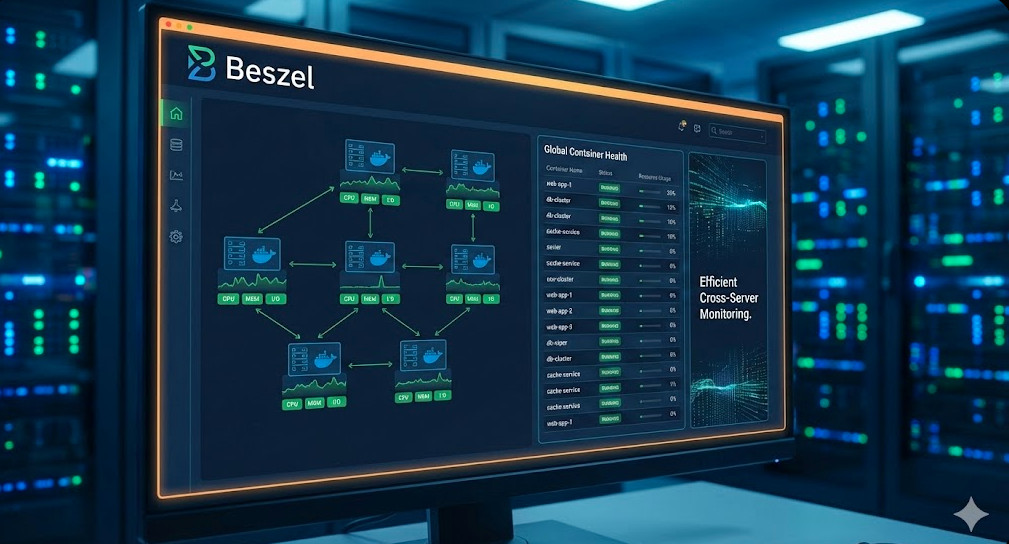
For further reading on Docker security, refer to the official Docker documentation: https://docs.docker.com/security/ and the OWASP Docker Security Guide: https://owasp.org/www-project-top-ten/OWASP_Top_Ten_2017/Top_10-2017_A10-Insufficient_Security_Software_Update_Management (Note: this link points to a relevant OWASP topic; a direct Docker security guide might not be available in one single link).

Top Docker Tools for Developers

Containerization has revolutionized software development, and Docker stands as a leading technology in this space. But mastering Docker isn’t just about understanding the core concepts; it’s about leveraging the powerful ecosystem of Docker tools for developers to streamline workflows, boost productivity, and enhance overall efficiency. This article explores essential tools that significantly improve the developer experience when working with Docker, addressing common challenges and offering practical solutions for various skill levels. We’ll cover tools that enhance image management, orchestration, security, and more, ultimately helping you become more proficient with Docker in your daily development tasks.

Essential Docker Tools for Developers: Image Management and Optimization

Efficient image management is crucial for any serious Docker workflow. Bulky images lead to slower builds and deployments. Several tools excel at streamlining this process.

Docker Compose: Orchestrating Multi-Container Applications

Docker Compose simplifies the definition and management of multi-container applications. It uses a YAML file (docker-compose.yml) to define services, networks, and volumes. This allows you to easily spin up and manage complex applications with interconnected containers.

  • Benefit: Simplifies application deployment and testing.
  • Example: A simple docker-compose.yml file for a web application:

version: "3.9"
services:
web:
image: nginx:latest
ports:
- "80:80"
depends_on:
- app
app:
build: ./app
ports:
- "3000:3000"

Docker Hub: The Central Repository for Docker Images

Docker Hub acts as a central repository for Docker images, both public and private. It allows you to easily share, discover, and download images from a vast community. Using Docker Hub ensures easy access to pre-built images, reducing the need to build everything from scratch.

  • Benefit: Access to pre-built images and collaborative image sharing.
  • Tip: Always check the image’s trustworthiness and security before pulling it from Docker Hub.

Kaniko: Building Container Images from a Dockerfile in Kubernetes

Kaniko is a tool that builds container images from a Dockerfile, without needing a Docker daemon running in the cluster. This is particularly valuable for building images in a Kubernetes environment where running a Docker daemon in every pod isn’t feasible or desirable.

  • Benefit: Secure and reliable image building within Kubernetes.
  • Use Case: CI/CD pipelines inside Kubernetes clusters.

Docker Tools for Developers: Security and Monitoring

Security and monitoring are paramount in production environments. The following tools enhance the security and observability of your Dockerized applications.

Clair: Vulnerability Scanning for Docker Images

Clair is a security tool that analyzes Docker images to identify known vulnerabilities in their base layers and dependencies. Early detection and mitigation of vulnerabilities significantly enhance the security posture of your applications.

  • Benefit: Proactive vulnerability identification in Docker images.
  • Integration: Easily integrates with CI/CD pipelines for automated security checks.

Dive: Analyzing Docker Images for Size Optimization

Dive is a command-line tool that allows you to inspect the layers of a Docker image, identifying opportunities to reduce its size. Smaller images mean faster downloads, deployments, and overall improved performance.

  • Benefit: Detailed analysis to optimize Docker image sizes.
  • Use Case: Reducing the size of large images to improve deployment speed.

Top Docker Tools for Developers: Orchestration and Management

Effective orchestration is essential for managing multiple containers in a distributed environment. The following tools facilitate this process.

Kubernetes: Orchestrating Containerized Applications at Scale

Kubernetes is a powerful container orchestration platform that automates deployment, scaling, and management of containerized applications across a cluster of machines. While not strictly a Docker tool, it’s a crucial component for managing Docker containers in production.

  • Benefit: Automated deployment, scaling, and management of containerized applications.
  • Complexity: Requires significant learning investment to master.

Portainer: A User-Friendly GUI for Docker Management

Portainer provides a user-friendly graphical interface (GUI) for managing Docker containers and swarms. It simplifies tasks like monitoring container status, managing volumes, and configuring networks, making it ideal for developers who prefer a visual approach to Docker management.

  • Benefit: Intuitive GUI for Docker management.
  • Use Case: Simplifying Docker management for developers less comfortable with the command line.

Docker Tools Developers Need: Advanced Techniques

For advanced users, these tools offer further control and automation.

BuildKit: A Next-Generation Build System for Docker

BuildKit is a next-generation build system that offers significant improvements over the classic `docker build` command. It supports features like caching, parallel builds, and improved build reproducibility, leading to faster build times and more robust build processes.

  • Benefit: Faster and more efficient Docker image builds.
  • Use Case: Enhancing CI/CD pipelines for improved build speed and reliability.

Skopeo: Inspecting and Copying Docker Images

Skopeo is a command-line tool for inspecting and copying Docker images between different registries and container runtimes. This is especially useful for managing images across multiple environments and integrating with different CI/CD systems.

  • Benefit: Transferring and managing Docker images across different environments.
  • Use Case: Migrating images between on-premise and cloud environments.

Frequently Asked Questions

What is the difference between Docker and Docker Compose?

Docker is a containerization technology that packages applications and their dependencies into isolated containers. Docker Compose is a tool that allows you to define and run multi-container applications using a YAML file. Essentially, Docker is the engine, and Docker Compose is a tool for managing multiple containers and their relationships within an application.

How do I choose the right Docker tools for my project?

The optimal selection of Docker tools for developers depends on your project’s specific requirements. For simple projects, Docker Compose and Docker Hub might suffice. For complex applications deployed in a Kubernetes environment, tools like Kaniko, Clair, and Kubernetes itself are essential. Consider factors like application complexity, security needs, and deployment environment when selecting tools.

Are these tools only for experienced developers?

While some tools like Kubernetes have a steeper learning curve, many others, including Docker Compose and Portainer, are accessible to developers of all experience levels. Start with the basics and gradually integrate more advanced tools as your project requirements grow and your Docker expertise increases.

How can I improve the security of my Docker images?

Employing tools like Clair for vulnerability scanning is crucial. Using minimal base images, regularly updating your images, and employing security best practices when building and deploying your applications are also paramount to improving the security posture of your Dockerized applications.

What are some best practices for using Docker tools?

Always use official images whenever possible, employ automated security checks in your CI/CD pipeline, optimize your images for size, leverage caching effectively, and use a well-structured and readable docker-compose.yml file for multi-container applications. Keep your images up-to-date with security patches.

Conclusion

Mastering the landscape of Docker tools for developers is vital for maximizing the benefits of containerization. This article covered a comprehensive range of tools addressing various stages of the development lifecycle, from image creation and optimization to orchestration and security. By strategically implementing the tools discussed here, you can significantly streamline your workflows, improve application security, and accelerate your development process. Remember to always prioritize security and choose the tools best suited to your specific project needs and expertise level to fully leverage the potential of Docker in your development process. Thank you for reading the DevopsRoles page!

Mastering Docker Swarm: A Beginner’s Guide to Container Orchestration

Containerization has revolutionized software development and deployment, and Docker has emerged as the leading platform for managing containers. However, managing numerous containers across multiple hosts can quickly become complex. This is where Docker Swarm, a native clustering solution for Docker, comes in. This in-depth guide will serve as your comprehensive resource for understanding and utilizing Docker Swarm, specifically tailored for the Docker Swarm beginner. We’ll cover everything from basic concepts to advanced techniques, empowering you to efficiently orchestrate your containerized applications.

Understanding Docker Swarm: A Swarm of Containers

Docker Swarm is a clustering and orchestration tool built directly into Docker Engine. Unlike other orchestration platforms like Kubernetes, it’s designed for simplicity and ease of use, making it an excellent choice for beginners. It allows you to turn a group of Docker hosts into a single, virtual Docker host, managing and scheduling containers across the cluster transparently. This significantly simplifies the process of scaling your applications and ensuring high availability.

Key Components of Docker Swarm

  • Manager Nodes: These nodes manage the cluster, scheduling tasks, and maintaining the overall state of the Swarm.
  • Worker Nodes: These nodes run the containers scheduled by the manager nodes.
  • Swarm Mode: This is the clustering mode enabled on Docker Engine to create and manage a Docker Swarm cluster.

Getting Started: Setting up Your First Docker Swarm Cluster

Before diving into complex configurations, let’s build a basic Docker Swarm cluster. This section will guide you through the process, step by step. We’ll assume you have Docker Engine installed on at least two machines (one manager and one worker, at minimum). You can even run both on a single machine for testing purposes, although this isn’t recommended for production environments.

Step 1: Initialize a Swarm on the Manager Node

On your designated manager node, execute the following command:

docker swarm init --advertise-addr 

Replace with the IP address of your manager node. The output will provide join commands for your worker nodes.

Step 2: Join Worker Nodes to the Swarm

On each worker node, execute the join command provided by the manager node in step 1. This command will typically look something like this:

docker swarm join --token  :

Replace with the token provided by the manager node, with the manager’s IP address, and with the manager’s port (usually 2377).

Step 3: Verify the Swarm Cluster

On the manager node, run docker node ls to verify that all nodes are correctly joined and functioning.

Deploying Your First Application with Docker Swarm: A Practical Example

Now that your Swarm is operational, let’s deploy a simple application. We’ll use a Nginx web server as an example. This will demonstrate the fundamental workflow of creating and deploying services in Docker Swarm for a Docker Swarm beginner.

Creating a Docker Compose File

First, create a file named docker-compose.yml with the following content:


version: "3.8"
services:
web:
image: nginx:latest
ports:
- "80:80"
deploy:
mode: replicated
replicas: 3

This file defines a service named “web” using the latest Nginx image. The deploy section specifies that three replicas of the service should be deployed across the Swarm. The ports section maps port 80 on the host machine to port 80 on the containers.

Deploying the Application

Navigate to the directory containing your docker-compose.yml file and execute the following command:

docker stack deploy -c docker-compose.yml my-web-app

This command deploys the stack named “my-web-app” based on the configuration in your docker-compose.yml file.

Scaling Your Application

To scale your application, simply run:

docker service scale my-web-app_web=5

This will increase the number of replicas to 5, distributing the load across your worker nodes.

Advanced Docker Swarm Concepts for the Ambitious Beginner

While the basics are crucial, understanding some advanced concepts will allow you to leverage the full potential of Docker Swarm. Let’s explore some of these.

Networks in Docker Swarm

Docker Swarm provides built-in networking capabilities, allowing services to communicate seamlessly within the Swarm. You can create overlay networks that span multiple nodes, simplifying inter-service communication.

Secrets Management

Securely managing sensitive information like passwords and API keys is vital. Docker Swarm offers features for securely storing and injecting secrets into your containers, enhancing the security of your applications. You can use the docker secret command to manage these.

Rolling Updates

Updating your application without downtime is crucial for a production environment. Docker Swarm supports rolling updates, allowing you to gradually update your services with minimal disruption. This process is managed through service updates and can be configured to control the update speed.

Docker Swarm vs. Kubernetes: Choosing the Right Tool

While both Docker Swarm and Kubernetes are container orchestration tools, they cater to different needs. Docker Swarm offers simplicity and ease of use, making it ideal for smaller projects and teams. Kubernetes, on the other hand, is more complex but provides greater scalability and advanced features. The best choice depends on your project’s scale, complexity, and your team’s expertise.

  • Docker Swarm: Easier to learn and use, simpler setup and management, suitable for smaller-scale deployments.
  • Kubernetes: More complex to learn and manage, highly scalable, offers advanced features like self-healing and sophisticated resource management, ideal for large-scale, complex deployments.

Frequently Asked Questions

Q1: Can I run Docker Swarm on a single machine?

Yes, you can run a Docker Swarm cluster on a single machine for testing and development purposes. However, this does not represent a production-ready setup. For production, you should utilize multiple machines to take advantage of Swarm’s inherent scalability and fault tolerance.

Q2: What are the benefits of using Docker Swarm over managing containers manually?

Docker Swarm provides numerous advantages, including automated deployment, scaling, and rolling updates, improved resource utilization, and enhanced high availability. Manually managing a large number of containers across multiple hosts is significantly more complex and error-prone. For a Docker Swarm beginner, this automation is key to simplified operations.

Q3: How do I monitor my Docker Swarm cluster?

Docker Swarm provides basic monitoring capabilities through the docker node ls and docker service ls commands. For more comprehensive monitoring, you can integrate Docker Swarm with tools like Prometheus and Grafana, providing detailed metrics and visualizations of your cluster’s health and performance.

Q4: Is Docker Swarm suitable for production environments?

While Docker Swarm is capable of handling production workloads, its features are less extensive than Kubernetes. For complex, highly scalable production environments, Kubernetes might be a more suitable choice. However, for many smaller- to medium-sized production applications, Docker Swarm provides a robust and efficient solution.

Conclusion

This guide has provided a thorough introduction to Docker Swarm, equipping you with the knowledge to effectively manage and orchestrate your containerized applications. From setting up your first cluster to deploying and scaling applications, you now possess the foundation for utilizing this powerful tool. Remember, starting with a small, manageable cluster and gradually expanding your knowledge and skills is the key to mastering Docker Swarm. As a Docker Swarm beginner, don’t be afraid to experiment and explore the various features and configurations available. Understanding the core principles will allow you to build and maintain robust and scalable applications within your Docker Swarm environment. For more advanced topics and deeper dives into specific areas, consult the official Docker documentation.https://docs.docker.com/engine/swarm/ and other reliable sources like the Docker website. Thank you for reading the DevopsRoles page!