Table of Contents
Kubernetes for Platform Teams: Mastering Efficiency with k0s and k0rdent
The operational complexity of Kubernetes (K8s) has reached an inflection point. While K8s provides unparalleled portability and scalability, managing a production-grade cluster often requires significant overhead. For Kubernetes platform teams, this overhead translates directly into slower feature velocity and increased operational toil.
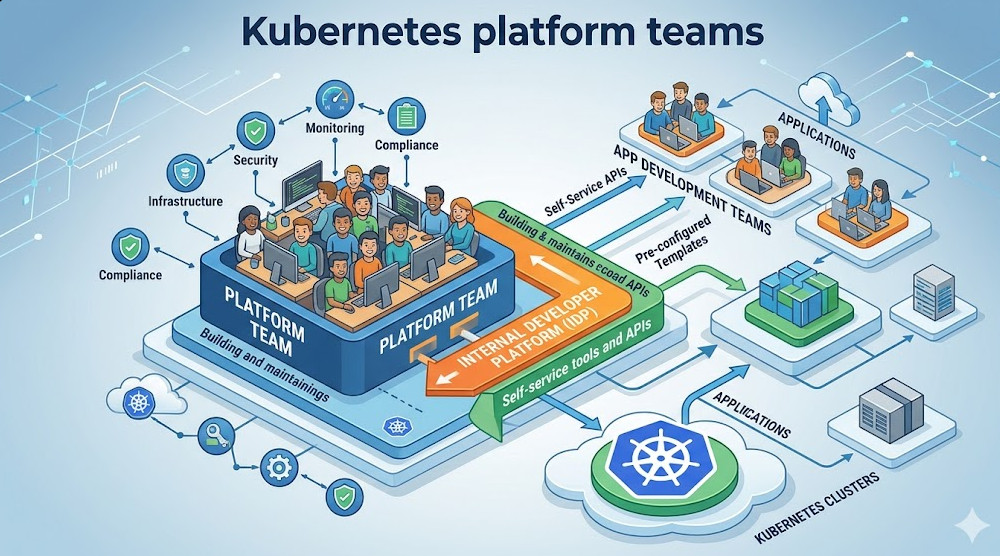
Platform teams are the critical layer between raw infrastructure and application development. Your mandate is to abstract away complexity, providing developers with self-service, opinionated, and secure environments.
This deep dive explores a powerful, modern stack designed specifically for this challenge: leveraging k0s for lightweight, robust cluster deployment, and k0rdent for declarative, GitOps-driven policy enforcement. We will show you how this combination allows Kubernetes platform teams to achieve unprecedented levels of efficiency and reliability.
Phase 1: Core Architecture and Conceptual Advantages
Before diving into implementation, it is crucial to understand why this specific stack is superior for modern platform engineering. The core problem with traditional K8s deployments is the sheer size and dependency graph of the control plane components.
The k0s Advantage: Lightweight Control Planes
k0s is a minimal, battle-tested Kubernetes distribution. It drastically reduces the attack surface and the operational footprint compared to vanilla Kubeadm setups. For platform teams, this means faster provisioning and less surface area to patch and maintain.
k0s achieves this by implementing a highly optimized control plane that focuses only on the necessary components. This lightweight nature is perfect for building a robust, multi-tenant platform without the bloat.
k0rdent: Policy as Code for Platform Governance
While k0s handles the deployment, k0rdent handles the governance. It is a specialized GitOps tool designed to enforce policies and manage cluster state declaratively.
In a platform context, governance means ensuring that every deployed workload adheres to security standards, resource quotas, and architectural best practices—all without manual intervention. k0rdent allows you to define these rules using Custom Resource Definitions (CRDs), treating policy itself as code.
The Combined Architecture
The synergy between these two tools forms a cohesive platform architecture:
- Bootstrap: k0s rapidly provisions the base cluster infrastructure.
- Policy Definition: Platform engineers define desired states (e.g., “All deployments must use a specific Service Mesh,” or “No container can run as root”) in Git.
- Enforcement: k0rdent monitors the cluster state against the Git repository, automatically reconciling any drift or non-compliant resource.
This shift moves the Kubernetes platform teams from reactive firefighting to proactive, declarative infrastructure management.
💡 Pro Tip: When designing your platform, always model the cluster as a set of immutable, version-controlled resources. By adopting this mindset, you treat infrastructure components (like networking policies or RBAC roles) with the same rigor as application code.
Phase 2: Practical Implementation Walkthrough
Implementing this stack requires a structured approach, starting with the foundation and building up the governance layer.
Step 1: Deploying the k0s Control Plane
The initial step is deploying k0s onto your primary control plane nodes. We recommend using the installer script for simplicity and reliability.
# Install k0s on the control plane node
curl -L https://k0s.io | bash

# Verify the cluster status
kubectl get nodes
Once k0s is running, you have a stable, minimal Kubernetes API endpoint ready to accept workloads.
Step 2: Integrating k0rdent for GitOps
Next, we introduce k0rdent. This involves setting up a dedicated Git repository that will serve as the single source of truth for all cluster policies and desired states.
You must install the k0rdent operator onto the cluster. This operator watches for specific resources and applies the defined policies.
# Example: Applying the k0rdent operator via Helm
helm install k0rdent argo-k0rdent/k0rdent \
  --namespace policy-system \
  --set replicaCount=1
Step 3: Defining a Policy (Example: Mandatory Resource Limits)
A core function of a platform team is resource management. We will enforce that every deployed workload must specify CPU and memory limits.
This policy is defined in YAML and committed to your GitOps repository. k0rdent will then ensure that any resource created without these limits is either rejected or automatically patched.
# policy-manifest.yaml (Committed to Git)
apiVersion: k0rdent.io/v1alpha1
kind: Policy
metadata:
  name: mandatory-resource-limits
spec:
  target: Deployment
  enforcement:
    field: resources
    required_fields: [requests.cpu, limits.cpu, requests.memory, limits.memory]
    action: warn # Start with warn, then move to deny
By committing this file, k0rdent detects the change and begins enforcing the policy across the cluster, significantly improving the reliability of Kubernetes platform teams.
This process of defining policy in code and letting the system reconcile the state is the essence of modern, resilient platform engineering. For more details on advanced cluster management, you can read the full article on the CNCF blog.
Phase 3: Senior-Level Best Practices and Scaling
Achieving stability with k0s and k0rdent is only the baseline. Senior platform engineers must consider security, observability, and multi-tenancy at scale.
1. Advanced Security Posture: Network Policies and RBAC
Security must be baked into the platform layer, not bolted on.
- Network Policies: Use k0rdent to mandate the deployment of NetworkPolicies for every namespace. This implements a zero-trust model by default.
- RBAC Granularity: Instead of granting broad cluster roles, use k0rdent to enforce strict Role-Based Access Control (RBAC) definitions, ensuring developers only interact with resources within their designated namespace.
A common mistake is allowing developers to manage their own service accounts. A platform team must intervene and enforce the use of specific, limited-scope service accounts.
2. Observability and Metrics Integration
A platform is only as good as its visibility. Integrate observability tools declaratively.
Use k0rdent to enforce the presence of ServiceMonitor resources for every application namespace. This ensures that Prometheus and Grafana automatically discover and scrape metrics endpoints, providing immediate visibility into resource utilization and performance degradation.
3. Multi-Tenancy and Namespace Isolation
When managing multiple teams, strict isolation is paramount.
- Resource Quotas: Enforce ResourceQuotas via k0rdent to prevent any single team from monopolizing cluster resources (CPU, memory, storage).
- Namespaces: Use dedicated namespaces for every team or environment (dev, staging, prod). This logical separation, enforced by policy, is crucial for governance.
💡 Pro Tip: Consider implementing a dedicated Admission Controller Webhook (like an external policy engine) that k0rdent can reference. This allows you to enforce complex, multi-resource validation logic that simple CRDs cannot handle, such as ensuring that a new Deployment must also create a corresponding Ingress resource.
Troubleshooting Common Platform Failures
If a deployment fails, the platform team needs to know why—was it a resource constraint, a policy violation, or a network issue?
- Check Policy Drift: Always check the k0rdent logs first. If the desired state in Git differs from the actual cluster state, k0rdent will report a reconciliation failure.
- Resource Exhaustion: If the error is generic, check the
ResourceQuotastatus in the affected namespace. - Networking: If the pod cannot communicate, check the NetworkPolicy logs. A default deny policy is often the culprit.
This robust, declarative approach to platform management is what elevates Kubernetes platform teams from mere operators to true engineering enablers. Understanding these architectural patterns is key to mastering the modern cloud-native landscape. For career guidance on these roles, check out resources at https://www.devopsroles.com/.
By combining the lightweight power of k0s with the declarative governance of k0rdent, Kubernetes platform teams can build highly resilient, scalable, and secure environments that accelerate development velocity while maintaining enterprise-grade control. Thank you for reading the DevopsRoles page!