Tag Archives: AIOps

Top 10 AIOps Tools to Boost Your IT Operations Efficiency

Introduction

In today’s rapidly evolving digital landscape, businesses are increasingly relying on artificial intelligence for IT operations, commonly known as AIOps. These tools leverage machine learning and big data to automate and enhance IT operations, significantly improving efficiency and reducing downtime.

In this article, we will explore the Top 10 AIOps Tools to Boost Your IT Operations Efficiency. These tools are designed to help you manage and optimize your IT infrastructure, ensuring smooth and effective operations.

What is AIOps?

Understanding AIOps

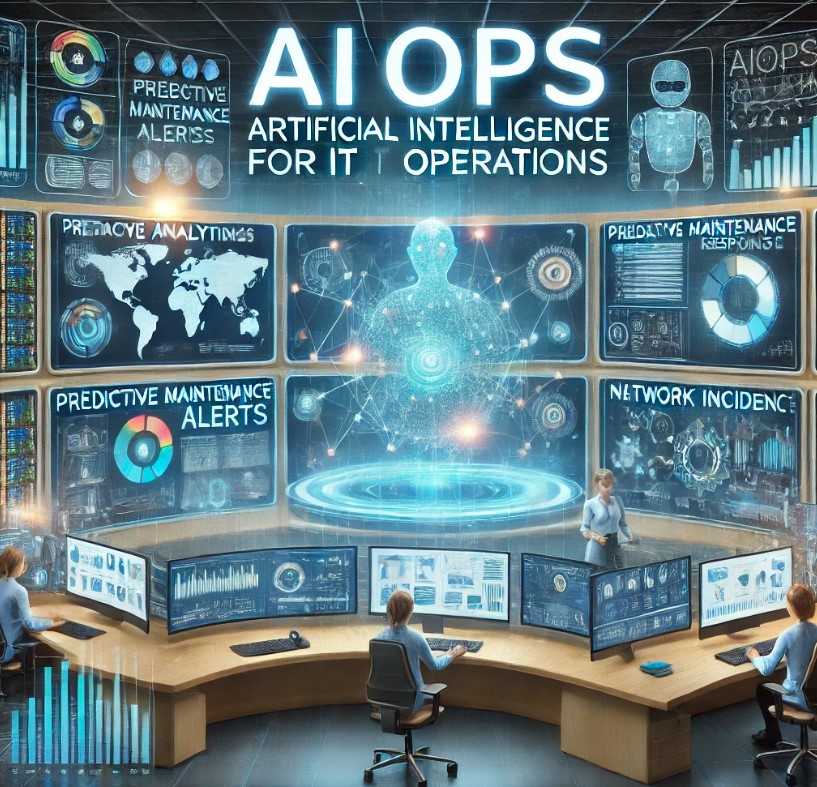
AIOps, or Artificial Intelligence for IT Operations, is a modern approach that uses AI technologies to automate and enhance IT operations. It integrates big data, machine learning, and other advanced analytics to monitor, analyze, and optimize IT systems. The primary goal of AIOps is to automate repetitive tasks, identify issues before they cause significant problems, and provide actionable insights for IT teams.

Benefits of AIOps

  • Enhanced Efficiency: Automates routine tasks, freeing up IT staff for more strategic activities.
  • Improved Accuracy: Reduces human error by leveraging machine learning and analytics.
  • Proactive Issue Resolution: Identifies and resolves issues before they impact business operations.
  • Cost Savings: Optimizes resource usage, reducing operational costs.
  • Scalability: Easily adapts to growing IT infrastructure and increasing data volumes.

Top 10 AIOps Tools to Boost Your IT Operations Efficiency

1. Splunk

Why Splunk?

Splunk is a powerful AIOps tool that provides real-time insights and operational intelligence. It helps IT teams monitor, search, analyze, and visualize machine-generated data.

Key Features

  • Real-time Monitoring: Provides instant visibility into IT operations.
  • Advanced Analytics: Utilizes machine learning to detect anomalies and predict issues.
  • Custom Dashboards: Allows users to create personalized dashboards for specific needs.
  • Integration: Seamlessly integrates with various IT systems and applications.

2. Moogsoft

Why Moogsoft?

Moogsoft uses AI and machine learning to provide comprehensive IT incident management. It helps reduce noise, correlate alerts, and automate incident responses.

Key Features

  • Noise Reduction: Filters out irrelevant alerts, focusing on critical issues.
  • Event Correlation: Connects related alerts to provide a holistic view of incidents.
  • Automated Remediation: Suggests and implements solutions for common issues.
  • Collaboration: Facilitates communication and collaboration among IT teams.

3. Dynatrace

Why Dynatrace?

Dynatrace offers a unified platform for monitoring and optimizing IT operations. It uses AI to deliver precise answers and actionable insights for performance improvement.

Key Features

  • Full-stack Monitoring: Covers applications, infrastructure, and user experience.
  • AI-powered Insights: Provides root cause analysis and anomaly detection.
  • Automatic Discovery: Identifies and maps IT components automatically.
  • Scalability: Supports large-scale IT environments.

4. AppDynamics

Why AppDynamics?

AppDynamics, a part of Cisco, offers application performance management and AIOps solutions. It helps businesses ensure optimal performance and user experience.

Key Features

  • End-to-end Visibility: Monitors the entire application lifecycle.
  • Business Insights: Connects IT performance with business outcomes.
  • Machine Learning: Predicts and prevents performance issues.
  • Customizable Alerts: Configures alerts based on specific thresholds and conditions.

5. BigPanda

Why BigPanda?

BigPanda uses machine learning to automate incident management and improve IT operations. It consolidates alerts and provides actionable insights for faster resolution.

Key Features

  • Alert Correlation: Groups related alerts to reduce noise.
  • Root Cause Analysis: Identifies the underlying causes of issues.
  • Automated Workflows: Streamlines incident response processes.
  • Integration: Works with a wide range of IT tools and platforms.

6. IBM Watson AIOps

Why IBM Watson AIOps?

IBM Watson AIOps leverages AI to provide intelligent automation and insights for IT operations. It helps organizations manage complex environments and ensure high availability.

Key Features

  • AI-driven Insights: Uses advanced analytics to detect and resolve issues.
  • Automation: Automates routine tasks and incident responses.
  • Predictive Maintenance: Anticipates and prevents potential problems.
  • Scalability: Supports large, distributed IT environments.

7. BMC Helix

Why BMC Helix?

BMC Helix offers an AI-powered ITSM (IT Service Management) and AIOps platform. It enhances service delivery and operational efficiency through intelligent automation.

Key Features

  • Cognitive Automation: Uses AI to automate IT service management tasks.
  • Proactive Monitoring: Identifies and addresses issues before they impact users.
  • Unified Platform: Combines ITSM and AIOps capabilities in a single solution.
  • Integration: Integrates with various IT tools and systems.

8. OpsRamp

Why OpsRamp?

OpsRamp provides a comprehensive IT operations management platform with AIOps capabilities. It helps businesses manage hybrid IT environments and optimize performance.

Key Features

  • Unified Monitoring: Covers infrastructure, applications, and services.
  • AI-driven Insights: Detects anomalies and predicts issues.
  • Automated Remediation: Implements solutions automatically based on predefined policies.
  • Hybrid IT Support: Manages on-premises and cloud environments.

9. PagerDuty

Why PagerDuty?

PagerDuty offers a real-time operations platform that uses AIOps to enhance incident response and resolution. It helps IT teams minimize downtime and improve service reliability.

Key Features

  • Real-time Alerts: Provides instant notifications for critical incidents.
  • Intelligent Triage: Prioritizes alerts based on severity and impact.
  • Automated Resolution: Suggests and executes remediation steps.
  • Collaboration: Facilitates communication and coordination among team members.

10. ScienceLogic

Why ScienceLogic?

ScienceLogic delivers a comprehensive AIOps platform for monitoring and managing IT operations. It provides deep visibility and actionable insights to improve efficiency.

Key Features

  • Full-stack Visibility: Monitors the entire IT infrastructure.
  • AI-powered Analytics: Identifies patterns and predicts issues.
  • Automated Workflows: Streamlines IT operations with intelligent automation.
  • Integration: Works with various IT systems and applications.

FAQs about AIOps Tools

What are AIOps tools?

AIOps tools are software solutions that use artificial intelligence and machine learning to automate and enhance IT operations. They help in monitoring, analyzing, and optimizing IT infrastructure to improve efficiency and reduce downtime.

How do AIOps tools improve IT operations?

AIOps tools improve IT operations by automating routine tasks, providing real-time insights, detecting anomalies, predicting issues, and suggesting or implementing remediation steps. This reduces human error, enhances efficiency, and ensures smooth IT operations.

Can small businesses benefit from AIOps tools?

Yes, small businesses can benefit from AIOps tools. These tools help small businesses manage their IT infrastructure more efficiently, reduce operational costs, and ensure high availability and performance, allowing them to compete more effectively.

What factors should be considered when choosing an AIOps tool?

When choosing an AIOps tool, consider factors such as the specific needs of your IT environment, ease of integration with existing systems, scalability, user-friendliness, and the level of automation and intelligence offered by the tool.

Conclusion

Incorporating AIOps tools into your IT operations can significantly enhance efficiency, reduce downtime, and ensure seamless business processes. The Top 10 AIOps Tools to Boost Your IT Operations Efficiency highlighted in this article offer a range of features and capabilities to meet diverse IT needs. By leveraging these tools, businesses can achieve higher operational efficiency, improved accuracy, and proactive issue resolution, ultimately leading to better performance and customer satisfaction.

Embrace the power of AIOps and transform your IT operations today! Thank you for reading the DevopsRoles page!

Exploring Generative AI in AIOps Use Cases: Revolutionizing IT Operations

Introduction

In today’s rapidly evolving technological landscape, IT operations must keep pace with increasing demands for efficiency, speed, and reliability. One transformative approach to achieving these goals is through the integration of Generative AI in AIOps. By leveraging the power of artificial intelligence, organizations can streamline processes, reduce downtime, and enhance overall performance.

This article delves into Generative AI in AIOps use cases, exploring its various applications, benefits, and future potential.

Understanding Generative AI in AIOps

What is Generative AI?

Generative AI refers to algorithms that can create new content, such as text, images, or even code, by learning from existing data. Unlike traditional AI, which follows predefined rules, generative AI models can generate novel outputs, making them highly versatile and valuable in various domains.

What is AIOps?

AIOps, or Artificial Intelligence for IT Operations, is a set of tools and practices that apply AI and machine learning to automate and enhance IT operations. AIOps platforms analyze large volumes of data to identify patterns, predict issues, and provide actionable insights, ultimately improving efficiency and reducing manual intervention.

How Does Generative AI Enhance AIOps?

By integrating generative AI with AIOps, organizations can achieve unprecedented levels of automation and innovation. Generative AI can create scripts, generate reports, and even develop new algorithms, all of which contribute to more efficient and effective IT operations.

Key Generative AI in AIOps Use Cases

Automating Incident Response

One of the most significant Generative AI in AIOps use cases is automating incident response. Generative AI can analyze historical incident data to predict potential issues and generate automated responses, significantly reducing the time and effort required to resolve problems.

Benefits of Automated Incident Response

  • Faster Resolution Times: Automated responses lead to quicker issue resolution.
  • Reduced Manual Effort: IT teams can focus on more strategic tasks.
  • Improved Reliability: Consistent and accurate responses enhance system stability.

Enhancing Predictive Maintenance

Predictive maintenance is another critical Generative AI in AIOps use cases. By analyzing equipment data, generative AI can predict when maintenance is needed, preventing unexpected downtime and extending the lifespan of IT assets.

How Predictive Maintenance Works

  1. Data Collection: Sensors and monitoring tools gather data on equipment performance.
  2. Data Analysis: Generative AI models analyze the data to identify patterns and predict failures.
  3. Maintenance Scheduling: The system schedules maintenance activities based on predictions.

Optimizing Resource Allocation

Generative AI can optimize resource allocation by analyzing usage patterns and predicting future demands. This capability ensures that resources are allocated efficiently, reducing costs and improving performance.

Key Areas of Resource Optimization

  • Server Utilization: Predicting server load and adjusting capacity accordingly.
  • Storage Management: Allocating storage resources based on usage trends.
  • Network Bandwidth: Ensuring optimal bandwidth allocation to prevent bottlenecks.

Improving Security Posture

Security is a paramount concern for IT operations. Generative AI can enhance security by identifying vulnerabilities, generating security patches, and simulating potential attack scenarios.

Security Applications of Generative AI

  • Vulnerability Detection: Identifying and addressing security gaps.
  • Patch Generation: Automatically creating and deploying security patches.
  • Attack Simulation: Testing systems against potential threats to improve defenses.

Future Trends in Generative AI in AIOps Use Cases

Integrating with IoT

The Internet of Things (IoT) is expanding rapidly, and integrating generative AI with IoT devices can lead to more intelligent and responsive systems. For instance, generative AI can analyze IoT data to optimize operations in real time.

Advancements in AI Models

As AI models become more advanced, their applications in AIOps will continue to grow. Future generative AI models will be more accurate, efficient, and capable of handling complex tasks.

Increasing Adoption Across Industries

The adoption of generative AI in AIOps is not limited to the tech industry. Sectors such as healthcare, finance, and manufacturing are also beginning to leverage AI to enhance their operations.

FAQs

  • What are the main benefits of using Generative AI in AIOps? The main benefits include faster incident resolution, predictive maintenance, optimized resource allocation, and improved security.
  • How does Generative AI predict maintenance needs? Generative AI analyzes equipment data to identify patterns and predict potential failures, allowing for proactive maintenance scheduling.
  • Can Generative AI improve IT security? Yes, Generative AI can identify vulnerabilities, generate security patches, and simulate attacks to improve security defenses.
  • What future trends can we expect in Generative AI for AIOps? Future trends include integration with IoT, advancements in AI models, and increased adoption across various industries.

Conclusion

The integration of Generative AI in AIOps is revolutionizing IT operations, offering numerous benefits such as automated incident response, predictive maintenance, optimized resource allocation, and enhanced security.

As AI technology continues to advance, its applications in AIOps will only grow, leading to more efficient, reliable, and innovative IT systems. By embracing Generative AI in AIOps use cases, organizations can stay ahead of the curve and ensure their IT operations are equipped to meet future challenges. Thank you for reading the DevopsRoles page!