Tag Archives: MLOps

How This Company Transformed Their ML Workflow with MLOps

Introduction

Machine learning (ML) has become a cornerstone for businesses looking to harness data-driven insights. However, managing ML workflows can be challenging, requiring robust systems to handle data pipelines, model training, deployment, and monitoring. This case study explores how one company successfully transformed their ML Workflow with MLOps, achieving significant improvements in efficiency and scalability.

Understanding MLOps

What is MLOps?

MLOps, or Machine Learning Operations, is the practice of combining machine learning development and operations (DevOps) to automate and streamline the end-to-end ML lifecycle. This includes data preprocessing, model training, deployment, monitoring, and management.

Benefits of MLOps

  • Scalability: Easily scale ML models and workflows to handle large datasets and complex algorithms.
  • Efficiency: Automate repetitive tasks, reducing the time and effort required for model development and deployment.
  • Consistency: Ensure consistent and reproducible results across different environments and team members.
  • Collaboration: Foster better collaboration between data scientists, ML engineers, and operations teams.

Company Background

The company in focus is a global leader in the e-commerce industry, dealing with millions of transactions daily. With a dedicated team of data scientists and engineers, they aimed to enhance their ML workflow to handle growing data volumes and complex models.

The Challenge

Initial Workflow Issues

  • Manual Processes: The company relied heavily on manual processes for data preprocessing, model training, and deployment, leading to inefficiencies.
  • Lack of Automation: The absence of automated pipelines resulted in longer development cycles and delayed deployment.
  • Scalability Concerns: Handling large datasets and complex models was becoming increasingly difficult, affecting model performance and accuracy.

The Transformation with MLOps

Step 1: Establishing Data Pipelines

The first step was to automate data preprocessing and feature engineering using robust data pipelines.

Tools and Technologies

  • Apache Airflow: For orchestrating complex data workflows.
  • Kubernetes: To manage containerized data processing tasks.

Benefits

  • Automated Data Ingestion: Streamlined data ingestion from various sources.
  • Consistent Data Processing: Ensured consistent preprocessing and feature engineering across all datasets.

Step 2: Automating Model Training

The next phase involved automating model training to reduce manual intervention and accelerate the training process.

Tools and Technologies

  • Kubeflow: For managing ML workflows on Kubernetes.
  • TensorFlow Extended (TFX): To build scalable and reproducible ML pipelines.

Benefits

  • Automated Training Pipelines: Enabled automated model training and hyperparameter tuning.
  • Reduced Development Time: Significantly decreased the time required to train and validate models.

Step 3: Streamlining Model Deployment

The company then focused on automating the deployment process to ensure models were deployed quickly and reliably.

Tools and Technologies

  • MLflow: For managing the entire ML lifecycle, including experiment tracking and model registry.
  • Docker: To containerize ML models for consistent deployment across different environments.

Benefits

  • Continuous Deployment: Enabled continuous integration and deployment of ML models.
  • Improved Reliability: Ensured models were deployed consistently with minimal downtime.

Step 4: Monitoring and Maintenance

Monitoring model performance and maintaining models in production was the final step in their MLOps transformation.

Tools and Technologies

  • Prometheus and Grafana: For monitoring model performance and system metrics.
  • Alerting Systems: To detect and respond to anomalies in real-time.

Benefits

  • Real-time Monitoring: Provided real-time insights into model performance and health.
  • Proactive Maintenance: Enabled proactive identification and resolution of issues.

Results and Impact

Enhanced Productivity

The automation of data pipelines, model training, and deployment led to a significant increase in productivity. Data scientists could focus more on developing innovative models rather than managing workflows.

Scalability Achieved

The company successfully scaled their ML workflows to handle larger datasets and more complex models, improving the overall performance and accuracy of their ML solutions.

Consistent and Reliable Deployments

Automated deployment pipelines ensured that models were consistently and reliably deployed, reducing downtime and improving the reliability of ML applications.

Improved Collaboration

Better collaboration between data scientists, ML engineers, and operations teams was achieved, leading to more cohesive and efficient ML development cycles.

Frequently Asked Questions

What are the main components of MLOps?

The main components of MLOps include automated data pipelines, model training, deployment, monitoring, and maintenance.

How does MLOps improve scalability?

MLOps improves scalability by automating workflows and using scalable technologies like Kubernetes and Apache Airflow to handle large datasets and complex models.

What tools are commonly used in MLOps?

Common tools include Apache Airflow, Kubeflow, TensorFlow Extended (TFX), MLflow, Docker, Prometheus, and Grafana.

Can MLOps be applied to any industry?

Yes, MLOps can be applied to any industry that leverages machine learning, including finance, healthcare, retail, and more.

How long does it take to implement MLOps?

The implementation timeline for MLOps varies based on the complexity of the existing ML workflows and the level of automation desired. It can take from a few months to over a year.

Conclusion ML Workflow with MLOps

The transformation of this company’s ML workflow using MLOps demonstrates the immense benefits of adopting automated and scalable ML practices. By streamlining data pipelines, automating model training and deployment, and implementing robust monitoring systems, the company achieved significant improvements in productivity, scalability, and model performance. This case study highlights the potential of MLOps to revolutionize ML workflows and drive business success. Thank you for reading the DevopsRoles page!

The Best MLOps Strategies for Small Businesses

Introduction

In today’s data-driven world, small businesses increasingly recognize the value of leveraging machine learning (ML) to drive growth and innovation. However, implementing and managing ML models can be challenging without the right strategies and tools. This is where MLOps (Machine Learning Operations) comes into play. MLOps is the practice of combining ML system development and operations to streamline the deployment and maintenance of machine learning models. This article will explore the best MLOps strategies for small businesses, providing practical examples from basic to advanced.

Understanding MLOps

What is MLOps?

MLOps is a set of practices that aim to deploy and maintain machine learning models in production reliably and efficiently. It bridges the gap between data science and operations, ensuring seamless integration and continuous delivery of ML models.

Why is MLOps Important for Small Businesses?

For small businesses, MLOps offers several benefits, including:

  • Enhanced Collaboration: Facilitates better communication between data scientists and IT operations.
  • Efficiency: Automates repetitive tasks, allowing teams to focus on high-value activities.
  • Scalability: Ensures that ML models can scale with business growth.
  • Reliability: Reduces the risk of model failures and improves overall system reliability.

Basic MLOps Strategies for Small Businesses

Start with Clear Objectives

Before diving into MLOps, it’s crucial to define clear objectives. What are the specific problems you want to solve with ML? Having well-defined goals will guide your strategy and ensure alignment with business needs.

Leverage Open-Source Tools

For small businesses with limited budgets, open-source tools provide a cost-effective way to implement MLOps. Some popular options include:

  • TensorFlow Extended (TFX): An end-to-end platform for deploying production ML pipelines.
  • Kubeflow: A Kubernetes-based platform for deploying, scaling, and managing ML workflows.
  • MLflow: An open-source platform for managing the ML lifecycle, including experimentation, reproducibility, and deployment.

Implement Version Control for Data and Models

Just as software development benefits from version control, so does ML development. Use tools like Git to version your code, and consider specialized tools like DVC (Data Version Control) for versioning data and models. This practice ensures reproducibility and facilitates collaboration.

Intermediate MLOps Strategies

Automate Model Training and Deployment

Automation is a core principle of MLOps. Implementing CI/CD (Continuous Integration/Continuous Deployment) pipelines can streamline the process of training and deploying ML models. Popular CI/CD tools for MLOps include Jenkins, GitLab CI, and CircleCI.

Steps to Automate Model Training and Deployment

  1. Set Up a CI/CD Pipeline: Define the stages of your pipeline, including data preprocessing, model training, and deployment.
  2. Use Automated Testing: Ensure your models are rigorously tested before deployment.
  3. Monitor the Pipeline: Continuously monitor the pipeline to detect and address issues promptly.

Use Containerization for Portability

Containers, such as Docker, provide a lightweight and consistent environment for running ML models. Containerization ensures that models run the same way in development, testing, and production environments, reducing deployment issues.

Benefits of Containerization

  • Consistency: Ensures the same environment across different stages of the ML lifecycle.
  • Portability: Easily move containers between different platforms and environments.
  • Scalability: Simplifies scaling ML models across multiple servers.

Advanced MLOps Strategies

Implement Advanced Monitoring and Logging

Monitoring and logging are critical for maintaining ML model performance. Implementing advanced monitoring solutions can help detect anomalies, track model performance, and provide insights into model behavior.

Key Metrics to Monitor

  • Accuracy: Measure the correctness of your model’s predictions.
  • Latency: Track the time it takes for your model to make predictions.
  • Resource Utilization: Monitor CPU, GPU, and memory usage to ensure efficient resource management.

Adopt a Model Governance Framework

Model governance involves the policies and procedures that ensure ML models are used responsibly and ethically. It includes aspects like model validation, fairness, and compliance with regulations.

Components of a Model Governance Framework

  • Model Validation: Regularly validate models to ensure they meet performance standards.
  • Fairness: Assess models for biases and ensure they provide fair outcomes.
  • Compliance: Ensure models comply with relevant regulations and industry standards.

Frequently Asked Questions

What is the main goal of MLOps?

The main goal of MLOps is to streamline and automate the deployment and maintenance of ML models in production, ensuring they are reliable, efficient, and scalable.

How can small businesses benefit from MLOps?

Small businesses can benefit from MLOps by enhancing collaboration between data science and IT teams, improving efficiency through automation, ensuring scalability of ML models, and increasing the reliability of their systems.

What are some popular tools for MLOps?

Popular tools for MLOps include TensorFlow Extended (TFX), Kubeflow, MLflow, Jenkins, GitLab CI, CircleCI, and Docker.

Why is version control important in MLOps?

Version control is important in MLOps because it ensures reproducibility, facilitates collaboration, and helps track changes in code, data, and models, reducing the risk of errors and improving the overall quality of ML projects.

How does containerization help in MLOps?

Containerization helps in MLOps by providing a consistent and portable environment for running ML models, reducing deployment issues, and simplifying the scaling of models across multiple servers.

Conclusion

Implementing the best MLOps strategies can significantly enhance the efficiency, reliability, and scalability of machine learning initiatives in small businesses. From leveraging open-source tools and automating model deployment to advanced monitoring and model governance, these strategies provide a comprehensive approach to managing the ML lifecycle. By adopting these practices, small businesses can unlock the full potential of their data and drive innovation in their operations.

Embracing MLOps is not just about technology; it’s about fostering a culture of collaboration and continuous improvement. Start with clear objectives, utilize the right tools, and continuously monitor and optimize your processes. With these strategies, small businesses can achieve remarkable success in their machine-learning endeavors. Thank you for reading the DevopsRoles page!
How MLOps Can Help You Achieve Continuous Delivery in ML

Introduction

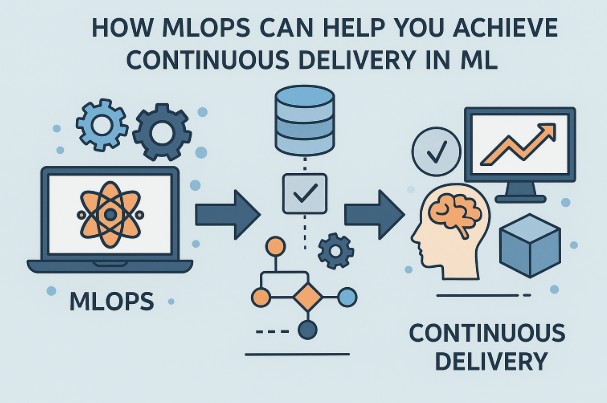
In the rapidly evolving world of machine learning (ML), the ability to continuously deliver high-quality models is crucial for staying competitive. MLOps, a combination of machine learning and DevOps practices, provides a framework for automating and streamlining the deployment, monitoring, and management of ML models. This article explores how MLOps can help you achieve continuous delivery in ML, from basic concepts to advanced strategies.

What is MLOps?

MLOps, short for Machine Learning Operations, is the practice of collaboration and communication between data scientists and operations professionals to manage the lifecycle of machine learning models. It integrates DevOps principles with ML systems to automate the process of deploying and maintaining models in production.

Key Components of MLOps

  • Version Control: Keeping track of changes to code and models.
  • CI/CD Pipelines: Automating the build, test, and deployment process.
  • Monitoring: Continuously tracking model performance and data drift.
  • Automation: Reducing manual intervention through automated workflows.

Why is Continuous Delivery Important in ML?

Continuous delivery (CD) ensures that software and ML models can be reliably released at any time. It allows organizations to respond quickly to changing market demands, improves collaboration between teams, and ensures higher-quality products.

Benefits of Continuous Delivery in ML

  • Faster Time to Market: Rapid iteration and deployment of models.
  • Improved Collaboration: Better communication between data scientists, engineers, and stakeholders.
  • Higher Quality: Early detection of issues through automated testing.
  • Scalability: Easier to manage and scale ML workflows.

Implementing MLOps for Continuous Delivery

Step 1: Establish a Version Control System

A robust version control system (VCS) is essential for managing changes to code and models. Git is a popular choice for its widespread use and integration capabilities.

Best Practices for Version Control in ML

  • Branching Strategies: Use feature branches to develop new models.
  • Commit Frequency: Commit changes frequently to avoid large, complex merges.
  • Tagging Releases: Use tags to mark specific releases for easier rollback if needed.

Step 2: Set Up CI/CD Pipelines

Continuous Integration (CI) and Continuous Deployment (CD) pipelines automate the process of building, testing, and deploying ML models.

Building CI/CD Pipelines

  • Automated Testing: Integrate unit tests, integration tests, and model validation tests.
  • Environment Management: Use containerization (e.g., Docker) to ensure consistency across environments.
  • Orchestration Tools: Utilize tools like Jenkins, GitLab CI, or CircleCI for pipeline automation.

Step 3: Monitor Model Performance

Monitoring is critical to ensure that models perform as expected and adapt to changing data patterns.

Techniques for Monitoring

  • Performance Metrics: Track metrics such as accuracy, precision, recall, and F1 score.
  • Data Drift Detection: Identify shifts in data distribution that may impact model performance.
  • Alerting Systems: Set up alerts for significant deviations in performance.

Step 4: Automate Workflows

Automation reduces the need for manual intervention, ensuring faster and more reliable deployment processes.

Automation Strategies

  • Hyperparameter Tuning: Use automated tools like Optuna or Hyperopt to optimize model parameters.
  • Model Retraining: Set up automated retraining schedules based on new data availability.
  • Deployment Automation: Utilize tools like Kubernetes for scalable and automated model deployment.

Advanced Strategies for MLOps

A/B Testing for Model Validation

A/B testing allows you to compare different versions of models to determine which performs better in production.

Implementing A/B Testing

  • Traffic Splitting: Divide traffic between multiple model versions.
  • Statistical Analysis: Use statistical methods to compare performance metrics.
  • Feedback Loops: Incorporate user feedback into model improvement.

Feature Store for Reusable Features

A feature store is a centralized repository for storing and sharing ML features across projects.

Benefits of a Feature Store

  • Consistency: Ensure consistent feature definitions across models.
  • Reusability: Reuse features to save time and reduce redundancy.
  • Collaboration: Enhance collaboration between data scientists through shared resources.

Model Explainability and Interpretability

Understanding how models make decisions is crucial for building trust and ensuring compliance with regulations.

Tools for Explainability

  • LIME (Local Interpretable Model-agnostic Explanations): Provides local explanations for individual predictions.
  • SHAP (SHapley Additive exPlanations): Offers a unified approach to explain model outputs.

MLOps in the Cloud

Cloud platforms like AWS, Azure, and Google Cloud provide robust tools and services for implementing MLOps.

Cloud Services for MLOps

  • AWS SageMaker: Comprehensive suite for building, training, and deploying ML models.
  • Azure Machine Learning: Platform for managing the entire ML lifecycle.
  • Google AI Platform: Integrated services for ML development and deployment.

FAQs

What is MLOps?

MLOps is the practice of combining machine learning and DevOps principles to automate and streamline the deployment and management of ML models.

Why is continuous delivery important in ML?

Continuous delivery ensures that ML models can be reliably released at any time, allowing for faster iteration, improved collaboration, higher quality, and better scalability.

How can I implement MLOps in my organization?

Start by establishing a version control system, setting up CI/CD pipelines, monitoring model performance, and automating workflows. Utilize advanced strategies like A/B testing, feature stores, and cloud services for further optimization.

What tools are commonly used in MLOps?

Common tools include Git for version control, Jenkins for CI/CD pipelines, Docker for containerization, Kubernetes for deployment, and cloud services like AWS SageMaker, Azure Machine Learning, and Google AI Platform.

Conclusion

MLOps is a transformative practice that enables continuous delivery in ML, ensuring that models can be deployed and maintained efficiently. By implementing best practices and leveraging the right tools, organizations can achieve faster time to market, improved collaboration, higher quality models, and better scalability. Embrace MLOps to stay ahead in the competitive landscape of machine learning.Thank you for reading the DevopsRoles page!

Top Features to Look for in MLOps Solutions

Introduction

In the rapidly evolving field of machine learning, operationalizing models effectively has become a crucial challenge. MLOps (Machine Learning Operations) solutions have emerged to address this challenge, enabling organizations to streamline the deployment, monitoring, and management of machine learning models. This article will explore the top features to look for in MLOps solutions, helping you choose the best tools to enhance your ML workflows.

Why MLOps Solutions Are Essential

Streamlined Model Deployment

One of the primary goals of MLOps solutions is to simplify the deployment of machine learning models. Traditional deployment methods can be time-consuming and prone to errors. MLOps solutions provide automated pipelines that streamline this process, reducing deployment time and minimizing the risk of human error.

Continuous Integration and Continuous Deployment (CI/CD)

CI/CD is a core principle in software engineering, and it’s equally important in MLOps. These practices ensure that models are automatically tested and deployed whenever changes are made. This automation accelerates development cycles and enhances the reliability of model updates.

Key Features to Look for in MLOps Solutions

1. Automated Pipelines

Automated pipelines are a cornerstone of effective MLOps solutions. These pipelines handle the end-to-end process of training, validating, and deploying machine learning models. Look for solutions that offer intuitive interfaces and support various stages of the ML lifecycle.

a. Data Ingestion and Preprocessing

Ensure the solution supports automated data ingestion and preprocessing. This includes data cleaning, feature engineering, and transformation tasks.

b. Model Training and Validation

Automated training and validation pipelines ensure that your models are consistently evaluated against new data. This feature is crucial for maintaining model performance over time.

2. Model Monitoring and Management

Once deployed, models need continuous monitoring to ensure they perform as expected. MLOps solutions should offer robust monitoring capabilities, including real-time analytics and alerting mechanisms.

a. Performance Metrics Tracking

Track key performance metrics such as accuracy, precision, recall, and F1 score. This helps in identifying any degradation in model performance.

b. Drift Detection

Detecting data drift and concept drift is essential for maintaining model accuracy. Look for solutions that provide automated drift detection and alerts.

3. Scalability

Scalability is a critical feature, especially for organizations dealing with large volumes of data. The MLOps solution should be capable of handling increasing data loads and more complex models without compromising performance.

a. Distributed Training

Support for distributed training allows you to leverage multiple GPUs or nodes, accelerating the training process for large datasets.

b. Kubernetes Integration

Integration with Kubernetes or other container orchestration platforms enhances scalability and simplifies the deployment of models in different environments.

4. Version Control

Effective version control for models, datasets, and code is essential for reproducibility and collaboration. MLOps solutions should offer comprehensive version control features.

a. Model Versioning

Track different versions of models and their associated metadata. This helps in reverting to previous versions if needed.

b. Dataset Versioning

Ensure that datasets used for training are versioned, allowing for reproducible experiments and better model governance.

5. Security and Compliance

Security is paramount when dealing with sensitive data and models. MLOps solutions should provide robust security features and comply with relevant regulations.

a. Role-Based Access Control (RBAC)

Implementing RBAC ensures that only authorized users can access and modify models and datasets.

b. Data Encryption

Ensure data at rest and in transit is encrypted to protect against unauthorized access.

Advanced Features for MLOps Solutions

6. Explainability and Interpretability

Understanding model decisions is crucial, especially in regulated industries. Look for MLOps solutions that offer tools for model explainability and interpretability.

a. SHAP and LIME Integration

Support for SHAP (SHapley Additive exPlanations) and LIME (Local Interpretable Model-agnostic Explanations) can provide insights into model behavior.

b. Model Audit Trails

Maintain audit trails for model decisions and changes, aiding in compliance and troubleshooting.

7. Experiment Tracking

Experiment tracking features allow data scientists to log and compare different model experiments. This helps in identifying the best performing models and understanding the impact of different parameters.

a. Hyperparameter Tuning

Automated hyperparameter tuning can optimize model performance without manual intervention.

b. Experiment Visualization

Visualize experiment results to easily compare different runs and configurations.

8. Collaboration and Sharing

MLOps solutions should facilitate collaboration among team members. Look for features that enable easy sharing of models, experiments, and results.

a. Model Registry

A centralized model registry allows team members to access and reuse models across different projects.

b. Collaborative Notebooks

Support for collaborative Jupyter notebooks can enhance teamwork and streamline the development process.

9. Cost Management

Managing costs is crucial, especially for large-scale ML projects. Look for MLOps solutions that offer cost management features.

a. Resource Allocation

Allocate resources efficiently to avoid unnecessary expenses.

b. Cost Monitoring

Monitor and analyze costs associated with different stages of the ML lifecycle.

Frequently Asked Questions (FAQs)

What is MLOps?

MLOps (Machine Learning Operations) is a set of practices that combines machine learning, DevOps, and data engineering to streamline the deployment, monitoring, and management of machine learning models.

Why is CI/CD important in MLOps?

CI/CD (Continuous Integration and Continuous Deployment) ensures that changes to models are automatically tested and deployed, reducing the risk of errors and accelerating development cycles.

How does automated drift detection work?

Automated drift detection monitors changes in data distribution and model performance, alerting you to potential issues that could impact model accuracy.

What are the benefits of model explainability?

Model explainability helps stakeholders understand how decisions are made, which is crucial for compliance, trust, and troubleshooting.

How can MLOps solutions help with cost management?

MLOps solutions with cost management features can optimize resource allocation, monitor expenses, and help you avoid unnecessary costs.

Conclusion

Choosing the right MLOps solution is essential for the success of your machine learning projects. By focusing on features like automated pipelines, model monitoring, scalability, version control, security, explainability, experiment tracking, collaboration, and cost management, you can ensure that your ML workflows are efficient, reliable, and scalable. Evaluate your specific needs and select an MLOps solution that aligns with your organizational goals to maximize the impact of your machine learning initiatives.

This comprehensive guide on “Top Features to Look for in MLOps Solutions” aims to provide you with the knowledge needed to make an informed decision. By understanding and prioritizing these features, you can enhance your MLOps strategy and drive better outcomes for your machine learning projects. Thank you for reading the DevopsRoles page!
5 Ways MLOps Can Save Your Company Time and Money

Introduction

In today’s rapidly evolving technological landscape, companies are constantly seeking ways to enhance efficiency and reduce operational costs. Machine Learning Operations (MLOps) has emerged as a pivotal solution to these challenges. By seamlessly integrating machine learning models into the operational workflow, MLOps can significantly save time and money for businesses. This article explores 5 Ways MLOps Can Save Your Company, from basic concepts to advanced implementations.

What is MLOps?

Machine Learning Operations, or MLOps, refers to the practice of collaboration and communication between data scientists and operations professionals to manage the production machine learning (ML) lifecycle. MLOps aims to automate and streamline every aspect of the ML model lifecycle, from development and deployment to monitoring and maintenance.

Why is MLOps Important?

Enhanced Collaboration

MLOps fosters better collaboration between data scientists and IT operations teams, ensuring that machine learning models are effectively integrated and maintained within production systems. This collaborative approach leads to more robust and reliable models, minimizing the risk of deployment failures.

Scalability

Implementing MLOps enables companies to scale their ML initiatives efficiently. Automated processes and standardized practices allow for the rapid deployment of models across various environments, ensuring consistent performance and scalability.

5 Ways MLOps Can Save Your Company Time

1. Streamlined Development and Deployment

Reduced Development Time

By adopting MLOps, companies can significantly reduce the time required for developing machine learning models. Automation tools and frameworks streamline the entire development process, allowing data scientists to focus on creating accurate and effective models without getting bogged down by repetitive tasks.

Continuous Integration and Continuous Deployment (CI/CD)

MLOps integrates CI/CD practices into the ML model lifecycle, ensuring that models are continuously tested, validated, and deployed. This continuous process reduces the time between model development and deployment, enabling faster iterations and improvements.

2. Improved Model Accuracy and Reliability

Automated Testing

MLOps incorporates automated testing at various stages of the ML lifecycle. Automated tests ensure that models perform as expected and meet predefined performance metrics. This practice enhances model reliability and accuracy, reducing the likelihood of errors and inaccuracies in production.

Monitoring and Maintenance

Once deployed, ML models require continuous monitoring to ensure they perform optimally. MLOps provides tools for monitoring model performance, detecting anomalies, and triggering maintenance tasks when necessary. This proactive approach minimizes downtime and ensures consistent model performance.

3. Cost Savings Through Efficient Resource Utilization

Optimized Infrastructure

MLOps allows companies to optimize their infrastructure usage by dynamically allocating resources based on model requirements. This efficient use of resources reduces operational costs and maximizes the return on investment in ML infrastructure.

Automated Scaling

With MLOps, companies can implement automated scaling strategies to handle varying workloads. Models can be scaled up or down based on demand, ensuring that resources are used efficiently without incurring unnecessary costs.

4. Enhanced Compliance and Governance

Regulatory Compliance

For industries with strict regulatory requirements, MLOps provides a framework for ensuring compliance. Automated documentation, auditing, and reporting tools help companies meet regulatory standards and maintain transparency in their ML processes.

Data Governance

MLOps enforces robust data governance practices, ensuring that data used for model training and deployment is managed securely and ethically. This governance reduces the risk of data breaches and ensures compliance with data protection regulations.

5. Accelerated Innovation

Rapid Experimentation

MLOps fosters an environment of rapid experimentation, allowing data scientists to test and validate new models quickly. This iterative process accelerates innovation and enables companies to stay ahead of the competition by continuously improving their ML capabilities.

Collaboration and Knowledge Sharing

MLOps promotes collaboration and knowledge sharing among teams, leading to more innovative solutions. By leveraging shared knowledge and best practices, companies can develop more sophisticated models and achieve better business outcomes.

FAQs

What is MLOps?

MLOps, or Machine Learning Operations, is a set of practices that combines machine learning, DevOps, and data engineering to deploy and maintain machine learning models in production reliably and efficiently.

How does MLOps improve collaboration between teams?

MLOps enhances collaboration by providing a standardized framework and tools that facilitate communication and coordination between data scientists and IT operations teams. This leads to more efficient model development and deployment processes.

Can MLOps help with regulatory compliance?

Yes, MLOps can help companies meet regulatory requirements by automating documentation, auditing, and reporting processes. This ensures transparency and accountability in the ML model lifecycle.

How does MLOps contribute to cost savings?

MLOps contributes to cost savings by optimizing resource utilization, automating scaling, and reducing development and deployment times. These efficiencies result in lower operational costs and a higher return on investment.

What are the key benefits of MLOps?

The key benefits of MLOps include streamlined development and deployment, improved model accuracy and reliability, cost savings, enhanced compliance and governance, and accelerated innovation.

Conclusion

Implementing MLOps in your company can lead to significant time and cost savings while enhancing the accuracy and reliability of machine learning models. By fostering collaboration, optimizing resource utilization, and ensuring compliance, MLOps provides a comprehensive framework for managing the ML model lifecycle. As the demand for machine learning solutions continues to grow, adopting MLOps will be crucial for staying competitive and achieving long-term success.

This article has explored five ways MLOps can save your company time and money, from streamlined development and deployment to accelerated innovation. By leveraging the power of MLOps, businesses can unlock new opportunities and drive growth in an increasingly data-driven world. Thank you for reading the DevopsRoles page!

MLOps vs Traditional ML Ops: Why You Need to Make the Switch Now

Introduction

In the fast-evolving landscape of machine learning, efficiency and scalability are paramount. MLOps vs Traditional ML Ops (MLOps) have served us well, but they often fall short in meeting the demands of modern data science. Enter MLOps, a set of practices that bridges the gap between data science and operations, offering a more robust, scalable, and automated approach to managing machine learning models. In this article, we’ll explore why you need to make the switch from traditional ML Ops to MLOps, and how it can revolutionize your workflows.

What is Traditional MLOps?

Understanding Traditional MLOps

Traditional ML Ops refers to the practices and processes involved in deploying and maintaining machine learning models in production. This often includes:

  • Data Preparation: Cleaning and preprocessing data.
  • Model Training: Building and training machine learning models.
  • Model Deployment: Deploying models to production environments.
  • Monitoring and Maintenance: Ensuring models continue to perform as expected over time.

Limitations of Traditional MLOps

While traditional ML Ops has been effective, it comes with several limitations:

  1. Manual Processes: Many tasks are performed manually, leading to inefficiencies and increased risk of human error.
  2. Scalability Issues: Handling large datasets and complex models can be challenging.
  3. Lack of Collaboration: Limited collaboration between data scientists and operations teams.
  4. Poor Monitoring: Inadequate tools for monitoring model performance and detecting issues.

What is MLOps?

Defining MLOps

MLOps, or Machine Learning Operations, is a set of practices that combines machine learning, DevOps, and data engineering to deploy and maintain ML models in production reliably and efficiently. Key components of MLOps include:

  • Automated Pipelines: Streamlining the entire ML workflow from data ingestion to model deployment.
  • Continuous Integration and Continuous Deployment (CI/CD): Ensuring models are always up-to-date and can be quickly deployed.
  • Collaborative Workflows: Enhancing collaboration between data scientists, data engineers, and operations teams.
  • Advanced Monitoring: Implementing robust monitoring and alerting systems to track model performance.

Benefits of MLOps

The shift to MLOps brings numerous benefits:

  1. Increased Efficiency: Automating repetitive tasks and reducing manual intervention.
  2. Scalability: Easily handling large datasets and complex models.
  3. Improved Collaboration: Fostering better communication and collaboration between teams.
  4. Enhanced Monitoring: Providing tools for real-time monitoring and performance tracking.

Why You Should Switch to MLOps Now

The Changing Landscape of Machine Learning

The machine learning landscape is rapidly evolving, with new models, techniques, and tools emerging at an unprecedented pace. To stay competitive, organizations must adapt to these changes by adopting more efficient and scalable practices.

Addressing Common Pain Points

Switching to MLOps addresses many common pain points faced by traditional ML Ops:

  • Manual Errors: Automating workflows reduces the risk of human error.
  • Slow Deployment: CI/CD pipelines accelerate the deployment process.
  • Poor Model Performance: Continuous monitoring ensures models maintain high performance.
  • Team Silos: Collaborative tools break down silos and enhance teamwork.

Key Components of MLOps

Automated Pipelines

Automated pipelines are at the heart of MLOps, ensuring that the entire ML workflow is streamlined and efficient. These pipelines typically include:

  • Data Ingestion: Automatically collecting and processing data from various sources.
  • Model Training: Continuously training models with the latest data.
  • Model Validation: Automatically validating model performance before deployment.
  • Model Deployment: Seamlessly deploying models to production environments.

Continuous Integration and Continuous Deployment (CI/CD)

CI/CD pipelines are essential for maintaining up-to-date models in production. They allow for:

  • Automated Testing: Ensuring models are tested thoroughly before deployment.
  • Rapid Deployment: Quickly deploying new models or updates.
  • Rollback Mechanisms: Easily reverting to previous versions if issues arise.

Advanced Monitoring and Logging

MLOps includes robust monitoring and logging systems to track model performance and detect anomalies. Key features include:

  • Real-time Monitoring: Tracking model performance in real-time.
  • Alerting Systems: Setting up alerts for any performance degradation or anomalies.
  • Comprehensive Logging: Keeping detailed logs of all model activities for auditing and debugging.

Implementing MLOps in Your Organization

Steps to Get Started

  1. Assess Current Workflows: Evaluate your existing ML Ops processes to identify areas for improvement.
  2. Choose the Right Tools: Select MLOps tools that fit your organization’s needs (e.g., MLflow, Kubeflow, TFX).
  3. Automate Workflows: Implement automated pipelines for data ingestion, model training, validation, and deployment.
  4. Set Up CI/CD: Establish CI/CD pipelines to streamline the deployment process.
  5. Monitor and Optimize: Continuously monitor model performance and optimize workflows as needed.

Overcoming Challenges

Implementing MLOps can come with challenges, such as:

  • Cultural Resistance: Overcome resistance by demonstrating the benefits and providing training.
  • Tool Integration: Ensure seamless integration of MLOps tools with existing infrastructure.
  • Scalability Concerns: Design workflows that can scale with increasing data and model complexity.

FAQ MLOps vs Traditional ML Ops

What is the main difference between MLOps and traditional ML Ops?

MLOps emphasizes automation, scalability, and collaboration, whereas traditional ML Ops often involves more manual processes and less integration between teams.

How does MLOps improve collaboration?

MLOps fosters collaboration by providing tools and practices that facilitate communication and joint efforts between data scientists, data engineers, and operations teams.

Can small organizations benefit from MLOps?

Yes, small organizations can benefit from MLOps by improving efficiency, reducing manual errors, and enabling scalability, which can lead to better business outcomes.

What tools are commonly used in MLOps?

Common MLOps tools include MLflow, Kubeflow, TFX, and various CI/CD platforms like Jenkins and GitLab CI.

How does MLOps enhance model monitoring?

MLOps enhances model monitoring by providing real-time tracking, alerting systems, and comprehensive logging, ensuring that models perform optimally in production.

Conclusion

The transition from traditional ML Ops to MLOps is not just a trend; it’s a necessary evolution to keep pace with the demands of modern machine learning. By automating workflows, enhancing collaboration, and implementing robust monitoring systems, MLOps offers a comprehensive solution to the challenges faced by traditional ML Ops. Now is the time to make the switch and leverage the full potential of your machine-learning initiatives.

Making the switch to MLOps can significantly enhance your machine learning workflows, leading to more efficient processes, better collaboration, and ultimately, superior business outcomes. Don’t wait—start your MLOps journey today and transform the way you manage your machine learning models. Thank you for reading the DevopsRoles page!

The Ultimate Guide to Choosing the Best MLOps Platform

Introduction

In the rapidly evolving landscape of machine learning, having a robust MLOps platform is crucial for streamlining workflows, enhancing productivity, and ensuring seamless deployment and monitoring of ML models.

This guide will walk you through the essential aspects of selecting the best MLOps platform, providing examples from basic to advanced levels to help you make an informed decision.

What is MLOps?

MLOps, or Machine Learning Operations, is a set of practices that aim to deploy and maintain machine learning models in production reliably and efficiently. It combines machine learning with DevOps to automate and improve the entire ML lifecycle.

Key Benefits of MLOps

  • Scalability: Easily scale ML operations as data and model complexity grow.
  • Collaboration: Foster collaboration between data scientists, engineers, and operations teams.
  • Efficiency: Automate repetitive tasks to save time and reduce errors.
  • Monitoring: Continuously monitor model performance and data quality.

Factors to Consider When Choosing an MLOps Platform

1. Integration Capabilities

A good MLOps platform should seamlessly integrate with your existing tools and infrastructure. Look for platforms that support various data sources, ML frameworks, and deployment environments.

Example: Basic Integration

Platforms like TensorFlow Extended (TFX) provide out-of-the-box integration with TensorFlow models and Google Cloud services.

2. Scalability and Performance

Ensure the platform can handle your current workload and scale with your business growth. Consider factors like data processing speed, model training time, and deployment capabilities.

Example: Advanced Scalability

Kubeflow offers Kubernetes-based scaling, allowing you to manage and scale ML workflows efficiently.

3. Automation and Orchestration

Automation is key to reducing manual effort and minimizing errors. Look for platforms that offer automated data preprocessing, model training, evaluation, and deployment.

Example: Orchestration Tools

MLflow provides a comprehensive solution for tracking experiments, packaging code into reproducible runs, and sharing and deploying models.

4. Model Monitoring and Management

Continuous monitoring of model performance and data quality is crucial for maintaining model accuracy over time. Choose platforms with robust monitoring tools and alert systems.

Example: Monitoring Tools

DataRobot MLOps offers end-to-end model monitoring, alerting, and management capabilities.

5. Security and Compliance

Security is paramount when handling sensitive data. Ensure the platform complies with industry standards and offers robust security features like encryption, access controls, and audit logs.

Example: Security Features

Azure Machine Learning provides enterprise-grade security, including network isolation, role-based access control, and compliance certifications.

6. Cost and Licensing

Consider the total cost of ownership, including licensing fees, infrastructure costs, and potential hidden costs. Evaluate whether the platform offers a pricing model that fits your budget.

Example: Cost Analysis

Platforms like Amazon SageMaker offer pay-as-you-go pricing, allowing you to scale your costs with usage.

Steps to Implementing an MLOps Platform

Step 1: Define Your Requirements

Identify your specific needs, including integration requirements, scalability, automation, monitoring, security, and budget constraints.

Step 2: Evaluate Potential Platforms

Research and compare different MLOps platforms based on your defined requirements. Use trial versions or demos to test their capabilities.

Step 3: Plan Your Implementation

Create a detailed implementation plan outlining the steps, timeline, and resources required. Ensure you have the necessary skills and support for a smooth transition.

Step 4: Deploy and Monitor

Deploy the selected MLOps platform, configure it according to your needs, and continuously monitor its performance to ensure it meets your expectations.

FAQs

What is the best MLOps platform for beginners?

For beginners, platforms like Google Cloud AI Platform and TensorFlow Extended (TFX) offer user-friendly interfaces and extensive documentation to help you get started.

How important is automation in MLOps?

Automation is critical in MLOps as it reduces manual effort, minimizes errors, and accelerates the ML lifecycle. Automated workflows ensure consistency and reliability in model training and deployment.

Can I integrate MLOps platforms with my existing tools?

Yes, most MLOps platforms offer integration capabilities with various data sources, ML frameworks, and deployment environments, allowing seamless integration with your existing tools.

How do I ensure the security of my MLOps platform?

Choose platforms that comply with industry standards and offer robust security features like encryption, access controls, and audit logs. Regularly update and monitor your security settings to protect sensitive data.

Conclusion

Choosing the best MLOps platform requires careful consideration of your specific needs and the platform’s capabilities. By evaluating factors like integration, scalability, automation, monitoring, security, and cost, you can find a solution that enhances your machine-learning operations and drives business success. With the right MLOps platform, you can streamline your ML workflows, improve collaboration, and ensure reliable model deployment and monitoring.

This guide has covered essential aspects of selecting the best MLOps platform, providing insights from basic to advanced levels. By following these guidelines, you can make an informed decision and implement a robust MLOps strategy that aligns with your business goals. Thank you for reading the DevopsRoles page!

How to Implement MLOps in Your Business for Maximum ROI

Introduction

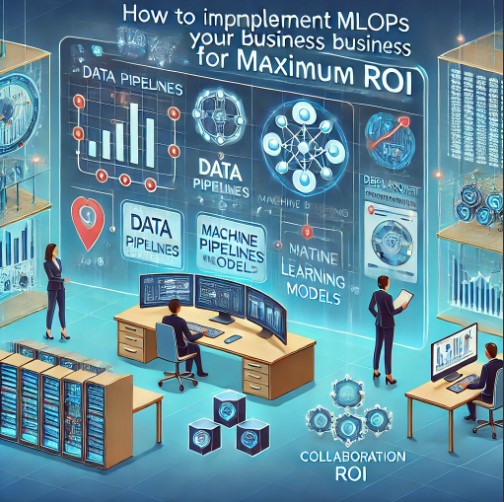
In the rapidly evolving field of machine learning (ML), organizations are increasingly adopting MLOps (Machine Learning Operations) to streamline and scale their ML workflows. MLOps bridges the gap between ML model development and operations, ensuring efficient deployment, monitoring, and management of ML models. This guide will help you understand how to implement MLOps in your business to maximize return on investment (ROI).

What is MLOps?

Definition and Importance

MLOps, short for Machine Learning Operations, is a set of practices that combines ML system development (Dev) and ML system operations (Ops). It aims to automate and enhance the process of deploying and maintaining ML models in production.

Benefits of MLOps

  • Improved Collaboration: Facilitates better collaboration between data scientists and operations teams.
  • Increased Efficiency: Streamlines model deployment and management, reducing time to market.
  • Scalability: Enables the scaling of ML models across various environments.
  • Enhanced Monitoring: Provides robust monitoring and management tools to ensure model performance and reliability.

Getting Started with MLOps

1. Establishing a Solid Foundation

Understanding Your Business Needs

Before diving into MLOps, it’s crucial to understand your business objectives and how ML can help achieve them. Identify key areas where ML models can provide value and outline clear goals for their implementation.

Building a Cross-Functional Team

Assemble a team that includes data scientists, ML engineers, software developers, and operations professionals. This cross-functional team will ensure that all aspects of the ML lifecycle are covered, from model development to deployment and maintenance.

2. Implementing the Right Tools and Technologies

Version Control Systems

Implement version control systems like Git to manage code, model versions, and data changes. This ensures that all team members can collaborate effectively and track changes over time.

Containerization

Use containerization technologies like Docker to package and deploy ML models consistently across different environments. Containers ensure that the models run reliably, regardless of where they are deployed.

Continuous Integration and Continuous Deployment (CI/CD)

Set up CI/CD pipelines to automate the process of building, testing, and deploying ML models. Tools like Jenkins, GitLab CI, and CircleCI can help streamline this process.

3. Data Management and Preprocessing

Data Ingestion

Implement robust data ingestion pipelines to collect and preprocess data from various sources. Ensure data quality and consistency to build reliable ML models.

Data Versioning

Use tools like DVC (Data Version Control) to manage and version datasets. This enables tracking of data changes and ensures reproducibility of ML experiments.

4. Model Training and Validation

Experiment Tracking

Implement experiment tracking tools like MLflow or Weights & Biases to log and track ML experiments. This helps in comparing different models and selecting the best-performing ones.

Hyperparameter Tuning

Perform hyperparameter tuning to optimize model performance. Use techniques like grid search, random search, or Bayesian optimization to find the best hyperparameters.

5. Model Deployment and Monitoring

Deployment Strategies

Choose the right deployment strategy based on your business needs. Options include:

  • Batch Inference: Processing large batches of data at scheduled intervals.
  • Real-Time Inference: Making predictions in real-time as data arrives.
  • Hybrid Inference: Combining batch and real-time inference for different use cases.

Monitoring and Logging

Implement monitoring and logging tools to track model performance in production. Tools like Prometheus and Grafana can help monitor key metrics and alert you to any issues.

Advanced MLOps Practices

1. Model Retraining and Lifecycle Management

Automated Retraining

Set up automated retraining pipelines to update models with new data regularly. This ensures that models remain accurate and relevant over time.

Model Governance

Implement model governance practices to manage model versions, ensure compliance, and track model lineage. This includes maintaining detailed documentation and audit trails.

2. Explainability and Fairness

Model Explainability

Use tools like SHAP or LIME to explain model predictions. This helps in building trust with stakeholders and ensures transparency in ML models.

Fairness and Bias Mitigation

Implement fairness checks to identify and mitigate biases in ML models. Ensure that models are fair and do not discriminate against any group.

3. Security and Compliance

Data Security

Ensure that data is securely stored and transmitted. Implement encryption, access controls, and other security measures to protect sensitive information.

Regulatory Compliance

Stay compliant with relevant regulations and standards, such as GDPR, HIPAA, or CCPA. Ensure that your MLOps practices adhere to these requirements.

FAQs

What are the key components of MLOps?

The key components of MLOps include version control, CI/CD pipelines, containerization, experiment tracking, monitoring, and automated retraining.

How does MLOps improve collaboration between teams?

MLOps fosters collaboration by creating a shared workflow and tools that allow data scientists, ML engineers, and operations teams to work together seamlessly.

What are some common challenges in implementing MLOps?

Common challenges include managing data quality, scaling ML models, ensuring model explainability, and staying compliant with regulations.

How can MLOps help in scaling ML models?

MLOps enables the scaling of ML models through automation, robust monitoring, and efficient deployment strategies, ensuring that models can handle increased workloads.

What tools are commonly used in MLOps?

Commonly used tools in MLOps include Git for version control, Docker for containerization, Jenkins for CI/CD, MLflow for experiment tracking, and Prometheus for monitoring.

Conclusion

Implementing MLOps in your business can significantly enhance the efficiency and scalability of your ML workflows, leading to maximum ROI. By following the best practices outlined in this guide, you can ensure that your ML models are deployed, monitored, and maintained effectively. Embrace MLOps to stay competitive in the rapidly evolving field of machine learning and achieve your business goals. Thank you for reading the DevopsRoles page!

Top 10 MLOps Tools to Streamline Your Machine Learning Workflow

Introduction

In the rapidly evolving field of machine learning (ML), the need for efficient, scalable, and integrated tools is more critical than ever. MLOps, a set of practices aimed at unifying ML system development (Dev) and ML system operations (Ops), has emerged as a solution to bridge the gap between data scientists and operations teams. This article explores the top 10 MLOps tools that can streamline your machine learning workflow, ensuring seamless integration and deployment of ML models.

1. MLflow

What is MLflow?

MLflow is an open-source platform designed to manage the complete machine learning lifecycle. It includes components for experiment tracking, model packaging, and model deployment.

Features

  • Experiment Tracking: Allows logging and querying of experiments.
  • Model Packaging: Standardizes the format to package ML models.
  • Model Deployment: Supports deployment on various platforms.

Example

MLflow makes it easy to track experiments with a simple API call:

import mlflow

with mlflow.start_run():
mlflow.log_param("param1", 5)
mlflow.log_metric("metric1", 0.89)
mlflow.log_artifact("model.pkl")

2. Kubeflow

What is Kubeflow?

Kubeflow is an open-source Kubernetes-native platform for deploying, orchestrating, and managing ML workflows.

Features

  • Scalability: Leverages Kubernetes for scaling.
  • Flexibility: Supports various ML frameworks like TensorFlow, PyTorch.
  • Integration: Seamlessly integrates with other Kubernetes tools.

Example

Kubeflow’s pipeline component can be defined using Python:

import kfp
import kfp.dsl as dsl

@dsl.pipeline(
name='Sample pipeline',
description='A sample pipeline'
)
def sample_pipeline():
# Define pipeline components here

3. TFX (TensorFlow Extended)

What is TFX?

TFX is an end-to-end platform for deploying production ML pipelines. It is highly optimized for TensorFlow.

Features

  • Data Validation: Ensures data quality.
  • Model Training: Scalable model training pipelines.
  • Model Serving: Efficient model serving with TensorFlow Serving.

Example

A simple TFX pipeline:

from tfx.components import CsvExampleGen
from tfx.orchestration.experimental.interactive.interactive_context import InteractiveContext

context = InteractiveContext()
example_gen = CsvExampleGen(input_base='data/')
context.run(example_gen)

4. DataRobot

What is DataRobot?

DataRobot is an enterprise AI platform that accelerates and manages the deployment of ML models.

Features

  • Automated Machine Learning: Automates the creation of ML models.
  • Model Deployment: Simplifies deployment and monitoring.
  • Collaboration: Facilitates collaboration among data scientists.

Example

DataRobot’s deployment API:

import datarobot as dr

project = dr.Project.create(sourcedata='data.csv')
model = project.train(target='target')
deployment = dr.Deployment.create(model.id, label='My Model Deployment')

5. Seldon

What is Seldon?

Seldon is an open-source platform for deploying and monitoring ML models at scale.

Features

  • Model Deployment: Supports multiple ML frameworks.
  • Monitoring: Real-time monitoring of deployed models.
  • Scalability: Scales with Kubernetes.

Example

Deploying a model with Seldon:

apiVersion: machinelearning.seldon.io/v1
kind: SeldonDeployment
metadata:
name: seldon-model
spec:
predictors:
- graph:
name: classifier
modelUri: gs://seldon-models/sklearn/iris
type: MODEL
name: default
replicas: 1

6. Metaflow

What is Metaflow?

Metaflow is a human-centric framework for data science that makes it easy to build and manage real-life data science projects.

Features

  • Ease of Use: Simple APIs for complex workflows.
  • Scalability: Scales from prototype to production.
  • Integration: Integrates with AWS for infrastructure.

Example

Creating a Metaflow flow:

from metaflow import FlowSpec, step

class MyFlow(FlowSpec):

@step
def start(self):
self.next(self.end)

@step
def end(self):
print("Flow completed!")

if __name__ == '__main__':
MyFlow()

7. Apache Airflow

What is Apache Airflow?

Apache Airflow is an open-source platform to programmatically author, schedule, and monitor workflows.

Features

  • Dynamic: Allows dynamic pipeline generation.
  • Scalable: Scales to support complex workflows.
  • Extensible: Easily integrates with other systems.

Example

Defining an Airflow DAG:

from airflow import DAG
from airflow.operators.dummy_operator import DummyOperator
from datetime import datetime

dag = DAG('simple_dag', start_date=datetime(2021, 1, 1))

start = DummyOperator(task_id='start', dag=dag)
end = DummyOperator(task_id='end', dag=dag)

start >> end

8. Flyte

What is Flyte?

Flyte is a structured programming and distributed processing platform for machine learning and data processing.

Features

  • Reusable Workflows: Define and reuse workflows.
  • Scalable: Scales with Kubernetes.
  • Secure: Provides security features for ML workflows.

Example

Creating a Flyte workflow:

from flytekit import task, workflow

@task
def my_task(x: int) -> int:
return x * 2

@workflow
def my_workflow(x: int) -> int:
return my_task(x=x)

my_workflow(x=10)

9. Pachyderm

What is Pachyderm?

Pachyderm is a data versioning and pipeline orchestration tool that ensures reproducible data science.

Features

  • Data Versioning: Tracks data lineage.
  • Pipeline Orchestration: Manages complex data workflows.
  • Scalability: Leverages Kubernetes for scaling.

Example

Defining a Pachyderm pipeline:

{
"pipeline": {
"name": "example-pipeline"
},
"transform": {
"cmd": ["python3", "transform.py"]
},
"input": {
"pfs": {
"glob": "/*",
"repo": "input-repo"
}
}
}

10. Neptune.ai

What is Neptune.ai?

Neptune.ai is a lightweight MLOps platform for managing ML metadata.

Features

  • Experiment Tracking: Comprehensive experiment tracking.
  • Model Registry: Maintains a registry of models.
  • Collaboration: Facilitates team collaboration.

Example

Tracking and experiment with Neptune:

import neptune.new as neptune

run = neptune.init(project='my_workspace/my_project')
run['parameters'] = {'lr': 0.01, 'batch_size': 32}
run['metrics/accuracy'] = 0.95

FAQs

What are MLOps tools?

MLOps tools are platforms and frameworks designed to manage the lifecycle of machine learning models, from development to deployment and monitoring.

Why are MLOps tools important?

They ensure efficiency, reproducibility, and scalability in ML workflows, making it easier to integrate ML models into production environments.

Which MLOps tool is best for beginners?

MLflow and Neptune.ai are great for beginners due to their user-friendly interfaces and comprehensive documentation.

Can these tools be integrated with each other?

Yes, many MLOps tools are designed to be interoperable and can be integrated into existing ML workflows.

Conclusion

The landscape of MLOps tools is diverse, offering a range of features to streamline machine learning workflows. Whether you are a beginner or an advanced practitioner, the tools listed above provide robust solutions for managing the complexities of ML projects. By leveraging these tools, you can ensure efficiency, scalability, and seamless integration in your machine-learning endeavors.

Remember to explore each tool to find the best fit for your specific needs and workflow requirements. Thank you for reading the DevopsRoles page!